Voting for the 14 seats in northern Karnataka will be held on Tuesday, bringing an end to general elections in the state that sends 28 members to Lok Sabha.
As many as 2.43 crore electorate will vote to pick 14 winners from among the 282 candidates in the fray. The south Karnataka region comprising another 14 seats went to the polls on April 18.
Among key contestants for Tuesday’s elections is Congress heavyweight Mallikarjun Kharge, who has represented the Gulbarga [Kalaburagi] seat — reserved for scheduled caste candidates — since 2009.
WATCH| Lok Sabha Elections 2019: Big fights to watch out for in Phase 3 of voting
However, this time he is pitted against Congress rebel Umesh Jadhav, who has the backing of some former party leaders.
Also in the fray are Union minister Ramesh Jigjinagi, who is contesting from the Bijapur (SC) constituency against Sunitha Chavan, and Ananth Kumar Hegde, contesting from the Uttara Kannada district against Anand Asnotikar of the Janata Dal (Secular).
State Congress working president Eshwar Khandre is hoping to wrest the Bidar seat from Bharatiya Janata Party’s Bhagwant Khuba.
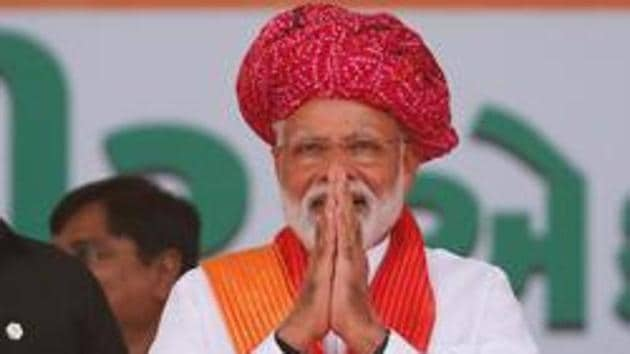
Popularity of Prime Minsiter Narendra Modi remains a key factor in this election as well. In 2014, the BJP had won 10 of the 14 seats that will go to the polls on Tuesday.
Just days before the polling, the Lingayat issue which seemed to have died down was revived by the BJP to target the Congress for allegedly hatching a conspiracy to divide society. The community which dominates northern Karnataka has been demanding a separate religion status for Lingayat.
{{/usCountry}}Just days before the polling, the Lingayat issue which seemed to have died down was revived by the BJP to target the Congress for allegedly hatching a conspiracy to divide society. The community which dominates northern Karnataka has been demanding a separate religion status for Lingayat.
{{/usCountry}}The Congress, on the other hand, focused its campaign on the fact that the BJP had picked only dominant caste candidates, except for the four reserved seats. Of the 10 candidates of the BJP in the region, eight belong to the Lingayat sect and two are Brahmins, a fact that was repeatedly highlighted by former chief minister Siddaramaiah, who attempted to consolidate the AHINDA (Kannada acronym for backward classes, minority communities and Dalits) voters.
Political analyst Narendra Pani, who teaches at the National Institute of Advanced Studies, Bengaluru, said the Congress strategy was clearly oriented towards consolidating the votes of one section of Lingayats with the AHINDA grouping. “The BJP’s move to bring it up is interesting in this light,” he said, adding, “It is unclear how much of a factor the Prime Minister’s popularity is especially because the BJP is banking so much on it.”