Decoding aging is one complicated process that scientists across globe are busy working on.
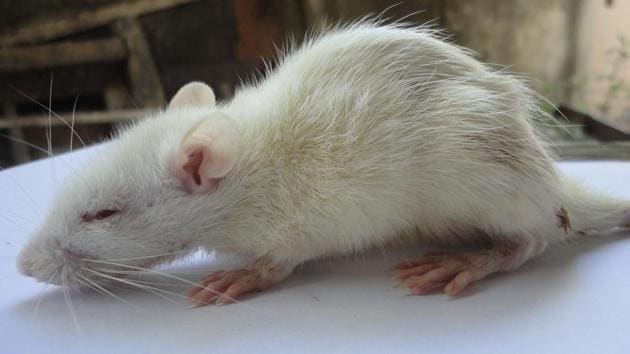
While a revolutionary breakthrough is still awaited, a group of scientists from Allahabad have developed unique model of rat which can go a long way in helping them find a formula to control the process.
Perhaps taking a cue from Bollywood blockbuster Paa, the scientists have developed a model of rat which displays a higher rate of aging.
“The accelerated aging model’ of rat provides a great tool for scientists to study aging and also to test ‘anti-aging’ drugs,” claims prof SI Rizvi from the Biochemistry department of Allahabad University (AU).
Rizvi is leading the research team.
The team’s findings and achievement have been published in the recent issue of the prestigious research journal ‘Biochemical and Biophysical Research Communications’ published from US.
Explaining his new research, prof Rizvi said that his team created a rat model which mimics the human condition of Progeria, a disease in which the patient starts to show a faster rate of aging.
Progeria syndrome was highlighted in the acclaimed Hindi movie Paa wherein the character was portrayed effectively by Amitabh Bachchan.
{{/usCountry}}Progeria syndrome was highlighted in the acclaimed Hindi movie Paa wherein the character was portrayed effectively by Amitabh Bachchan.
{{/usCountry}}Progeria is a rare genetic condition that causes a child’s body to age fast. Most kids with progeria do not live past the age of 13. The disease affects both sexes and all races equally. It affects about 1 in every 4 million births worldwide. Medical experts believe that India has around 8-10 reported cases of progeria and potentially 66 unreported cases.
To study aging, scientists rely on animal models such as C elegans (an earthworm), fruit flies, and mice. The consideration for choosing an animal is primarily based on its lifespan. Shorter lifespan provides an opportunity to study age-dependent changes in a shorter time frame.
To create the Progeria model of rat, the Allahabad University scientists subjected normal rats to chronic treatment of 30 days with dihydrotachysterol, a chemical similar to vitamin D. A look into relevant scientific literature reveals that very few studies have been conducted on such a model of rat.
“Normal experimental rats have a lifespan of two years, which is too large a time for conducting experiments. The rat model mimicking Progeria provides a very good model to study aging process in a short span of time,” added prof Rizvi.
The young progeria-mimicking rats display a certain level of oxidative stress (an established hallmark of aging) equivalent to old age rats.
The research group will now test Metformin, a common anti-diabetic drug, as an experimental anti-aging drug on increased aging model rats. Initial results using Metformin as an anti aging drug have been very exciting, added prof Rizvi.