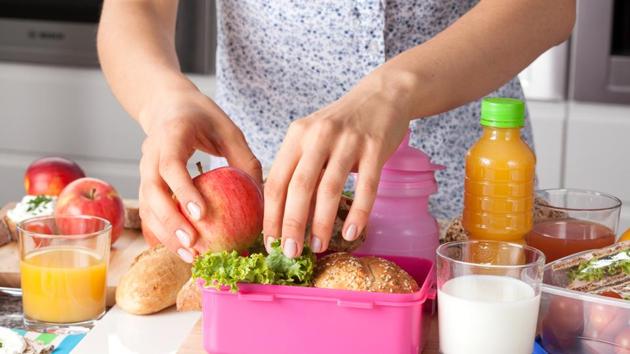
It’s great to not rely on a school canteen for your children’s daily meals. But some safety precautions need to be taken for home-cooked food as well. Rebecca Dittmar, a Texas A&M AgriLife Extension Service program specialist, warns that there are some food safety tips that everyone should know when preparing food at home to be eaten later at school.
“Food left at room temperature for more than a few hours can put children at risk for food borne illness,” said Dittmar, “Children typically have a higher risk of food borne illness as their immune systems are not sufficiently developed to resist the bacteria that can grow on foods.” According to the US Department of Agriculture (USDA), food at temperatures between 40 and 140 degrees F are in the “danger zone” and can allow bacteria to double in number in as little as 20 minutes, so to help prevent this bacteria and foodborne illness, the USDA and Dittmar have shared tips and advice for a safer packed lunch.
Although preparing foods in advance is fine, if preparing the night before leave lunches in the refrigerator overnight. “To ensure the best results, store with the lid of the lunch box or bag left open in the refrigerator so there’s optimal air circulation to cool it down,” says Dittmar. She advises that it’s also best to pack lunch just before the child leaves for school. When it comes to freezing, “You can freeze some foods for lunches, but it’s not always a good idea to freeze all the ingredients. For example, it’s usually not best to freeze complete sandwiches containing mayonnaise, lettuce, pickles or tomatoes or onions, as these don’t usually taste particularly good when thawed. Keep these add-ons in a separate plastic bag or container so your child can put them on the sandwich just before eating it.”
When packing up lunches use an insulated lunch box or double paper bags. “If your children are taking a lunch requiring refrigeration, find out if they have access to a refrigerator at school and remind them to put their lunch in it as soon as they get to school,” she said. For cool perishable items such as lunch meats, eggs, cheese, milk and yogurt Dittmar also recommends including a cold pack with the lunch. “These cold packs should also be used even in insulated lunch boxes or bags when there’s perishable food inside,” Dittmar said. “You can also freeze water or juice and use that to keep perishables cold, and the liquids should thaw by lunchtime.”
{{/usCountry}}When packing up lunches use an insulated lunch box or double paper bags. “If your children are taking a lunch requiring refrigeration, find out if they have access to a refrigerator at school and remind them to put their lunch in it as soon as they get to school,” she said. For cool perishable items such as lunch meats, eggs, cheese, milk and yogurt Dittmar also recommends including a cold pack with the lunch. “These cold packs should also be used even in insulated lunch boxes or bags when there’s perishable food inside,” Dittmar said. “You can also freeze water or juice and use that to keep perishables cold, and the liquids should thaw by lunchtime.”
{{/usCountry}}For hot lunches use a thermos or other insulated container to keep them at a warm temperature. Dittmar also has another tip, “If you put boiling water into the container and let it sit for a few minutes, then pour the water out and put in the hot food — like soup, stew or chili this will help keep the contents warm until lunchtime.”
After children have finished eating remind them to throw away all lunch packaging and bags, and clean lunch boxes after use when they return home if it’s not possible at school. “Leftover food should also be discarded after lunch too, along with all used food packaging and paper bags,” she said. “Reusing packaging is a bad idea as it could contaminate other food and cause illness. And keeping unrefrigerated perishables in a lunch box or bag so you can eat them later means they’ll probably be in the temperature danger zone for a while and could become a safety risk.”
Follow @htlifeandstyle for more