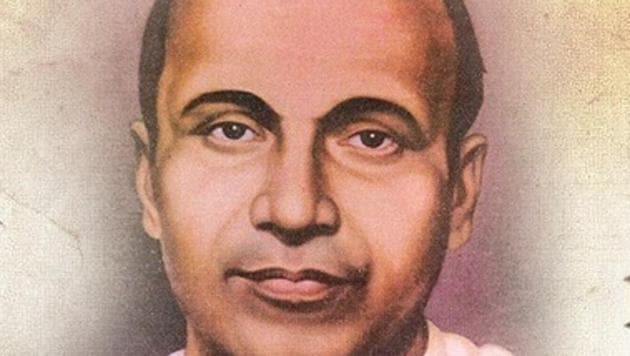
The original handwritten copy of Kamayani - one of the greatest of Hindi literary works of Hindi writer and poet Jai Shankar Prasad - is now in the private collection of National Archives in Delhi and will be soon available to research scholars.
The epic poem, written in two volumes and spread over 280 pages, along with other works of Prasad, has been donated to the archives by his great grandson.
Kamayani is an allegorical epic poem that dramatises the tradition, culture and philosophy of India. The poem deals with diverse subjects but the central theme is development of human culture. It depicts the interplay of human emotions, thoughts, and actions by taking mythological metaphors.
Kamayani has personalities such as Manu, Ida and Shraddha, who are found in the Vedas. The great deluge described in the poem has its origin in Sataapatha Brahmana.
The plot is based on the Vedic story where Manu, the man who survives the deluge (Pralaya), is emotionless (Bhavanasunya). Manu starts getting involved in various emotions, thoughts and actions. These are sequentially portrayed with Shraddha, Ida, Kilaat and other characters playing their part. The chapters are named after these emotions, thoughts or actions. Some people consider that the sequences of chapters denote the change of personality in a man’s life with age.
The 23 items in the collection of National Archives includes around 500 correspondence letters of Prasad with his contemporary writers, including Premchand, Mahadevi Varma, Suryakant Tripathi, Maithali Sharan Gupt and Sumitra Nandan Pant. There are theatrical publications, short stories, poems and manuscripts of plays, a Parker pen with which he had written Kamayani. His last incomplete book titled-Iravati-- is also among the collections.
{{/usCountry}}The 23 items in the collection of National Archives includes around 500 correspondence letters of Prasad with his contemporary writers, including Premchand, Mahadevi Varma, Suryakant Tripathi, Maithali Sharan Gupt and Sumitra Nandan Pant. There are theatrical publications, short stories, poems and manuscripts of plays, a Parker pen with which he had written Kamayani. His last incomplete book titled-Iravati-- is also among the collections.
{{/usCountry}}Vijay Shankar Prasad, the great grandson of Prasad says: “All his works, including Kamayani, is a national heritage and treasure. I wanted to give this to the country so that the new generation scholars can benefit from them. National Archives is the best place for this treasure to be kept and conserved. My great grandfather started writing Kamayani in 1928 and completed it in 1936. It finally got published in February 1937.”
“The literary work of Jai Shankar Prasad has given value addition to the already rich collection of private papers in the archives. We will do the listing of the collection make them available to the research scholars. We will also digitalise the collection subsequently,” says T Hussain, deputy director general, National Archives.
Follow more stories on Facebook and Twitter