Our rivers Mula and Mutha are dead with their Dissolved Oxygen (DO) level being at zero. By conducting such river cleaning drives, what we are trying to do is at least try and save as much as we can of our rivers,” says Vinod Bodhankar, convenor, Sagar Mitra.
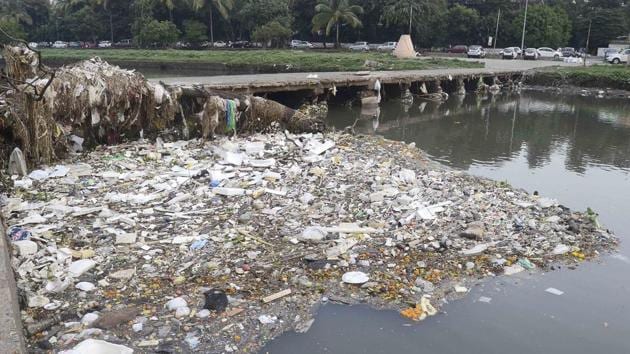
The Pune Municipal Corporation’s (PMC) 2017 Environment Status Report (ESR) says that the biological oxygen demand (BOD) is very high according to the samples tested in 2016. According to Bodhankar, an expert on river pollution, this is not good for the survival of the aquatic life as there is hardly any fish in the river. Similarly, if the chemical oxygen demand (COD) is less, then, it is good for the river. In case of the Mula and Mutha, however, the COD is well over the standard reading of 150 mg/l as recorded by the Maharashtra Pollution Control Board (MPCB).
“Also our river is not healthy because the hills are denuding and all the forests are gone. The only one who can save the rivers is when you have greening of the hills. The river has many threads coming from the sides and some come from the uphill nullahs which will deposit plastic and other waste into the river,” Bodhankar said.
Pune’s two rivers, Mula and Mutha rivers originate in the Sahyadri ranges and traverse across the city and district. The two rivers further meet and upon their confluence Mula-Mutha river is formed which drains into the Bhima river. The total length of these three rivers traversing through the city is about 44 km. Mutha river has three dams- Khadakwasla, Varasgaon and Temghar while Mula river has Mulshi dam that controls the release of water in the rivers. The rainfall only in the catchment area below the dams finds its way into the rivers.
{{/usCountry}}Pune’s two rivers, Mula and Mutha rivers originate in the Sahyadri ranges and traverse across the city and district. The two rivers further meet and upon their confluence Mula-Mutha river is formed which drains into the Bhima river. The total length of these three rivers traversing through the city is about 44 km. Mutha river has three dams- Khadakwasla, Varasgaon and Temghar while Mula river has Mulshi dam that controls the release of water in the rivers. The rainfall only in the catchment area below the dams finds its way into the rivers.
{{/usCountry}}Although the rivers have a majestic flow during the peak of the monsoons, they are heavily polluted. The Mula-Mutha has been identified by the Central Pollution Control Board among 300-plus polluted rivers in the country. Over the past decades, the condition of the rivers have decayed due to discharge of untreated domestic waste water into the river owing to inadequate sewerage system, dumping of construction material and open defecation on the river banks.
“We have actually never used the rivers for drinking water purpose and always relied on the dams to provide us with drinking water,” says Sunil Joshi, another conservationist working in the area of river rejuvenation.
According to Bodhankar, the city’s rivers have degraded over time because of urbanisation along the river, release of untreated sewage directly into the rivers, construction of dams in their upstream and poor discharge of water into the river, turning it into a polluted ‘drain’.
River city
Pune district has five rivers, namely, Mula and Mutha being the main rivers and the three smaller rivers in the form of Ram Nadi, Dev Nadi and Ambil nullah. The Mula river runs for 22.2 km, the Mutha for 10.4 km and after confluence at Sangam, the Mula-Mutha runs for another 11.8 km.