“What pained one most was the fact that everyone knew the guilty, yet nothing was done. This national failure was to pave the way for Ayodhya 1992 and Gujarat 2002. I was 16 and in Class 10, the son of an Army officer living in Defence Colony, and a Hindu by birth. Yet, my belief that we were citizens of a secular republic was shattered for all times,” Vikram Kapur, 49, said this in an interview following a reading from his latest novel, ‘The Assassinations: A Novel of 1984’, in the city on Saturday.
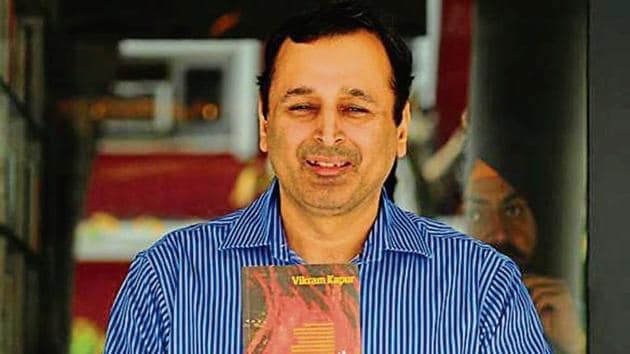
It is the second novel of the Delhi-based author on this theme, the first, ‘Time is a Fire’, was published in 2002. Besides, he has edited an anthology of fiction and non-fiction called ‘1984 in Memory and Imagination’, published in 2016. The latest novel adds to fiction collection on the November 1984 killings with the book, coming decades after the episode.
“A novelist takes time and needs distance to look at an historical event whereas the response is quick in non-fiction or even poetry and short-fiction,” he adds. The latest novel is a love story on the North Campus of Delhi University between a Sikh boy and a Hindu girl. The parents agree and the marriage is fixed. However, Operation Bluestar happens, troubling the boy’s mind and the alienation is complete in killings of the Sikhs that followed the assassination of the Prime Minister. The story ends tragically like the kissas of Punjab and plays itself out in the Delhi of the 1980s with the author ‘having been there and knowing the way back by heart’.
When asked why he has been returning to this episode of history, “This episode made a political novelist out of me, because it shattered all illusions about the political fabric. Often, I find people relating to these writings as Sikhs but I saw it more as a national catastrophe and the past continues to shape the present”.
In his 2004 novel ‘The Wages of Life’ Vikram sketched the assassination of Mahatma Gandhi and the rise of the Hindutva forces. A teacher of creative writing in Shiv Nadar University, Vikram adds that he is working on his next novel, which will move away from the recurring 1984 theme in his books. However, he adds that he had to ‘write out’ on 1984 because the stories must be told. “I have had personal catharsis, but the works were aimed at raising larger questions. As a young boy, one thought riots happen somewhere else not in the nation’s capital with not just the politicians, but also the police egging them on.”
{{/usCountry}}In his 2004 novel ‘The Wages of Life’ Vikram sketched the assassination of Mahatma Gandhi and the rise of the Hindutva forces. A teacher of creative writing in Shiv Nadar University, Vikram adds that he is working on his next novel, which will move away from the recurring 1984 theme in his books. However, he adds that he had to ‘write out’ on 1984 because the stories must be told. “I have had personal catharsis, but the works were aimed at raising larger questions. As a young boy, one thought riots happen somewhere else not in the nation’s capital with not just the politicians, but also the police egging them on.”
{{/usCountry}}