More than 2,000 families have been virtually forced by developers to hurriedly move into new housing projects in Greater Noida West and Noida. The reason? Most of the projects have been given ‘partial’ completion certificates which allow the builders to deliver possession to buyers for fitouts (allowing the latter to carry out interior work) even though basic amenities or infrastructure are missing. Delivering apartments in such a manner means developers will not have to pay penalty to buyers for late delivery as mandated by the Real Estate Regulatory Act (or RERA) once it kicks in from May this year.
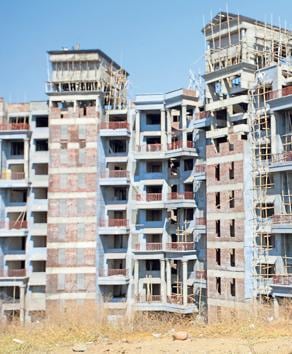
The term ‘partial’ completion certificate incorporated in the UP Apartment Act sometime back, is issued to builders to facilitate tower wise completion, especially for large projects. Buyers moving in “before completion” will not get compensation for late delivery.
Part completion certificates were seen as a means to provide relief to apartment owners stuck in large unifinished housing projects. This is now being misused by some developers who receive ‘part’ completion for a few towers but not ‘total completion’ certificate which requires inspectors to review work in the previous towers before granting the final document, say experts.
Habitable condition
Interestingly, the rules framed by the Central government under RERA for union territories clearly state that “ready to move in possession” shall mean that the apartment shall be in a habitable condition which is complete in all respects including the provision of all specifications, amenities and facilities, as agreed to between the parties, and for which occupation certificate and completion certificate, as the case may be, has been issued by the competent authority.”
The rules framed by the UP government and titled Uttar Pradesh Apartment (Promotion of Construction, Ownership and Maintenance) (Amendment) Rules, 2015, define “ongoing projects” as unfinished projects without completion certificates. Projects in the rules which have been excluded are those “where all development work have been completed and sale/lease deeds of sixty percent of the apartments/houses/plots have been executed” and “where all development works have been completed and application has been filed with the competent authority for issue of completion certificate.”
{{/usCountry}}The rules framed by the UP government and titled Uttar Pradesh Apartment (Promotion of Construction, Ownership and Maintenance) (Amendment) Rules, 2015, define “ongoing projects” as unfinished projects without completion certificates. Projects in the rules which have been excluded are those “where all development work have been completed and sale/lease deeds of sixty percent of the apartments/houses/plots have been executed” and “where all development works have been completed and application has been filed with the competent authority for issue of completion certificate.”
{{/usCountry}}Legal experts warn that these two provisions under the RERA rules framed by the UP government are being “misused” by developers. They are handing over real estate projects to buyers in a “hurry” before RERA comes into effect from May 1, 2017.
Recently, a few developers who acquired part completion certificates executed sale or lease deeds with 60% buyers Some builders were also filing applications for completion certificates with the authority in advance to exclude themseves from the ambit of RERA, S K Pal, a Supreme Court lawyer, said.
Part completion
Homebuyers will therefore have to be careful and ensure that the projects they are investing in are complete in all respects before taking possession. If they are not careful, buyers will not come under the ambit of the security that RERA offers, he says.
Part completion is alien to the urban development act of any state wherein it is clearly stated that a property cannot be sold unless a project has been awarded a completion certificate. The Act identifies a group housing project to mean the area earmarked under the Master Plan, say urban planners.
A project within a project is not a concept within the urban development act which only identifies the entire plot as a project. Even if the part occupancy certificate covers 90% of a project, a final completion has to still be obtained from the authority. If not, then the project will come under the ambit of RERA, they say.
“There should, therefore, be a policy framed by the government wherein an apartment owner should be allowed to retain 2% to 5% of the final payment until the entire project is awarded a completion certificate. Until the land cost is paid for, the previous apartment owners run the risk of having the obligation to pay for the land cost and also the project may never get completed. The sub lease or the conveyance deed signed between the parties should clearly state that the remaining amount of 2% or 5% shall be paid at the time the project is awarded completion certificate,” adds Pal.
Faultlines
Amit Modi, director ABA Corp and vice president, Credai, Western UP says that neither the developer not the buyer is at fault. First, nobody can force buyers to accept the letter of possession of a housing project if it’s not complete in all respects.
Also, making arrangements for water or electricity is the responsibility of the government, all these services including the roads leading to the project, have to be provided for before a developer decides to give possession. In the last six months, Greater Noida Authority has so far received 35 applications for completion certificates and 27 certificates have been so far issued to builders.
Deepak Aggarwal, CEO, Noida Authority, when contacted, said at the macro level, projects were not given completion cerficiates because of non-issuance of no-objection certificates by the fire department, setback issues (inadequate open space, light and air in projects), or parking problems. Other problems included technical issues such as developers defaulting on payments to authority.
“ In case there are projects in which basic necessities have not been provided but they have been given completion certificates, we will look into the matter,” he added.