
 E-Paper



Delhi RERA chief cautions real estate developers against falling into investors’ trap
Falling into investors' trap could affect cash flows and result in real estate projects getting stalled, Anand Kumar, chairman, RERA, Delhi and Chandigarh said

 Prefer HTon Google


Real estate developers should not fall into the 'trap of investors’ as this could affect their cash flows and result in projects getting stalled, Anand Kumar, chairman, Real Estate Regulatory Authority for NCT of Delhi and Chandigarh said that the CII Conference on ‘Evolving Landscape of Indian Real Estate: Trends and Future Outlook’ held in the Capital.
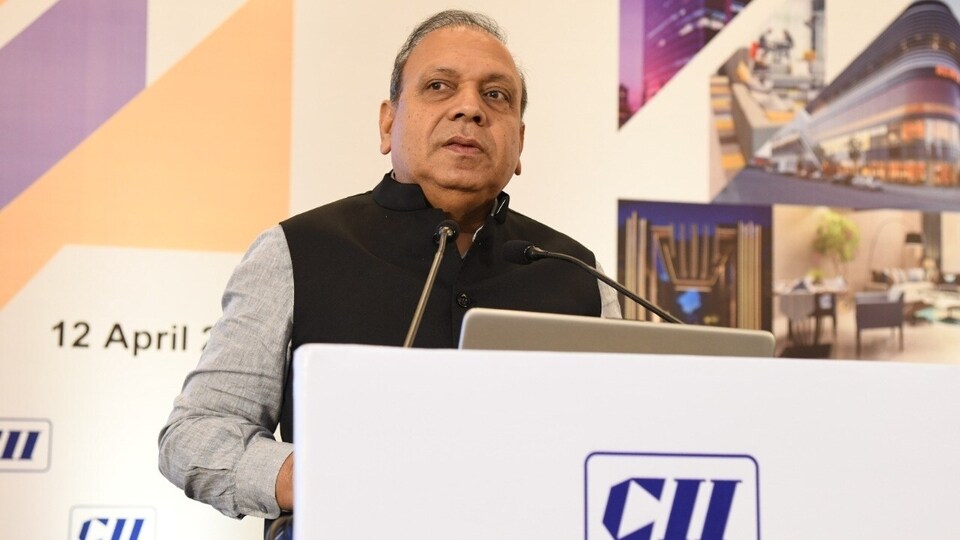
Kumar cautioned that if builders do not act against such investors, their "financial cycle will be disrupted" and that will give rise to stalled projects.
There are several high net worth individuals who purchase many flats in the hope of making huge profits, he said, adding these investors stop paying their installments after having paid just about 30% of the total cost of the housing units.
Real estate developers are then forced to cancel the units, which leads to disputes with customers, he said.
"In case, you (builder) find any problem that somebody is not paying on time, you go to RERA first, before he comes to RERA. Because, RERA is meant not only for allottees but also for you," Kumar told developers.
He said that under RERA, developers can even cancel the allotment of units if somebody does not pay up.
On the issue of unauthorized developments, he said that "If we curb unauthorized development, then we can have 5,000 houses in the same land where we have 1,000 houses.”
Sanjay Kulshrestha, chairman and managing director of HUDCO, said around 3% of the country's land contributes to 60% of GDP and that real estate developers should venture into non-metro and smaller centers.
Also Read: DDA luxury flats in Delhi’s Dwarka sold out, but no Rera nod yet
On the PM Awas Yojana, he said that in the interim budget 2024-25, the government has made an announcement to build 2 crore affordable houses in the next five years. State governments such as UP, Maharashtra are developing townships. In Maharashtra, a highway connects Nagpur, Mumbai and JNPT – that connects 18 districts. From 15 hours the transit time is down to 8 hours.
“These 18 districts are able to deliver goods to ports in four-five hours, he said and urged real estate developers to enter smaller untapped geographies to develop affordable houses,” he said.
Real-estate is the second largest employer after agriculture and is also one of the fastest growing sector, said Neel C Raheja, Chairman of CII National Committee on Real Estate and Housing and Group President of K Raheja Corp.
"We are at the forefront of hiring people, training them and creating better livelihoods for them, he added.
In 2023, India has emerged as the office to the world, said Sriram Khattar, Vice Chairman and Managing Director, DLF Rental Business.
“In the office segment, markets had a record lead in 2023 with India’s top seven sub-markets crossing a sale of 60 million sq ft. A milestone has been achieved. This firmly establishes the country’s credentials as an office to the world. The demand emanated from global capability centres, in manufacturing, engineering, financial services and technology at a time when third party tech outsourcing had a rather muted year,” he said.
Around 3% of the country’s land contributes to 60% of GDP, and there is a need for real-estate developers to venture into non-metros and smaller centres, said Sanjay Kulshrestha, chairman and managing director, HUDCO, at the CII Conference on Evolving Landscape of Indian Real Estate: Trends and Future Outlook on Friday
Emphasising the need to regulate unauthorised development, Anand Kumar, Chairman, Real Estate Regulatory Authority for NCT of Delhi and Chandigarh said “If we curb unauthorized development, then we can have 5000 houses in the same land where we have 1000 houses”. Unauthorised colonies, are a pain point in areas like Delhi, Noida, Gurgaon, he added.
The event witnessed the release of CII Knight Frank Report “India Real Estate: A Decade From Now: Assessing the economic and real estate sector potential in the next decade”.
Both Mr Kumar, and Mr Kulshrestha stressed on the need of skilling human-resources in real-estate sector. Referring to the findings of report, Mr Kulshrestha said that skill sets will have be developed for standardization, material, reiterating the need to build affordable houses, stating that most buyers today are unable to pay the cost of houses. “We need more semi-skilled workers. We have had cases where modules sent for a site were installed by the electrician incorrectly. And now, this has led to a GST issue. CII, NAREDCO, CREDAI need to get together to address this skill-shortage” added Mr Kumar.
Real-estate is the second largest employer after agriculture and is also one of the fastest growing sector, said Mr Neel C Raheja Chairman, CII National Committee on Real Estate and Housing and Group President, K Raheja Corp. “We are at the forefront of hiring people, training them and creating better livelihoods for them, he added. Today the real-estate sector is pegged to be around 7.5% of GDP, which is expected to grow to 15.5% of GDP by 2047”, said Mr Raheja.
In 2023, India has emerged as the office to the world, said Mr Sriram Khattar Vice Chairman & Managing Director, DLF Rental Business. “In the offices segment, markets had a record lead in 2023 with India’s top seven sub-markets crossing a sale of 60 million sq ft. A milestone has been achieved. This firmly establishes the country’s credentials as an office to the world. The demand came from global capability centres, in manufacturing, engineering, financial services and technology at a time when third party tech outsourcing had a rather muted year” pointed out Mr Khattar, adding that even in residential and retail segments, sales were upbeat in 2023. India also bought bigger apartments in 2023, above the price of ₹1.5 crore being the fastest selling category, for the first time ever, he added.


