E-Paper



Karnataka launches ‘Bhoo Guaraatee’ scheme; 7 lakh properties likely to be regularised at 2% fee
Karnataka has launched an OTS scheme for 7 lakh b-Khata owners to convert properties to a-Khata at 2% fee; Here’s what it means for homeowners

 Prefer HTon Google


The Karnataka government rolled out a one-time settlement (OTS) scheme starting today to regularise nearly 7 lakh b-Khata properties across the state, particularly in Bengaluru’s urban and peri-urban areas. Eligible property owners can convert their properties to a-Khata status by paying 2% of the guidance value. This move is expected to provide legal clarity and ease long-standing issues related to property registration, bank loans, resale transactions and civic approvals faced by homeowners due to b-Khata classification.
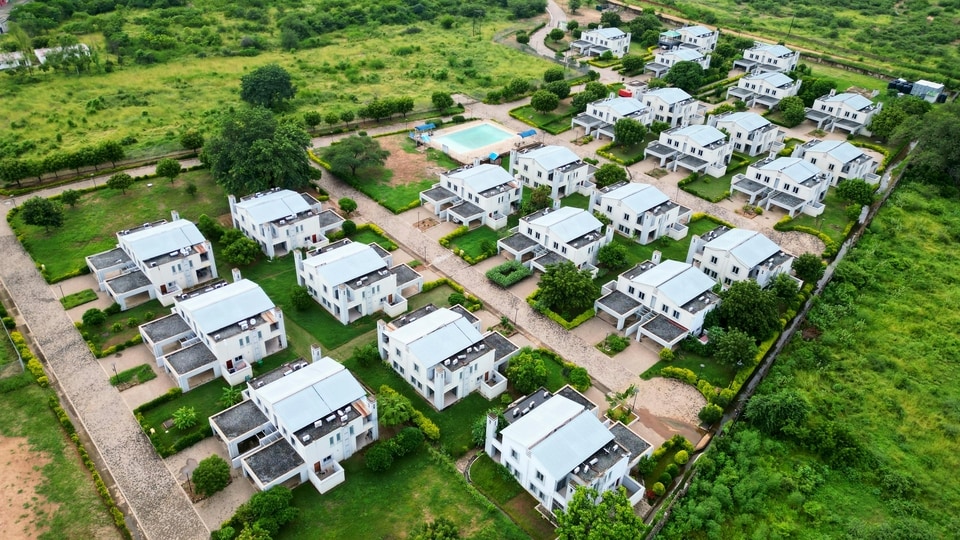
Officials said the earlier 5% conversion fee based on the guidance value discouraged many property owners from opting for regularisation.
Deputy Chief Minister D K Shivakumar said the revised rate would substantially ease the financial burden on homeowners. For instance, the conversion charge for a property valued at ₹1 crore has now been reduced from ₹5 lakh to ₹2 lakh.
“From the perspective of the welfare of more than 7 lakh property owners in Bengaluru, the 'My e-Khata' campaign will be launched from May 16 for conversion from 'B' account to 'A' account,” Shivakumar had posted earlier on X.
"Under this scheme, the public can submit applications within 100 days and pay only 2% guidance rate instead of the stipulated 5% to convert their property. Providing security to your properties through people-friendly governance is our goal,” he said.
What is a b-Khata?
B-khata is a type of property record maintained by the Bruhat Bengaluru Mahanagara Palike (BBMP) for properties that do not fully comply with legal and planning norms. These include buildings in unauthorised layouts, constructions without approved plans, or those lacking occupancy certificates. Even though these properties are not entirely legal, owners are still required to pay property tax, and their details are recorded for tax purposes.
However, owning a b-Khata property comes with several drawbacks. These properties are not considered fully legal and face restrictions on selling, obtaining building approvals, or applying for trade licenses. Banks and financial institutions usually do not offer loans against them. Compared to a-Khata properties, which are fully compliant with local laws, b-Khata properties generally have lower market value and limited legal benefits, experts say.
What does this move mean for property owners?
Under the new scheme, eligible b-Khata owners can regularise their properties and obtain a-Khata status by paying a settlement fee of 2% of the property's guidance value.
The guidance value is the minimum property valuation fixed by the Karnataka government for stamp duty and registration purposes.
“The owner can pay 2% as a penalty against the guidance value to convert the site within these 100 days as an OTS. This will help them get loans, sell their properties, etc. Once proper documentation is done, officials will give the papers to owners at their doorstep under Nanna Khata Nanna Nakshe,” Shivakumar said while addressing a press conference.
“A programme is being launched in 52 locations across the city from Saturday. Through this programme, immediate redressal of citizens’ complaints regarding e-Khata services and on-the-spot service facilities will also be provided,” he said.
Shivakumar said that out of nearly seven lakh eligible properties, only around 11,000 owners had applied for khata conversion, of which about 7,000 properties were successfully converted. He said that the earlier conversion charge of 5% of the guidance value discouraged many property owners from coming forward.
Shivakumar said the revised rate would significantly reduce the burden on property owners, noting that the conversion fee for a property valued at ₹1 crore has now dropped from ₹5 lakh to ₹2 lakh.
Also Read: Mysuru real estate: ₹1,000 crore worth of property transactions stuck amid e-Khata system issues
How will owners benefit from regularised b-Khata properties?
Once regularised, b-Khata property owners will be issued certificates that grant them legal ownership of their properties, said Akash Bantia, an advocate.
"This legal clarity will allow them to mortgage their properties, apply for bank loans, and carry out property-related transactions that were earlier difficult or impossible due to the uncertain status of b-Khata properties. For years, these properties existed in a legal grey zone, which limited the financial options available to their owners," he said.