Memories of the dramatic demolition of the Supertech Twin Towers in Noida have resurfaced following the Allahabad High Court’s latest order in the Gulmohar Greens case in Ghaziabad. The court has directed the demolition of two towers and two floors of four other towers, ordered an FIR against the promoter for alleged fraud and statutory violations, and called for action regarding the role of public officials involved in the approval process.
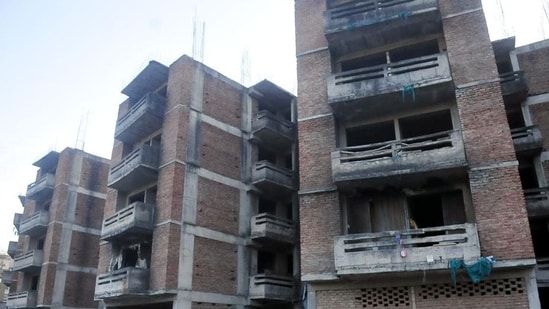
The Gulmohar Greens order invites comparison with other cases, including the Maradu apartment demolitions in Kerala, the Chintels Paradiso collapse in Gurugram and the ‘self-demolition’ case in Bengaluru. Together, these cases offer a broader lens through which to examine when demolition becomes necessary and how homebuyers' rights can be protected when regulatory safeguards fail, say legal experts.
The Gulmohar Greens case
In its October 27 order, the court directed the Ghaziabad Development Authority (GDA) to demolish towers 27 and 28, each comprising five floors with eight units on every floor, and the ninth and 10th floors of towers 16, 17, 18 and 19 within two months, the Hindustan Times newspaper reported.
The constructions were undertaken by Friends Land Developers Pvt Ltd, a partnership firm of SVP Builders India Ltd. Describing the case as one in which apartment owners had been harassed by the promoter, allegedly in connivance with the development authority, the court imposed costs of ₹25 lakh on the promoter. It directed him to deposit the amount with the Gulmohar Greens Residents Welfare Association within a month, the report said.
{{/usCountry}}The constructions were undertaken by Friends Land Developers Pvt Ltd, a partnership firm of SVP Builders India Ltd. Describing the case as one in which apartment owners had been harassed by the promoter, allegedly in connivance with the development authority, the court imposed costs of ₹25 lakh on the promoter. It directed him to deposit the amount with the Gulmohar Greens Residents Welfare Association within a month, the report said.
{{/usCountry}}In a statement, SVP Builders India Ltd said it was examining the judgment and its legal implications, and would take necessary steps through due legal process. A representative of the builder told the newspaper that the two towers and the floors were currently vacant.
A legal expert said that “the significance of this judgment extends beyond the legality of the structures in question. It raises a fundamental issue concerning urban development: whether a developer can be permitted to retain unauthorised construction merely by obtaining subsequent approvals, and at what point demolition becomes the only legally sustainable remedy.”
The reported findings in Gulmohar Greens indicate that the dispute was not confined to deviations from an approved building plan. The legality of successive compounding approvals, the alleged sale of common areas and the protection of apartment owners’ statutory rights are also central to it, said Niyati Merchant, Associate Partner, MDP Legal Advocates and Solicitors.
Also Read: Gulmohar Greens demolition: Diamond cutting technique may be used at Ghaziabad towers
How do the other demolition cases differ?
Supertech’s twin towers case
The Supreme Court’s 2021 decision in the Supertech Emerald Court matter provides the closest comparison, Merchant said. The court upheld the demolition of the twin towers in Noida after examining violations of building regulations, infringement of residents’ rights and the role of the planning authority.
“Where unauthorised construction affects common areas, ventilation, light, spacing requirements or other rights of apartment owners, the consequences extend to individuals who have purchased their homes in reliance on the sanctioned plans and the applicable legal framework,” Merchant said.
She added that a developer’s commercial interests cannot automatically prevail over the statutory rights of apartment purchasers. However, the legality of the construction and the proportionality of the remedy must be assessed on the facts of each case. “The Supertech judgment supports a strict approach to established and material violations; it does not mean that every departure from an approved plan must result in demolition,” she said.
Chintels Paradiso: When structural safety becomes the priority
The Chintels Paradiso incident in Gurugram presents a different dimension. Following the partial collapse of Tower D in February 2022, which resulted in two fatalities, structural assessments raised serious concerns about the safety of the affected buildings. Subsequent proceedings addressed the consequences for residents, including demolition, reconstruction and financial relief, Merchant said.
“Where a building is structurally unsafe, the urgency of protecting human life may independently justify extensive remedial measures. Continued occupation cannot be justified merely because demolition would be commercially or financially inconvenient. In disputes involving planning violations or apartment ownership, courts must also examine the precise statutory prohibition, the rights affected and whether the construction can lawfully be retained after corrective measures,” she said.
Maradu case: Can subsequent approvals override environmental statutory restrictions?
The Maradu apartment demolitions in Kerala illustrate another principle: permissions granted by local authorities cannot necessarily override binding statutory restrictions. In 2019, the Supreme Court directed the demolition of four apartment complexes constructed in violation of applicable Coastal Regulation Zone requirements.
“The significance of Maradu lies in the need to enforce statutory restrictions consistently, particularly where they protect public and environmental interests. If a development is prohibited under the governing regulatory framework, administrative approval cannot automatically render it lawful,” Merchant added.
Unlike court-ordered demolitions, Bengaluru’s SNN Raj Etternia tower is being voluntarily razed and rebuilt by the developer after a tilt was detected during final quality checks, despite having received an Occupancy Certificate three months earlier and all 49 apartments having been sold.