Molecular biologists have discovered anomalies in the phylogenetic tree of Sars-CoV-2 - a flowchart that maps out how the virus has evolved since first being found - that some scientists say could indicate that the coronavirus jumped from animals to humans on multiple occasions, according to a report by Nature.
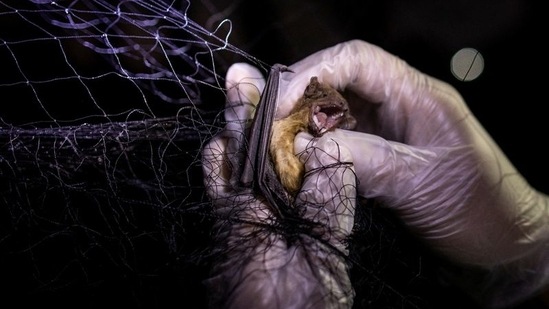
The anomalies require further investigation, scientists told Nature, suspecting that these mostly are the result of errors, but they raise a strong possibility that virtually diminishes the theory that the virus began spreading from a lab.
covid origin
, which has been the basis for the strongest theory yet that it originated in the mammal before jumping to humans, either directly or via intermediate hosts.
Efforts to understand the evolution of Sars-CoV-2 are underpinned by genome data submitted by thousands of labs around the world to what is known as the GISAID database. This database shows that all Sars-CoV-2 sequences trace back to either lineage A or lineage B, which were first sampled by labs in China.
Lineage B, according to the Nature article, is the one dominant globally, and was first seen in samples taken from people who visited the Huanan seafood market in Wuhan. Lineage A spread within China, including in people who went to other Wuhan markets, the report said.
In a study cited in the Nature article, the dots between the two lineages do not join - giving rise to the theory that Patient Zero in each of the lineages may have been different people, infected possibly by an animal.
{{/usCountry}}In a study cited in the Nature article, the dots between the two lineages do not join - giving rise to the theory that Patient Zero in each of the lineages may have been different people, infected possibly by an animal.
{{/usCountry}}The divergence was reported by molecular biologists who posted their findings on virological.org, saying that it was likely the outcome of errors in the samples submitted. But some scientists involved in the sampling say it is unlikely there were errors, the Nature article went on to state.
“It is a very significant study,” the article quoted virologist Robert Garry as saying. “If you can show that A and B are two separate lineages and there were two spillovers, it all but eliminates the idea that it (Sars-CoV-2) came from a lab,” said the scientist, who works at Tulane University in New Orleans.
At the heart of the mystery are 38 genomes collected before February 28, 2020. These were seen as transitional – that is, linking the two lineages. But, the researchers said they found other mutations which would not typically happen.
“The more we dug, the more it looked like, maybe we can’t trust any of the ‘transitional’ genomes,” the article quoted study co-author Michael Worobey, an evolutionary biologist at the University of Arizona in Tucson as saying. The authors suggest that a laboratory or computer error probably occurred in sequencing one of the two mutations in these ‘intermediate’ genomes – something that is not unusual.
This is why, another researchers quoted in the piece said, there must be more investigation. Xiaowei Jiang, an evolutionary biologist at Xi’an Jiaotong-Liverpool University in Suzhou, China, said that the team behind the study must verify the findings by getting “the original raw sequencing data for as many genomes as possible”.
How possible this will be remains to be seen. China has resisted granting any more access to labs or data than it already has, prompting a World Health Organization (WHO) team that visited the country last year to conclude that the origins cannot conclusively be traced.