Nvidia CEO Jensen Huang has spoken out against what he describes as a harmful narrative surrounding artificial intelligence, warning that repeated predictions of catastrophe are doing real damage to society and the technology industry.
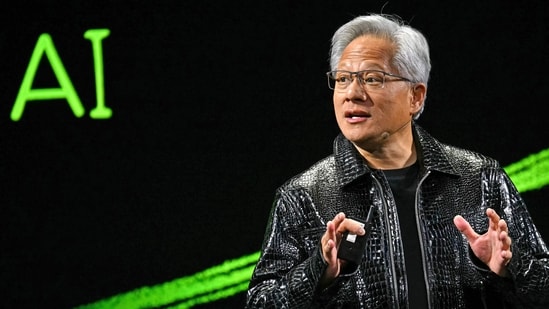
Speaking on the No Priors podcast, Huang said the conversation around AI in 2025 had become a “battle of narratives” between those who see the technology as a tool for progress and those who frame it as an existential threat. While acknowledging the need for caution, Huang argued that some high-profile voices have gone too far in portraying AI as dangerous or uncontrollable.
According to Huang, the constant emphasis on worst-case scenarios is not helping governments, businesses or the public understand how AI can be developed and deployed responsibly. He said fear-driven messaging discourages investment in the very systems that could make AI safer, more reliable and more useful.
Huang did not name specific individuals but said that “very well-respected people” have promoted end-of-the-world style narratives that resemble science fiction more than practical reality. He argued that this approach creates confusion and anxiety, rather than constructive debate about how AI should evolve.
He also raised concerns about what he described as regulatory capture. Huang suggested that companies approaching governments to push for heavier regulation may not always be acting in the best interests of society. In his view, industry leaders lobbying for strict controls while promoting fear-based narratives risk shaping policy in ways that benefit their own positions rather than public outcomes.
{{/usCountry}}He also raised concerns about what he described as regulatory capture. Huang suggested that companies approaching governments to push for heavier regulation may not always be acting in the best interests of society. In his view, industry leaders lobbying for strict controls while promoting fear-based narratives risk shaping policy in ways that benefit their own positions rather than public outcomes.
{{/usCountry}}Huang said that when most public messaging focuses on pessimism and extreme risks, it scares policymakers and investors away from supporting AI development that could improve safety, productivity and economic growth. He argued that balanced investment is essential to making AI systems more robust and accountable.
The comments come amid ongoing debate over AI’s impact on jobs and the economy. Huang previously disagreed with remarks by Anthropic CEO Dario Amodei, who warned that AI could replace up to half of white-collar entry-level jobs within five years. Amodei later said that Huang had misrepresented his views, highlighting the sensitivity and complexity of the discussion.
Huang’s criticism reflects a broader divide within the technology sector over how AI risks should be communicated. While some leaders emphasise long-term threats and the need for strict controls, others argue that overstating dangers may delay progress and reduce the focus on practical safeguards.
Other tech executives have also called for a shift in how AI is discussed. Microsoft CEO Satya Nadella recently wrote that society needs to move beyond labelling AI-generated content as “slop” and instead develop a more mature understanding of how humans interact with AI tools. Nadella argued that AI should be seen as a cognitive amplifier that changes how people work and relate to one another, rather than as a threat to creativity or intelligence.
Together, these comments suggest growing frustration among some industry leaders with the tone of public debate around AI. Huang’s position is not that risks should be ignored, but that fear-based narratives can be counterproductive if they dominate the conversation. He believes that responsible development, transparency and continued investment are more effective paths to managing AI’s impact than focusing on speculative disasters.
As governments around the world consider new AI regulations, the clash between caution and optimism is likely to intensify. Huang’s remarks add to the pressure on policymakers to separate realistic risks from exaggerated scenarios, and to shape rules that protect society without slowing innovation.