Bhai Dooj is usually associated with sisters putting a tilak on their brothers’ foreheads and praying for their well-being. But in many Kayastha households, the day also involves another ritual. Families observe Chitragupta Puja, or Kalam-Dawat Puja, by placing pens, inkpots and account books before the deity. The practice reflects the community’s traditional association with writing, learning and record-keeping.
Who is Lord Chitragupta and why is he worshipped?
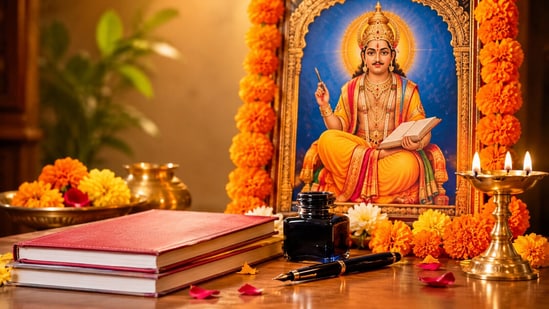
In Hindu tradition, Lord Chitragupta is believed to be the divine record-keeper who maintains an account of every person's actions, both good and bad. Associated with Lord Yama, the god of death, he is believed to keep track of human deeds and their consequences.
Chitragupta is particularly revered by the Kayastha community, which has traditionally been associated with writing, record-keeping and administrative work. He is regarded as the community’s ancestral deity. Incredible India’s account of the Adi Chitragupt Mandir in Patna describes him as the divine scribe who records human virtues and sins.
(Also Read: South Carolina man arrested for leaving sleeping 6-year-old daughter in line for Pokémon cards)
The Global Kayastha Conference identifies the occasion as Chitragupta Puja, also known as Kalam-Dawat Puja, and lists pens, inkpots, notebooks and account books among the items used in the worship.
Why are pens and inkpots worshipped on Bhai Dooj?
{{/usCountry}}The Global Kayastha Conference identifies the occasion as Chitragupta Puja, also known as Kalam-Dawat Puja, and lists pens, inkpots, notebooks and account books among the items used in the worship.
Why are pens and inkpots worshipped on Bhai Dooj?
{{/usCountry}}The name Kalam-Dawat comes from two words: kalam, meaning pen, and dawat, meaning inkpot. These objects are placed before the deity along with notebooks, ledgers and account books.
The practice is linked to Chitragupta’s role as the keeper of records. Worshipping writing instruments is seen as a way of seeking blessings for knowledge, wisdom, education and success in one's work.
A Times of India report on Chitragupta Puja in Lucknow records how Kayastha families worship pens and paper as symbols of education. Some business owners also place their account books before the deity and pray for prosperity.
The significance of Kalam-Dawat Puja
The ritual is not limited to seeking professional success. It also carries a message of accountability, as Chitragupta is believed to maintain a record of every individual's actions. Devotees seek his blessings for wisdom and the ability to distinguish between right and wrong.
The Adi Chitragupt Mandir in Patna, also known as Kayastha Dham, is an important place of worship for the community. Incredible India notes that devotees visit the temple on Yam Dwitiya to seek blessings from their revered deity.
(Also Read: Know Your Neighbourhood: How Bengaluru's Fraser Town got its name)
While Bhai Dooj is largely celebrated as a festival honouring the bond between siblings, Kayastha families also mark the day with Chitragupta Puja. The practice of worshipping pens, inkpots and account books reflects the community’s long-standing association with writing and record-keeping.