Ford sculptor Rex Allen has spent 40 years shaping car models out of clay. Now 68, he has seen the work change with the arrival of new technology, including virtual reality (VR) and 3D printing. Yet, clay remains an important part of the process.
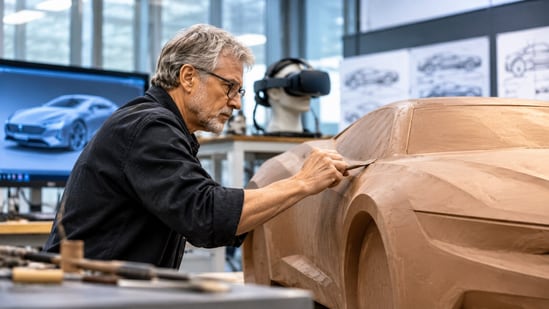
Based at Ford’s headquarters in Dearborn, Michigan, Allen continues to use traditional sculpting techniques alongside digital tools to develop vehicle designs.
How Rex Allen got into car sculpting
Allen did not begin his career as a car sculptor. He started out as a machinist but decided to move on after seeing robots take over some of the work. Having always enjoyed art and drawing, he was drawn to a job that allowed him to work with his hands.
As reported by Fortune, someone he knew introduced him to a business that made car models out of clay. Allen gave it a try and went on to work at several independent modelling studios. He also contributed to the original concept of the Dodge Viper before joining Ford, where he has now worked for 24 years.
Clay models allow designers to examine a car’s shape and proportions from different angles before finalising a design. As Ford explains, physical models continue to be used alongside digital tools in the design process.
{{/usCountry}}Clay models allow designers to examine a car’s shape and proportions from different angles before finalising a design. As Ford explains, physical models continue to be used alongside digital tools in the design process.
{{/usCountry}}(Also Read: AI startup founder shares name with former Nvidia CEO Jensen Huang, says controversy has boosted his business)
How VR and 3D printing have changed his work
Making changes to a clay model once involved considerable manual work. Allen now combines clay sculpting with digital scanning, virtual reality (VR) and milling machines, a method that allows him to make design changes more quickly.
The process begins with a rough clay model, which is scanned into a computer. Allen then uses a VR headset to refine the design before a milling machine carves the updated shape. The final touches are done by hand. He can now develop a design theme in five days, using a process that brings traditional sculpting and digital tools together.
The shift is part of a wider change in Ford's design studios. In a feature on its mixed-reality technology, the company explains how virtual tools have helped speed up parts of the vehicle design process, while physical models continue to be used.
Why clay modelling still matters
Despite these changes, Allen believes there is still a need for physical models. They allow designers to look at a vehicle's shape from different angles and discuss changes while examining the actual model.
Technology has reduced the number of people working in clay modelling over the years, Allen told Fortune, but the amount of work has not gone away. He is now looking forward to training younger sculptors in both traditional clay modelling and VR. As he put it, “I hop out of bed in the morning so I can come to work.”