An Indian YouTuber travelling across Thailand on a very tight budget was asked to leave a Buddhist temple where he tried to camp for one night. The incident has since drawn backlash from viewers online, with many criticising the YouTuber’s attempt to travel across Thailand with no money.
For some context
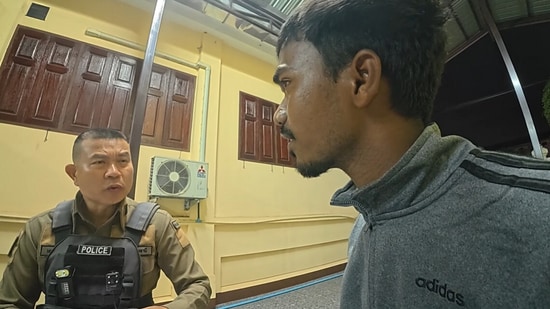
Banshi, who runs the YouTube channel Anything Banshi, tried to set up a tent inside a temple in Udon Thani as part of his attempt to travel the world with no money. His presence drew several police officers to the temple, who repeatedly asked him to leave.
The Indian YouTuber tried to convince the police officers and temple authorities to let him camp inside the temple premises for one night. He claimed that he had spoken to a monk who told him he was allowed to stay overnight at the temple.
The whole incident lasted over 20 minutes, during which Banshi repeatedly tried to convince the police officers to let him stay — all in vain. He declined an offer from Thai police to stay at a nearby budget hotel costing 400 baht per night.
YouTuber shares video
The incident came to public attention on Sunday, October 11, following reports by Thai news outlets Khaosod and Naewna. Banshi later posted a video titled “Thailand Good Police Say Get Out of The Temple Now || First Bad Experience In Thailand Temple”, recounting his encounter with the authorities.
{{/usCountry}}The incident came to public attention on Sunday, October 11, following reports by Thai news outlets Khaosod and Naewna. Banshi later posted a video titled “Thailand Good Police Say Get Out of The Temple Now || First Bad Experience In Thailand Temple”, recounting his encounter with the authorities.
{{/usCountry}}According to his account, Banshi had been travelling around Thailand without money and had relied on asking people for food and other assistance. Police officers and temple committee members reportedly asked him to pack his belongings and leave, explaining that the temple was not a place for outsiders to spend the night.
The officers and temple representatives also expressed concern for his safety and suggested that he stay at a nearby hotel charging around ฿400 per night. They offered to help him get there, but Banshi declined, saying he wanted to keep his expenses to a minimum.
The incident led to severe backlash against Banshi, mostly from Indians who accused the content creator of tarnishing the country’s image.
“Thai police handled the situation perfectly except for deporting this guy. Should have been deported before he brings more shame to the country,” wrote one person on YouTube.
“As an Indian, I am ashamed by behaviour of this young man. Please stop bringing shame to fellow Indians. If you don’t have money, please take help from fellow Indians who can donate for you to travel and show things. Thanks to the Thai police for being kind to him,” another said.
What do Thai laws say?
Thailand is one of the most popular destinations for Indian tourists, as much for its beautiful beaches as for its lively nightlife. It allows visa-free entry and stay up to 30 days for Indians.
However, tourists must abide by a set of rules, one of which is proof of accommodation and a minimum bank balance.
According to the Embassy of India in Bangkok, Indian travellers to Thailand must show “Proof of accommodation.”
“If intending to stay with relatives and friends, applicants must provide invitation letter along with a copy of their ID/passports,” the rules state.
In addition to that, travellers must have sufficient cash or bank balance to fund their stay. For visa exempt and visa on arrival tourists, the minimum cash requirement is 10,000 baht per person or 20,000 baht per family.
The Banshi controversy has brought attention to a genre of travel content built around exploring destinations with little or no money. “First, traveling with no money and asking for free stays is illegal. Tourists must have proof of funds (at least 20,000 THB). Second, temples are sacred places, not free campsites. Third, filming monetized YouTube videos on a tourist visa without a work permit is also against the law,” one person pointed out in the YouTube comments section.