Kazakhstan has released a second Amur tiger into the wild as part of its efforts to restore the big cats to their historical habitat. The country lost its native tiger population more than 70 years ago.
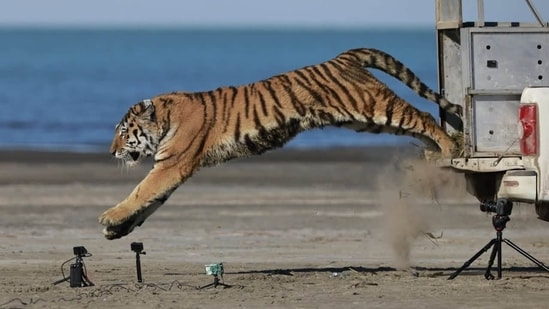
The male tiger, named Amur, was released into the Ile-Balkhash State Nature Reserve in south-eastern Kazakhstan on October 31, according to Asatana Times. He joins Umit, a female tiger released into the same reserve on July 31.
The releases are part of a long-term programme to reintroduce tigers to Central Asia. The region was once home to the Caspian, also known as the Turan, tiger.
Amur undergoes health and behavioural assessments
After arriving in Kazakhstan, Amur was kept in a specially equipped acclimatisation enclosure at the Ile-Balkhash reserve. Specialists supervised him throughout this period.
Before his release, the tiger underwent veterinary examinations and behavioural assessments. Experts evaluated his health, hunting skills, ability to find food independently and response to human presence.
The assessments confirmed that Amur was ready to live in the wild, according to Kazakhstan’s Ministry of Ecology and Natural Resources.
{{/usCountry}}The assessments confirmed that Amur was ready to live in the wild, according to Kazakhstan’s Ministry of Ecology and Natural Resources.
{{/usCountry}}He was also fitted with a satellite collar to help conservationists track his movements and monitor how he adapts to his new surroundings.
“Every tiger release carries significant responsibility. We must be certain that the animal is ready to live independently in the wild. That is why the decision is made only after a thorough assessment of its health, behaviour and hunting skills,” said Daniyar Turgambayev, chairman of the Forestry and Wildlife Committee, as reported by Kazakhstan’s Astana Times.
Turgambayev said specialists would continue monitoring the tigers' movements and their adaptation to the reserve.
First tigress Umit adapting to life in the reserve
Umit, the first tiger released into the reserve on July 31, is reportedly adapting successfully to her surroundings.
The tigress has been exploring the territory and hunting independently. Conservationists are tracking her movements using a satellite collar.
Kazakhstan's Minister of Ecology and Natural Resources Alibek Kuantyrov said the latest release marked another important step in bringing tigers back to the country.
(Also read: Habitat loss key challenge in conservation: Yadav on Gloal Tiger Day)
“Today, we are taking another important step towards bringing tigers back to Kazakhstan. On July 31 this year, the tigress Umit was released into the wild, and today we have released the second tiger, a male named Amur,” Kuantyrov said.
He thanked the Amur Tiger Centre and its specialists, the World Wide Fund for Nature (WWF) and other partners for supporting the programme and helping restore natural ecosystems.
Two tiger cubs that arrived in Kazakhstan alongside the adult animals remain under specialist supervision. Authorities will decide on their release once they reach the appropriate age and complete the required assessments.
Kazakhstan works to restore tiger habitat
The Balkhash region and the Ili River valley were historically home to the Caspian, or Turanian, tiger. The subspecies disappeared from Kazakhstan in the mid-20th century. Habitat loss, declining populations of wild prey and poaching contributed to its disappearance.
Kazakhstan established the Ile-Balkhash State Nature Reserve in 2018 to support efforts to restore the region's natural habitats and wildlife.
(Also read: How India saved its tigers—and lions and rhinos and elephants)
The programme focuses on rebuilding the prey base and developing conservation infrastructure. Increasing populations of wild ungulates is a key part of the effort, as they provide food for tigers.
Bukhara deer and kulans have been relocated to the reserve to help restore the ecosystem. Other measures are also being taken to protect species that form part of the tigers' food supply.
In September 2026, 30 kulans were relocated from Altyn-Emel State National Nature Park to the Ile-Balkhash reserve. The restoration of habitats and prey populations has helped prepare the region for the return of tigers.
International cooperation supports reintroduction programme
Kazakhstan's tiger reintroduction programme is being implemented in cooperation with Russia, international conservation organisations and researchers.
Government agencies, specialists and conservation partners are working together to restore the natural ecosystem and support the tigers' adaptation to the reserve.
The programme aims to bring tigers back to a region where they once lived naturally and establish conditions that can support their long-term survival.
“This historic event is the result of many years of joint work. In this regard, I would like to express my special gratitude to the Russian side, especially the Amur Tiger Center and its specialists, for their support and direct participation in the implementation of the program.
"I would also like to express my gratitude to the World Wildlife Fund and all our partners, who have been contributing to the restoration of Kazakhstan's natural ecosystems and creating the necessary conditions for the return of tigers for many years,” Kazakhstan's Minister of Ecology and Natural Resources Alibek Kuantyrov said.