Paper straws were widely adopted as an alternative to plastic in the name of environmental protection. However, a government-commissioned study in South Korea suggests that the switch may not be as environmentally beneficial as many believed.
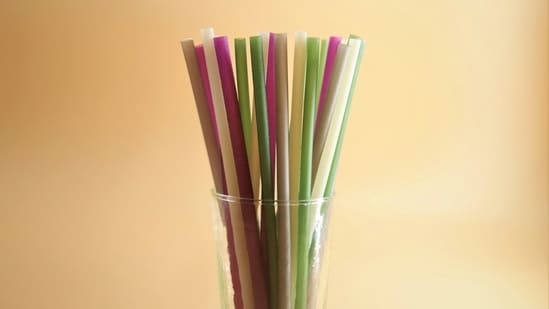
The assessment, commissioned by South Korea’s Ministry of Climate, Energy and Environment, compared four types of straws: conventional plastic, paper, biodegradable plastic and bio-based polyethylene (bio-PE), which can be made from renewable sources such as sugarcane.
Researchers assessed the environmental impact of each type across 16 categories, tracking the straws from raw material production and manufacturing to their eventual disposal. Conventional plastic straws recorded the lowest impact in 10 categories, including climate change, human toxicity and particulate matter.
The study was released on October 21 by Representative Kim Wi-sang of the People Power Party.
Paper straws score higher on carcinogenic impact
The study found that paper straws had a human carcinogenic impact 6.33 times higher than that of conventional plastic straws over their life cycle. They also recorded 2.04 times the environmental acidification impact of their plastic counterparts.
(Also read: Switching to paper straws to save the environment? They are more toxic for you)
{{/usCountry}}(Also read: Switching to paper straws to save the environment? They are more toxic for you)
{{/usCountry}}Bio-PE straws performed worse on both measures, with a human carcinogenic impact 16.18 times higher than conventional plastic straws and an acidification impact 5.9 times higher.
However, the carcinogenic impact figures do not directly indicate the risk of cancer to people using these straws. They are modelled estimates of the potential impact of pollution associated with the production, use and disposal of the materials.
The assessment also factored in how discarded straws are treated as waste. Based on national waste statistics, researchers assumed that 73.6% of used straws were incinerated, while the remaining 26.4% ended up in landfills.
Why recycling paper straws is difficult
Paper straws are often seen as a more sustainable option because paper is recyclable. However, their small size can make them difficult to recover at recycling facilities, where sorting equipment may fail to separate them from other waste.
Their water-resistant coatings and adhesives can also complicate processing and make them harder to break down. These factors raise questions about how effectively paper straws can be recycled and the environmental costs associated with their disposal.
The findings challenge the assumption that replacing plastic with paper automatically reduces environmental harm. They also highlight the need to consider a product's entire life cycle, rather than focusing on the material alone.
South Korea's paper straw policy faces criticism
The findings have renewed scrutiny of South Korea's efforts to reduce plastic waste by promoting alternatives such as paper straws.
South Korea introduced restrictions on plastic straws at cafes in 2022, but stopped enforcing the rule a year later following complaints.
(Also read: Trump declares 'back to plastic' as he bans paper straws in federal agencies)
Kim Wi-sang, who disclosed the study, criticised the government's approach to environmental policy, arguing that the shift towards alternative materials had not delivered the expected benefits.
“The government must acknowledge the failure of its greenwashing policy, which fixated on ineffective substitute materials,” he said.
Public opinion also appears to reflect dissatisfaction with paper straws. A government survey of 1,001 South Korean citizens found that 87.5% disliked them.