A $50,000 bequest in 1885 could have funded a monumental marble gateway at the entrance to San Francisco’s Golden Gate Park. Instead, a change of plans transformed the money into something far more accessible: a dedicated space where children could play, families could gather, and generations could enjoy the outdoors.
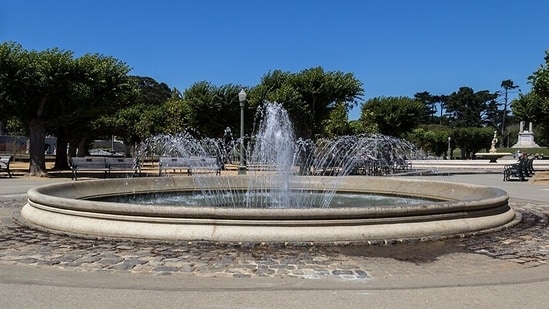
According to theGardens of Golden Gate Park, Golden Gate Park has a long history of providing public spaces for recreation and community activities. Opened on December 22, 1888, the Sharon Quarters for Children became one of the earliest public playgrounds in the United States and is now known as the Koret Children’s Quarter. The playground emerged after plans for a grand memorial arch were abandoned in favor of a facility that would directly benefit children and families.
How a proposed memorial arch gave way to a playground
The story begins with William Sharon, a businessman and former Nevada senator who was a prominent figure in West America. When Sharon died in 1885, his estate left $50,000 to Golden Gate Park without specifying how it should be used. Proposals included a lake, a music hall, and a large marble archway at the park entrance on Stanyan Street. Architect John Gash drew up the project, and it was approved. Finally, the construction began in 1886.
William Hammond Hall, an engineer and former park superintendent who returned to an official role in 1886, argued that the money could serve a more immediate public need. Golden Gate Park’s early plans had contemplated a dedicated children’s area, but it was never established. Hall persuaded park commissioners to reconsider the project. The partially constructed archway was abandoned, and the work already completed was demolished. Estate trustees decided to fund a children's playground as opposed to having a statue erected to honor Sharon.
What children found when the playground opened
{{/usCountry}}William Hammond Hall, an engineer and former park superintendent who returned to an official role in 1886, argued that the money could serve a more immediate public need. Golden Gate Park’s early plans had contemplated a dedicated children’s area, but it was never established. Hall persuaded park commissioners to reconsider the project. The partially constructed archway was abandoned, and the work already completed was demolished. Estate trustees decided to fund a children's playground as opposed to having a statue erected to honor Sharon.
What children found when the playground opened
{{/usCountry}}The opening of the Sharon Quarters for Children and the adjacent building took place on December 22, 1888, and the opening celebration drew about 2,000 people despite a forecast of rain. Contemporary accounts said the day was festive and that a rainbow appeared at noon. The playground provided recreational activities that were rare for children's play areas at the time. They had a chance to play on swings and slides, to play croquet and lawn tennis, and to have a ride in a goat cart or donkey carriage.
While the playground offered outdoor recreation, the Sharon Building next door gave children and adults an indoor place to gather if bad weather kept them inside. Research published in The Sharon playground illustrates that transition, demonstrating how park planning increasingly accommodated children's needs alongside traditional adult recreation.
A historic playground that continues to serve families
The playground has changed a lot since the 19th century. However, it is easy to tell what it was initially intended for. It is now called Koret Children’s Quarter and still functions as a recreational area for those who visit Golden Gate Park. One of the park’s best-known attractions is a merry-go-round swing, which was built in 1940 and moved from the Golden Gate International Exposition at Treasure Island. The swing was donated by businessman Herbert Fleishhacker. It had been out of service since 1977 due to safety concerns but was refurbished and reopened in 1984.
The nearby Sharon Building also remains in use. It now functions as the Sharon Art Studio, which offers art classes for children and adults, extending the site’s community role beyond outdoor play. The playground’s history has also attracted the attention of landscape historians. An account published in Eden: Journal of the California Garden & Landscape History Society discusses Hall’s influence and the decision to abandon the memorial gateway in favor of a children’s recreation area.
Thus, the narrative illustrates changes that have occurred in the understanding of civic matters and the idea of public recreation. Instead of using the money received from the will to design a magnificent entryway into the city of San Francisco, the authorities decided to spend the $50,000 on something that would benefit the citizens.