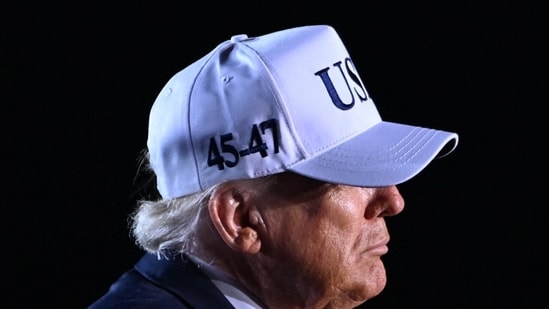
A political reckoning shatters Trump’s grip on Washington
Republican midterm losses leave the president weakened during his final two years in the White House.
Published on: Nov 4, 2026, 15:00:48 IST
WSJ
Advertisement
Rarely in American politics has a president traded away so much political support so quickly.
PREMIUM
Tuesday’s election results show that even many Republicans oppose President Trump’s policies.
The losses that Republicans suffered on Tuesday marked one of the most decisive repudiations of a president in modern history. President Trump had re-entered the White House with advantages he lacked in his first term: A victory in the popular vote, a cadre of aides eager to expand his authority and cultural currency that had NFL players doing the “Trump dance” in the end zone.
{{^htLoading}} {{/htLoading}}
{{^usCountry}}{{/usCountry}}
Deep Dive
Why did Trump-backed Senate candidates lose in the midterms?
Trump’s interventions in Republican primaries elevated candidates who faced questions about their experience or political baggage, while dividing Republican support. Voters also reacted against his policies and the economic costs they associated with them.
How did Trump’s tariffs and the Iran war affect the midterm results?
Voters blamed Trump’s policies, including tariffs and the war, for worsening economic conditions and raising costs. The war also ran counter to his promise to avoid foreign entanglements.
What could Democratic control of Congress mean for Trump?
A Democratic-led Congress could investigate the administration and Trump’s business dealings, challenge his policies, and seek to reverse parts of his agenda. Democrats have also said they would press for changes to health insurance cuts and deportation policy.
Powered ByAsk HT
Voters he believed would stick with him instead walked away, handing Democrats control of the House and Senate and producing losses that either party could have barely imagined a year ago. In South Carolina, voters rejected his chosen Senate candidate, the inexperienced Darline Graham, and will send a Democrat to the Senate for the first time in 28 years. In Texas, Trump’s elevation of Ken Paxton, the impeached and indicted attorney general, over a safer choice led voters to elect a Democrat, James Talarico, for the first time since 1988.
In Kentucky, Democrats won a House district in which voters backed Trump by 15 points in 2024. Democrats held on to at least three House seats in Florida that Republicans had redrawn to their advantage, despite voter pools that backed Trump by about 10 points in the last presidential election.
{{^htLoading}} {{/htLoading}}
“It’s total carnage,” said Tom Rath, a former Republican National Committee member in New Hampshire and veteran of multiple presidential campaigns.
“What occurred today was a tectonic shift in American politics. Seismic is not big enough to describe what has occurred,” said Jason Villalba, a former Republican House member in Texas, where Democrats won races for the Senate and governor. “It’s an abject repudiation of MAGA, of Trump and of Trumpism across the board.”
One open question is whether the Democratic gains are transitory or can last beyond Trump’s term in office. With more than 60% of voters saying Trump’s policies had damaged the economy, voters indicated that they were rejecting Republicans more than embracing Democrats. A majority of people who cast ballots, some 53%, held an unfavorable view of the Democratic Party, 6 points more than those with a positive view, a large poll of midterm voters found.
{{^htLoading}} {{/htLoading}}
A voter checks in at polling station in Sunbury, Ohio.
MAGA damaged
A president accustomed to creating his own political weather system, blowing through the traditional guardrails on executive powers, will now face a Democratic-led House and Senate that promise to try to reverse much of his agenda. Democrats will be under pressure to respond to their own angry and restive voters by investigating Trump’s financial gains in office, restoring the GOP’s cuts to health insurance programs and reining in deportations.
{{^htLoading}} {{/htLoading}}
One of Trump’s greatest assets—a MAGA movement that supported him with a rare intensity—is now damaged, if not fractured. Trump’s loyal political base allowed him to control the Republican-led Congress as he claimed unusual authority to slash federal agencies and take other actions without the approval of lawmakers.
But Tuesday’s election results showed that even many Republicans opposed his policies. More than one-quarter of voters who backed a GOP House candidate said Trump’s tariffs had damaged the economy, and about one-quarter said his overall policies had made the economy worse, according to a large poll of 75,000 midterm voters, called The Voter Poll by SSRS. In Senate races in Ohio, Texas, Kansas and other battleground states, GOP candidates struggled to consolidate Republican voters while Democratic candidates drew close to universal support within their party.
{{^htLoading}} {{/htLoading}}
People react to concession speeches during a midterm election night watch party with Ohio Republican candidates.
“This is what happens when you govern by impulse,” said Steve Israel, a former Democratic congressman from New York, who led the party’s House re-election campaign for four years. “This is what happens when you’re not stepping back and analyzing what you need to do, but just throwing your elbows out and plunging forward.”
{{^htLoading}} {{/htLoading}}
Greg Strimple, a Republican pollster based in Idaho, called it “a complete repudiation of Donald Trump and the Republican Party.”
The election outcome showed the risk Trump had taken with a governing strategy that leaned heavily into exciting his MAGA base with an immigration crackdown, a battle against diversity measures in universities and businesses and an often uncouth “own the libs” social media presence.
That strategy alienated much of the rest of the country, leaving Trump politically exposed when his hold on Republican voters began to slip this year.
“Soft Republicans” and Republican-leaning independents abandoned the party, said Strimple, a process that he thought started with the ICE shootings of two protesters, both U.S. citizens, early this year in Minneapolis. “That said Trump had gone too far with some of his agenda items,” he said.
{{^htLoading}} {{/htLoading}}
Republican U.S. Senate candidate Ashley Hinson during her election night watch party in Cedar Rapids, Iowa.TIM GRUBER FOR WSJ
A smaller GOP
Trump redefined the Republican Party, and in the process made it smaller by chasing away anyone he saw as disloyal, Rath said. “While it’s conservative, it needs the Republican middle to go along with it. When you publicly say for six or eight years, ‘No, we don’t want you, go someplace else,’ sooner or later they get the message—and the party is paying the price for it.”
{{^htLoading}} {{/htLoading}}
The consequence in Senate elections was a fracturing of Republican support and steep losses among independent voters. While Talarico consolidated 99% of Democrats who voted in Texas, Paxton was drawing only 88% of Republicans, The Voter Poll found. Independents, meanwhile, voted for the Democrat by nearly 30 points.
Voters in other Senate battlegrounds divided along the same lines. In Ohio, where former senator Sherrod Brown, a Democrat, won his Senate race, 97% of Democrats were backing his candidacy, while his opponent Sen. John Husted was drawing 90% of Republicans in his bid for his first full term, the poll found. Independents backed the Democrat by 25 points.
The outcome not only changes the power structure in Congress but opens the prospect that Democrats in the 2028 presidential election can win states such as Ohio, Iowa and North Carolina, which had backed Democrat Barack Obama in 2008 but later swung heavily behind Trump.
Even Florida—Trump’s adopted state, and the home base of the MAGA movement—may return as a presidential battleground after Trump won it three times. On Tuesday, Rep. Byron Donalds was elected as the state’s first Black governor. But his margin of victory was just over 1 percentage point in near-final tallies, a substantial deterioration of support compared with the 19-point victory that Gov. Ron DeSantis won in 2022.
Ohio, Iowa and Texas elected Democrats as governors on Tuesday, a potential advantage for the party in the coming presidential race. Republicans had held the governor’s office in all three states. Even a Republican as dominant as Gov. Greg Abbott of Texas was ejected in what preliminary results suggested would be a lopsided loss.
“I’m just overwhelmed,” said Villalba, as he considered the results in Texas. “I had no expectation the wave would be this epic.”
Rarely in American politics has a president traded away so much political support so quickly.
PREMIUM
Tuesday’s election results show that even many Republicans oppose President Trump’s policies.
The losses that Republicans suffered on Tuesday marked one of the most decisive repudiations of a president in modern history. President Trump had re-entered the White House with advantages he lacked in his first term: A victory in the popular vote, a cadre of aides eager to expand his authority and cultural currency that had NFL players doing the “Trump dance” in the end zone.
{{^htLoading}} {{/htLoading}}
{{^usCountry}}{{/usCountry}}
Only two years later, his political standing has collapsed, all due to a dramatic miscalculation of his power to shape events. A war of choice with Iran and tariffs imposed on U.S. trading partners betrayed his promise to avoid foreign entanglements and tame inflation. His extraordinary interventions in his party’s primaries left Republicans with a set of unusually weak candidates.
Deep Dive
Why did Trump-backed Senate candidates lose in the midterms?
Trump’s interventions in Republican primaries elevated candidates who faced questions about their experience or political baggage, while dividing Republican support. Voters also reacted against his policies and the economic costs they associated with them.
How did Trump’s tariffs and the Iran war affect the midterm results?
Voters blamed Trump’s policies, including tariffs and the war, for worsening economic conditions and raising costs. The war also ran counter to his promise to avoid foreign entanglements.
What could Democratic control of Congress mean for Trump?
A Democratic-led Congress could investigate the administration and Trump’s business dealings, challenge his policies, and seek to reverse parts of his agenda. Democrats have also said they would press for changes to health insurance cuts and deportation policy.
Powered ByAsk HT
Voters he believed would stick with him instead walked away, handing Democrats control of the House and Senate and producing losses that either party could have barely imagined a year ago. In South Carolina, voters rejected his chosen Senate candidate, the inexperienced Darline Graham, and will send a Democrat to the Senate for the first time in 28 years. In Texas, Trump’s elevation of Ken Paxton, the impeached and indicted attorney general, over a safer choice led voters to elect a Democrat, James Talarico, for the first time since 1988.
{{^htLoading}} {{/htLoading}}
In Kentucky, Democrats won a House district in which voters backed Trump by 15 points in 2024. Democrats held on to at least three House seats in Florida that Republicans had redrawn to their advantage, despite voter pools that backed Trump by about 10 points in the last presidential election.
{{^htLoading}} {{/htLoading}}
“It’s total carnage,” said Tom Rath, a former Republican National Committee member in New Hampshire and veteran of multiple presidential campaigns.
“What occurred today was a tectonic shift in American politics. Seismic is not big enough to describe what has occurred,” said Jason Villalba, a former Republican House member in Texas, where Democrats won races for the Senate and governor. “It’s an abject repudiation of MAGA, of Trump and of Trumpism across the board.”
One open question is whether the Democratic gains are transitory or can last beyond Trump’s term in office. With more than 60% of voters saying Trump’s policies had damaged the economy, voters indicated that they were rejecting Republicans more than embracing Democrats. A majority of people who cast ballots, some 53%, held an unfavorable view of the Democratic Party, 6 points more than those with a positive view, a large poll of midterm voters found.
{{^htLoading}} {{/htLoading}}
A voter checks in at polling station in Sunbury, Ohio.
MAGA damaged
A president accustomed to creating his own political weather system, blowing through the traditional guardrails on executive powers, will now face a Democratic-led House and Senate that promise to try to reverse much of his agenda. Democrats will be under pressure to respond to their own angry and restive voters by investigating Trump’s financial gains in office, restoring the GOP’s cuts to health insurance programs and reining in deportations.
{{^htLoading}} {{/htLoading}}
One of Trump’s greatest assets—a MAGA movement that supported him with a rare intensity—is now damaged, if not fractured. Trump’s loyal political base allowed him to control the Republican-led Congress as he claimed unusual authority to slash federal agencies and take other actions without the approval of lawmakers.
But Tuesday’s election results showed that even many Republicans opposed his policies. More than one-quarter of voters who backed a GOP House candidate said Trump’s tariffs had damaged the economy, and about one-quarter said his overall policies had made the economy worse, according to a large poll of 75,000 midterm voters, called The Voter Poll by SSRS. In Senate races in Ohio, Texas, Kansas and other battleground states, GOP candidates struggled to consolidate Republican voters while Democratic candidates drew close to universal support within their party.
{{^htLoading}} {{/htLoading}}
People react to concession speeches during a midterm election night watch party with Ohio Republican candidates.
“This is what happens when you govern by impulse,” said Steve Israel, a former Democratic congressman from New York, who led the party’s House re-election campaign for four years. “This is what happens when you’re not stepping back and analyzing what you need to do, but just throwing your elbows out and plunging forward.”
{{^htLoading}} {{/htLoading}}
Greg Strimple, a Republican pollster based in Idaho, called it “a complete repudiation of Donald Trump and the Republican Party.”
The election outcome showed the risk Trump had taken with a governing strategy that leaned heavily into exciting his MAGA base with an immigration crackdown, a battle against diversity measures in universities and businesses and an often uncouth “own the libs” social media presence.
That strategy alienated much of the rest of the country, leaving Trump politically exposed when his hold on Republican voters began to slip this year.
“Soft Republicans” and Republican-leaning independents abandoned the party, said Strimple, a process that he thought started with the ICE shootings of two protesters, both U.S. citizens, early this year in Minneapolis. “That said Trump had gone too far with some of his agenda items,” he said.
{{^htLoading}} {{/htLoading}}
Republican U.S. Senate candidate Ashley Hinson during her election night watch party in Cedar Rapids, Iowa.TIM GRUBER FOR WSJ
A smaller GOP
Trump redefined the Republican Party, and in the process made it smaller by chasing away anyone he saw as disloyal, Rath said. “While it’s conservative, it needs the Republican middle to go along with it. When you publicly say for six or eight years, ‘No, we don’t want you, go someplace else,’ sooner or later they get the message—and the party is paying the price for it.”
The consequence in Senate elections was a fracturing of Republican support and steep losses among independent voters. While Talarico consolidated 99% of Democrats who voted in Texas, Paxton was drawing only 88% of Republicans, The Voter Poll found. Independents, meanwhile, voted for the Democrat by nearly 30 points.
Voters in other Senate battlegrounds divided along the same lines. In Ohio, where former senator Sherrod Brown, a Democrat, won his Senate race, 97% of Democrats were backing his candidacy, while his opponent Sen. John Husted was drawing 90% of Republicans in his bid for his first full term, the poll found. Independents backed the Democrat by 25 points.
The outcome not only changes the power structure in Congress but opens the prospect that Democrats in the 2028 presidential election can win states such as Ohio, Iowa and North Carolina, which had backed Democrat Barack Obama in 2008 but later swung heavily behind Trump.
Even Florida—Trump’s adopted state, and the home base of the MAGA movement—may return as a presidential battleground after Trump won it three times. On Tuesday, Rep. Byron Donalds was elected as the state’s first Black governor. But his margin of victory was just over 1 percentage point in near-final tallies, a substantial deterioration of support compared with the 19-point victory that Gov. Ron DeSantis won in 2022.
Ohio, Iowa and Texas elected Democrats as governors on Tuesday, a potential advantage for the party in the coming presidential race. Republicans had held the governor’s office in all three states. Even a Republican as dominant as Gov. Greg Abbott of Texas was ejected in what preliminary results suggested would be a lopsided loss.
“I’m just overwhelmed,” said Villalba, as he considered the results in Texas. “I had no expectation the wave would be this epic.”
Get the latest World News, breaking headlines and global updates from the US, UK, Pakistan, Bangladesh, Russia and other countries along with latest US midterm elections update. Follow major international events on Hindustan Times.
Get the latest World News, breaking headlines and global updates from the US, UK, Pakistan, Bangladesh, Russia and other countries along with latest US midterm elections update. Follow major international events on Hindustan Times.
Home/A political reckoning shatters Trump’s grip on Washington
{{^htLoading}}
Advertisement
{{/htLoading}}
SHARE THIS ARTICLE ON
{{#usCountry}}{{/usCountry}}
Notifications
Get breaking alerts directly from the newsroom
Notifications are on!You'll be notified when news breaks