For more than five years, the music that once echoed through restaurants, cafes and shops across Kabul has largely disappeared. Since the Taliban returned to power in 2021, public venues have been limited to religious or patriotic songs approved by the authorities.
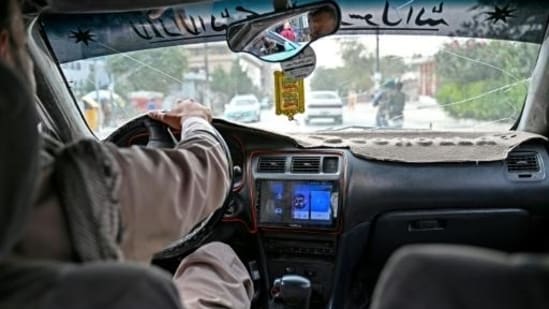
But some Afghan taxi drivers are quietly pushing back against the restrictions, playing music in their cars despite the ban. They risk being stopped by morality police, but for drivers like Roeen, listening to music is a "form of protest", AFP reported.
"At every checkpoint we pass, we lower the volume of the music or even turn it off completely... so I don't get into trouble with them," Roeen, who gave only his first name for security reasons, told AFP.
Also Read: Taliban claims Pakistani airstrikes kill 4 civilians amid rising tensions
The ban on music in public places is enforced by the Taliban's Ministry for the Propagation of Virtue and Prevention of Vice (PVPV), whose morality police patrol Kabul wearing long white coats.
Under PVPV regulations, "since music is forbidden and causes annoyance to passengers, drivers must refrain from playing or listening to it".
{{/usCountry}}Under PVPV regulations, "since music is forbidden and causes annoyance to passengers, drivers must refrain from playing or listening to it".
{{/usCountry}}Roeen, 28, said PVPV officials wield "a lot of authority", making drivers wary of playing music openly. "We're definitely too afraid of them to be able to listen to music at a higher volume," he told AFP from his sky-blue-and-white taxi.
As he navigates Kabul's congested and noisy streets, Roeen said the restrictions have only deepened his appreciation for music. "I have to make sure that even if I can't listen in the early morning, by eight o'clock my music is on," he said.
Another taxi driver, who requested anonymity for security reasons, told AFP he only listens to music when he is alone in his car and surrounded by the noise of other vehicles.
"Before, whenever a person wanted, they could listen without any worry or stress. But now... personally I listen -- but with some stress," he said in his car that had a radio player with a USB slot.
The 32-year-old has been stopped twice at checkpoints for having a USB stick and a memory card. "I didn't lie -- I said it has music, and they broke it," he said.
"Afghan culture should not vanish, and music is one of the cultures of our people. Personally, I don't want this culture to disappear."
Shamsullah Ahmad, a master's student, told AFP that he prefers to listen to music everyday and tries to check if the taxi he is boarding has a music player.
"I prefer to listen to music every day; whenever I go to any destination, I try to check if the taxi has a music player," said the 29-year-old.
"I prefer music in the car, because wearing headphones would be noticed, but in the car, even with lower volume is better than nothing," Ahmad said.
Afghanistan has a strong musical tradition, influenced by Iranian and Indian classical music. It also has a thriving pop music scene, adding electronic instruments and dance beats to more traditional rhythms. Both have flourished in the past 20 years.
In 2024, two sisters launched their own form of movement against oppression through music. Clad in blue burqa, they started a music movement called the Last Torch. Protected by anonymity, they took it upon themselves to perform songs which resonated with many women across their country.
“Our fight started from right under the flag of the Taliban and against the Taliban. Before the Taliban came to power, we had never written a single poem. This is what the Taliban did to us,” the sisters said in an interview with BBC.
(With inputs from AFP)