
 E-Paper



Can Lina Khan Make Peace With New York’s Business Community?
Viewed by corporate America as hostile to their interests, she will work with another Mamdani appointee seen by business leaders as more of an ally.


 Prefer HTon Google


New York City Mayor Zohran Mamdani has kept the city’s business leaders waiting to see his plan to grow the local economy.
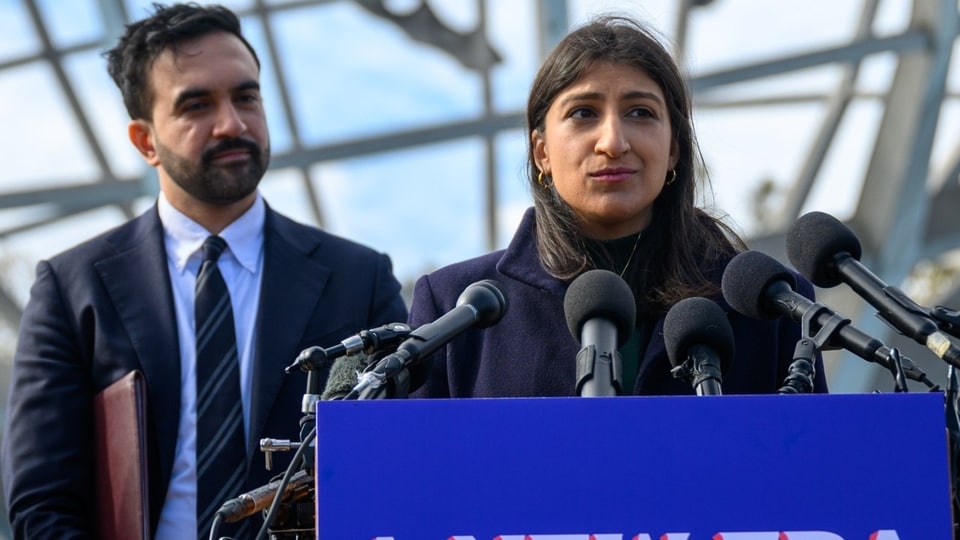
This week, the city’s business elite received an unexpected surprise when Mamdani named a new chair of the city’s powerful Economic Development Corporation: Lina Khan, the 37-year-old who made her name crusading against the world’s largest corporations as head of the Federal Trade Commission during the Biden administration.
The appointment of Khan, who is seen by Wall Street and Big Tech as hostile to business, sent a jolt through some of the more rarefied corners of the business community. But a separate appointment blunted the shock, and for some, is sending mixed signals. Mamdani also appointed Tony Shorris, a long-trusted hand for the city and business community, as the EDC’s president and CEO.
Khan has “an adversarial approach to large enterprises,” said Steven Fulop, the CEO of the business organization Partnership for New York City. “Pairing these two leaders sends a confusing and conflicted signal about which philosophy will define the agency’s work going forward, and it remains unclear to us what direction NYCEDC will ultimately take.”
The pair will work together to set the agenda for the nation’s most economically important city. The EDC is in charge of doling out city-owned land, tax incentives and financing subsidies for large-scale development projects in the city. The dual appointments opened a new question: who’s really running New York City’s economic policy?
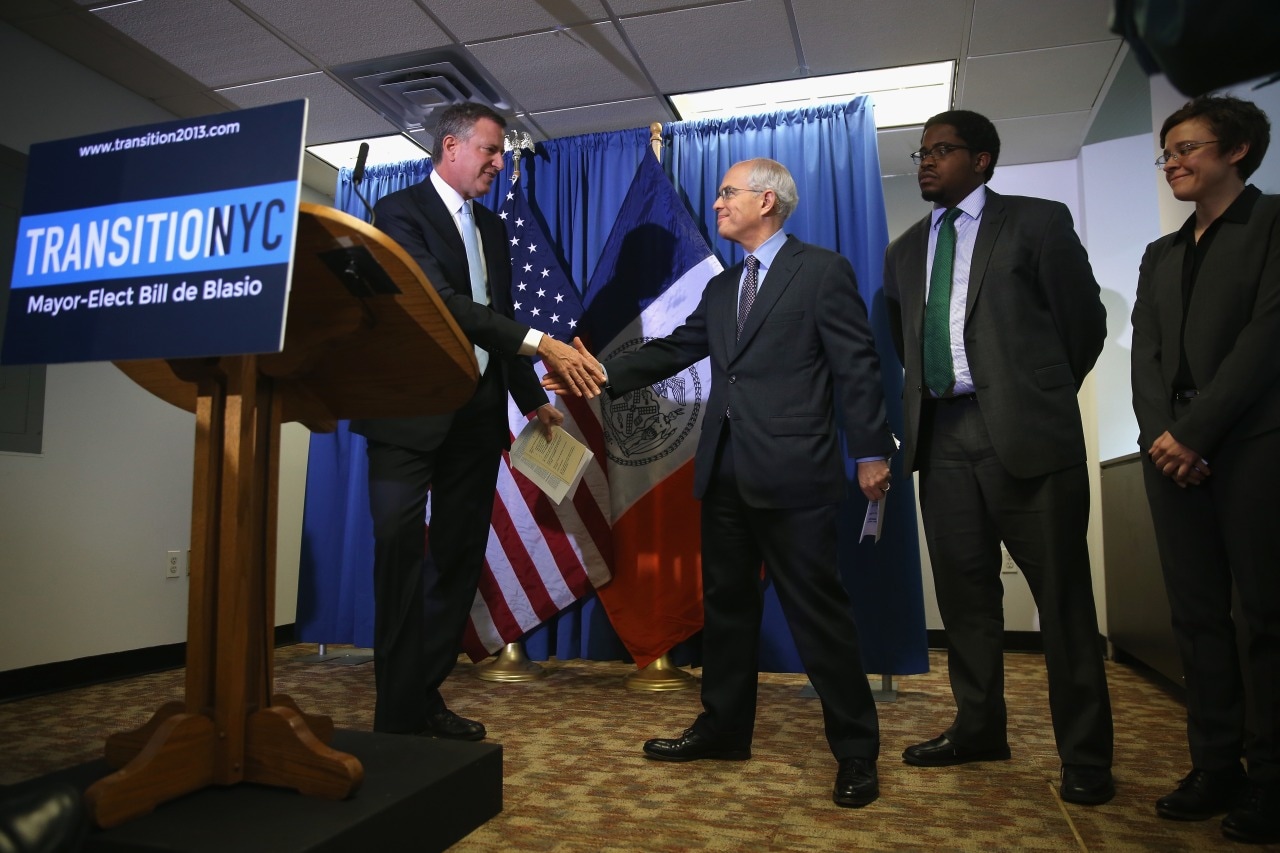
Mamdani has at times shown he is willing to work with businesses. The mayor recently proposed reforms to some regulations on small businesses, like no longer requiring restaurants to obtain a special permit to serve ice cream.
Julie Su, Mamdani’s deputy mayor for economic justice, referenced Shorris’s experience going after tax cheats as an example of the kind of work that fits into the mayor’s agenda for economic justice. She said building affordable housing, creating high-paying jobs and opening city-run grocery stores are all among City Hall’s priorities. “This is our vision for EDC,” Su said.
Developers and business leaders say they assume Shorris will actively steer the city’s policy, since CEOs of the agency typically set the agenda. Board chairs historically have rarely overridden the executives. Yet those who know Khan say she is unlikely to serve as a figurehead.
Khan is “very curious, always asking good questions, loves to get into the details of how businesses work and the specific hurdles facing new businesses,” said Zephyr Teachout, a professor at Fordham who has focused on antitrust, and who co-wrote a 2014 law review paper with Khan.
Khan, as a member of Mamdani’s transition team, had interviewed candidates for the role of EDC president and referenced the idea of reining in corporate power.
As the chair of New York’s EDC, Khan will be in an unfamiliar role — on the inside. Those acquainted with how the EDC works say she will have a less powerful role than Shorris but will still be working with a few dozen of the city’s business, nonprofit and labor leaders to bring in large development projects and find ways to stimulate new industries.
The position may prove to be an awkward one. Microsoft, Amazon, Meta and the parent company of Coach and Kate Spade are all companies Khan has singled out for anticompetitive behavior, either as a professor or as the FTC Chair.
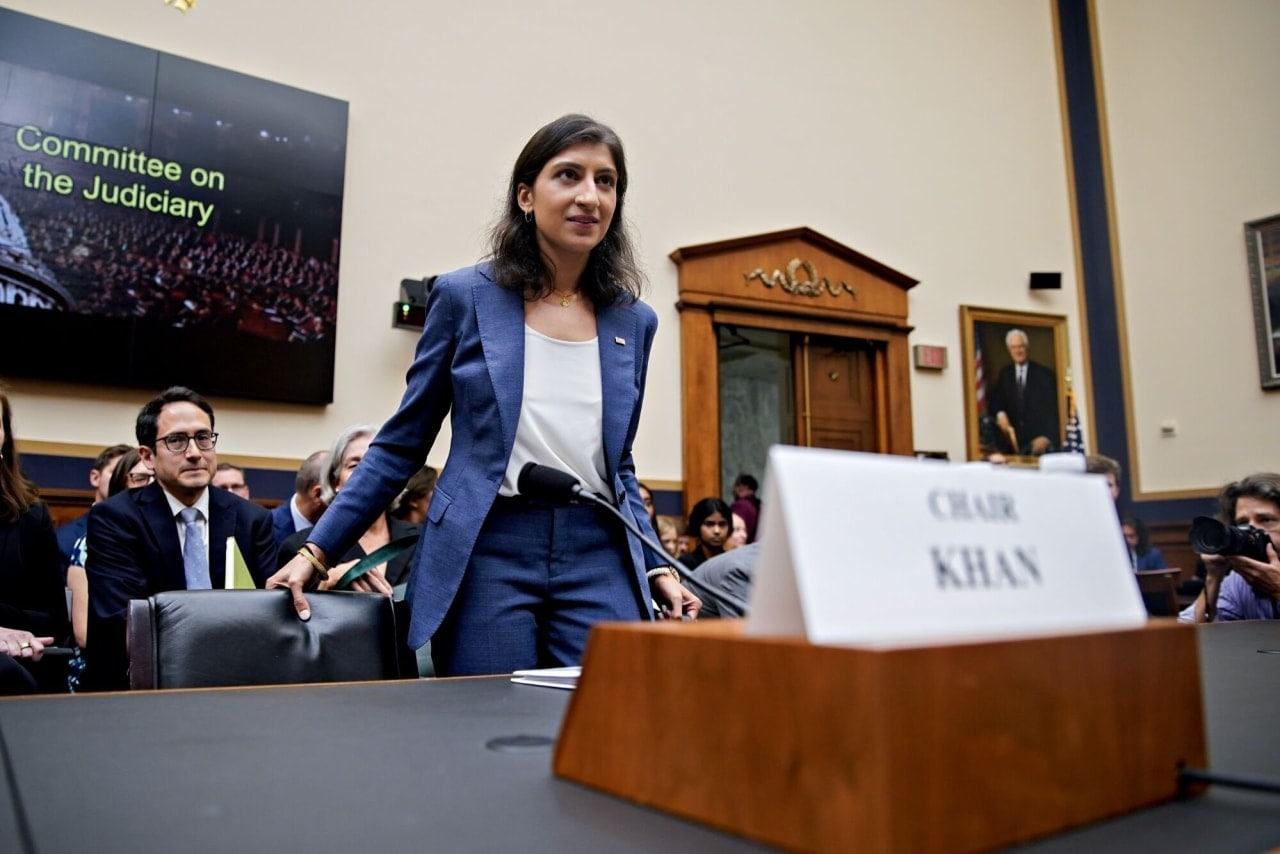
Shorris most recently worked as a partner at McKinsey & Co., and his municipal experience stretches back to the 1980s. Despite lingering uncertainty over Khan’s approach, the real-estate industry is so far taking solace in the Shorris appointment.
“Lots of folks took a sigh of relief,” said Carlo Scissura, CEO of the New York Building Congress, a developer trade group. “The fact that Tony knows the industry, knows the projects, it’s a good thing.”
Real-estate leaders often measure a mayoral administration’s success in part by its ability to use the EDC to execute big projects. Seven months into Mamdani’s tenure, some of the landmark projects in the EDC’s pipeline have been moving at the pace of a slow crawl.
“There are big-ticket projects that have been waiting for leadership to reinvigorate them,” said Tucker Reed, a Brooklyn real-estate developer.
Real-estate leaders are watching a few key projects as bellwethers for whether the odd couple of Khan and Shorris will work. One of them is the Brooklyn Marine Terminal, a $3.5 billion project to transform a Brooklyn waterfront into a new maritime district with an all-electric shipping port and thousands of new apartments. The project has been moving sluggishly for the past two years due to local pushback citing a lack of infrastructure to support the new housing. The city has also struggled to secure necessary financing with the state.
Developers are also watching for any progress on a new science research campus in Manhattan’s Kips Bay neighborhood and the revamped boulevard stretching along Fifth Avenue from Bryant Park to Central Park.
“In the next few months, let’s see if money is released, let’s see if projects are approved, let’s see how fast an executive director is hired for the Brooklyn Marine Terminal,” said Scissura.
It isn’t clear what Khan’s responsibilities will be at the EDC, or whether she will take an active role in the major development projects on the horizon. Su, the deputy mayor, introduced her during a press conference as “someone watching over” the EDC.
Traditionally, the EDC board chair is a lighter-touch oversight role and less involved in the day-to-day responsibilities of the organization. Bylaws empower the chair to set the board’s agenda and pick a vice chair, though the board—which is largely appointed by the mayor—can expand those powers.
The board approves the EDC’s annual budget but when it comes to approving actual projects, it largely functions as a final rubber stamp.
At the EDC offices, “there is a desk for the president. There is no desk, to my knowledge, for the board chair,” said James Patchett, who served as the EDC president under former Mayor Bill de Blasio. “It needs to be clear who is in charge.”
Write to Kevin T. Dugan at kevin.dugan@wsj.com and Rebecca Picciotto at Rebecca.Picciotto@wsj.com


