The Arctic has lost almost 95% of its older ice cover since 1984, according to NASA.
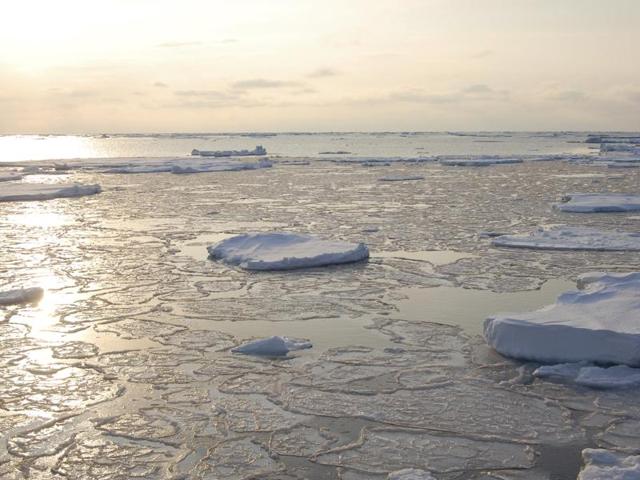
The ice in the Arctic grows and shrinks through the year, and is made up of seasonal and perennial ice. The perennial sea ice that has built up over the years tends to be thicker and less vulnerable to melting away in summer than newer seasonal ice.
According scientists at NASA, the area covered by Arctic sea ice at least four years old has decreased from 1,860,000 square kilometres in September 1984 to 110,000 square kilometres in September 2016.
Read | ‘Arctic may become ice-free for first time in 100,000 years’
Arctic sea ice reaches its minimum each September. September Arctic sea ice is now declining at a rate of 13.3% per decade, relative to the 1981 to 2010 average.
In the visualisation below from NASA of data from buoys, weather stations, satellites and computer models, the age of the ice is indicated by shades ranging from blue-gray for the youngest ice to white for the oldest.
The rising temperatures in the Arctic are affecting permafrost and snow cover as well as the amount of sea ice, which this year was the second-lowest on record.
{{/usCountry}}The rising temperatures in the Arctic are affecting permafrost and snow cover as well as the amount of sea ice, which this year was the second-lowest on record.
{{/usCountry}}Ketil Isaksen of the Norwegian Meterological Institute said the average temperature in Longyearbyen, the main settlement in Svalbard, Norway, is expected to be around 0 degree Celsius with a little over a month left of the year.
“This is a little bit shocking,” Isaksen said. “If you had asked me five or 10 years ago, I could not have imagined such numbers in 2016.”
This graph shows the average monthly Arctic sea ice extent in September since 1979, derived from satellite observations.
The normal yearly average in Svalbard, an island group midway between the North Pole and continental Norway, is minus 6.7 C and the warmest year until now was 2006, when the average temperature in Svalbard was minus 1.8 C, Isaksen said.
“Svalbard is a very good spot to show what’s happening in the Arctic at the moment,” he said, noting that each of the past 73 months has been warmer than average.
Also Read | Another year, another record: 2016 set to be the hottest year, says UN