President Donald Trump on Thursday announced that the 25 percent tariffs on a majority of Mexican goods will be postponed for an additional month after discussions with Mexico’s president.
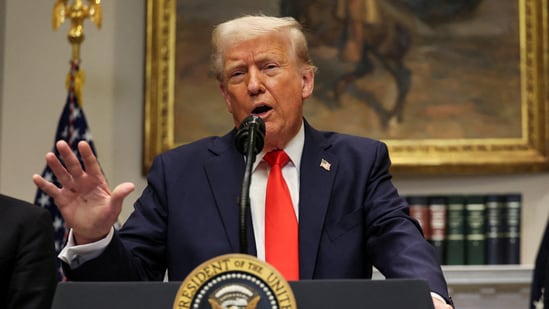
This move follows earlier comments by commerce secretary Howard Lutnick, who said that the delay could apply to both Canada and Mexico.It marks the second time Trump has postponed the tariffs, which were first introduced in February, with the delay applying to goods that comply with the trade agreement negotiated with both countries.“We are working hard, together, on the Border, both in terms of stopping Illegal Aliens from entering the United States and, likewise, stopping Fentanyl,” Trump said on Truth Social.
Trump's fluctuating tariff threats have caused volatility in financial markets, diminished consumer confidence, and created uncertainty for many businesses, potentially delaying hiring and investment decisions.
Lutnick stressed that reciprocal tariffs—where the US imposes taxes on countries that levy tariffs on American exports—will still take effect on April 2.
US markets rebounded from their earlier losses shortly after Lutnick's comments.
Meanwhile, Canadian Prime Minister Justin Trudeau said that Canada may be locked in a trade conflict with the US for the foreseeable future.
Trudeau described the month-long delay as a “promising sign,” though he added that it does not change the fact that tariffs remain, and Canada’s response will continue as well.
China’s commerce minister Wang Wentao on Thursday said that the country will not yield to pressure and can withstand higher US tariffs, though he warned that there are “no winners in a trade war.”
Speaking on the sidelines of the annual session of China’s national congress, Wang warned against coercion and threats, while officials outlined plans to strengthen the economy and financial markets.Since taking office in January, the Trump administration has twice raised tariffs on Chinese imports, prompting China to retaliate with duties and restrictions on American goods and companies.
{{/usCountry}}Speaking on the sidelines of the annual session of China’s national congress, Wang warned against coercion and threats, while officials outlined plans to strengthen the economy and financial markets.Since taking office in January, the Trump administration has twice raised tariffs on Chinese imports, prompting China to retaliate with duties and restrictions on American goods and companies.
{{/usCountry}}With AP inputs