Former Afghan president Hamid Karzai is expected to lead a high-level delegation, including High Council for National Reconciliation chief Abdullah Abdullah, to Pakistan to give a push to efforts to forge a political settlement in Afghanistan amid the fast-paced drawdown of US forces.
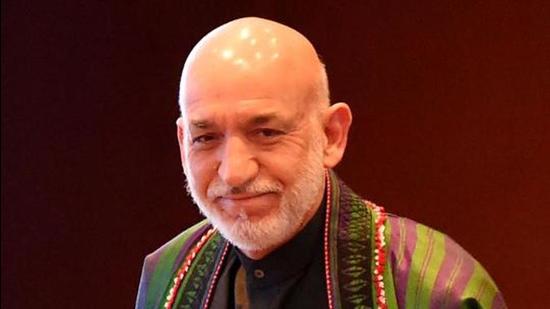
Karzai’s visit is being seen as complementary to US special representative for Afghanistan reconciliation Zalmay Khalilzad’s efforts to nudge the Afghan government and the Taliban towards a political settlement. Khalilzad began a visit on June 4 that has taken him to Afghanistan and Qatar, where he met the Taliban negotiating team.
The team to be led by Karzai to Pakistan will represent the Grand Council that was convened recently by Afghan President Ashraf Ghani to fashion a strategy for further talks with the Taliban, people familiar with developments said on condition of anonymity. The inclusion of Abdullah in the team is an effort to project a united front, they said.
Also Read | Talking to the Taliban
The team is expected to travel to Islamabad by June 20 and its members will engage with Pakistan’s political and military leadership to underline the importance of taking forward talks with the Taliban on finding a political settlement, the people said.
{{/usCountry}}The team is expected to travel to Islamabad by June 20 and its members will engage with Pakistan’s political and military leadership to underline the importance of taking forward talks with the Taliban on finding a political settlement, the people said.
{{/usCountry}}“The team will convey the will of the Afghan people to the Pakistani leadership and discuss ways to bring the Taliban to the negotiating table,” one of the people cited above said.
The Afghan side is expecting the Pakistani side to lend a helping hand, even though there is a heated dialogue in Kabul on the way forward with Islamabad, especially because of the lack of trust and suspicions about the Pakistani military’s close ties with elements within the Afghan Taliban, the people said.
Referring to the Pakistani military’s relationship with the Haqqani Network, which has been blamed for a string of attacks in Afghanistan, a second person said: “It is better to convince the master so that they can convince the foot soldiers. The patron has been behaving badly for too long.”
The Taliban have refused to open a dialogue with Ghani’s government and are holding separate talks with Khalilzad. It is believed UK Chief of Defence Staff Gen Nick Carter has been spearheading British efforts to push the Pakistani side to play a positive role in helping with the Afghan peace process.
Key Western powers have pointed out to Pakistan that a positive role in the Afghan peace process would also be helpful at a time when Islamabad is dealing with various vulnerabilities and challenges, such as a worsening economy and pressure on the counter-terrorism front from bodies such as the Financial Action Task Force FATF).
The people said there was a growing realisation in India, Afghanistan and key Western powers that the Taliban will have a part in the next government formed in Kabul and, therefore, the current efforts should ensure that the group did not emerge as the dominant power in such a dispensation. “Even Pakistan realises that a government in which the Taliban have free rein is not in its interests,” the first person cited above said.
Sameer Patil, fellow for international security studies at Gateway House, said: “Everyone expects the Taliban to be part of the next Afghan government in some manner. This would indicate that efforts to contain the Taliban by all the players, except for Pakistan, haven’t yielded results, but it is also true that efforts to prop up other political elements have not been successful.”
He added, “The only option now is to create an amalgamation of elements from both sides that will work for some sort of political stability in Afghanistan. Within this, the aim will be to ensure the Taliban doesn’t have the upper hand.”