Britain will not make changes to its laws following a ruling by the European Court of Justice that employers banning political and philosophical signs such as headscarves did not constitute direct discrimination, Prime Minister Theresa May said on Wednesday.
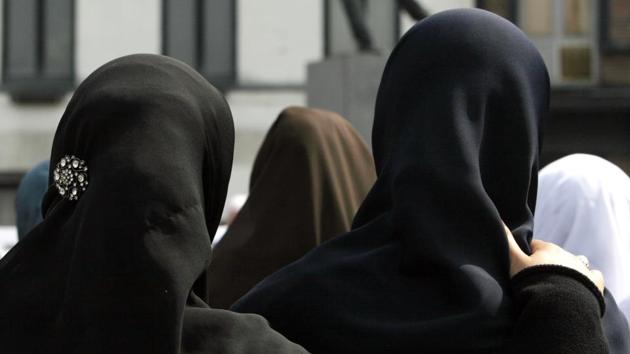
Tuesday’s ruling evoked a mixed reaction in Britain. Amid concerns in minority communities, May said in the House of Commons: “We have a strong tradition in this country of freedom of expression.
“Of course this case came up particularly in relation to the wearing of the veil - there will be times when it's right to ask for a veil to be removed, but it is not for government to tell women what they can and cannot wear and we want to continue that strong tradition of freedom of expression.”
Reacting to the ruling, the Muslim Council of Britain said, “It is a sad day for justice and equality. At a time when populism and bigotry are at an all-time high, we fear that this ruling will serve as a green light to those wishing to normalise discrimination against faith communities.”
It added, “Many will be worried that this action will prevent Muslim women who choose to wear the scarf from securing jobs. And it sends a message that we cannot accept a plural society that recognises and celebrates religious differences. This is a backward step which people of all faiths and none should speak out against.”
{{/usCountry}}It added, “Many will be worried that this action will prevent Muslim women who choose to wear the scarf from securing jobs. And it sends a message that we cannot accept a plural society that recognises and celebrates religious differences. This is a backward step which people of all faiths and none should speak out against.”
{{/usCountry}}However, Stephen Evans of the National Secular Society said: "Religious and political neutrality can be a perfectly reasonable aim. This ruling demonstrates that this approach is consistent with equality and human rights law and that businesses and organisations who wish to present themselves in a neutral way are able to do so, provided their actions are fair and reasonable.
“The test of reasonableness and proportionality will be for national courts to decide. But where a ban on employees wearing religious or political symbols is founded on a general company rule of religious neutrality, and where that rule is applied equally to all, it can't realistically be argued that this constitutes 'direct discrimination' and this ruling simply reflects that."