
As artificial intelligence becomes ubiquitous, we face a fundamental question: What is going on inside these new “minds”? The path to answering it may come from an unlikely source: man’s best friend.
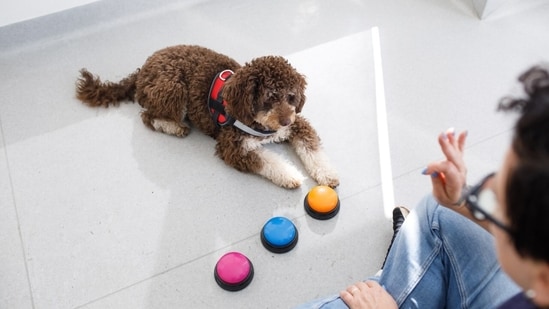
Dogs are the result of thousands of years of behavioral engineering. Wolves’ domestication didn’t simply make them friendlier. We selected animals that could thrive in our social world. Dogs became extraordinarily sensitive to human behavior, following our gazes and gestures and learning our patterns. We also shaped the
As artificial intelligence becomes ubiquitous, we face a fundamental question: What is going on inside these new “minds”? The path to answering it may come from an unlikely source: man’s best friend.
Dogs are the result of thousands of years of behavioral engineering. Wolves’ domestication didn’t simply make them friendlier. We selected animals that could thrive in our social world. Dogs became extraordinarily sensitive to human behavior, following our gazes and gestures and learning our patterns. We also shaped the other side of that relationship, selecting dogs that communicated in ways humans could readily understand. This creates the irresistible illusion that dogs think like us.
They don’t. A dog isn’t a furry, four-legged human that drools. Its sensory world and cognitive architecture are profoundly different from ours. That we engineered dogs to communicate successfully with us doesn’t mean the machinery inside their heads works like ours. We are now experiencing remarkably similar confusion about large language models.
These models are only one kind of AI, but they are the form with which millions of people now have humanlike interactions. We train these models on our language and shape them to answer questions, follow instructions and respond in socially appropriate ways. Like dogs, we have engineered large language models to read us and behave in ways we can easily read. Anthropomorphism is inevitable, and the illusion that they think like us is all the stronger because they speak our language.
An AI chatbot is a task master, and one of its core tasks is interacting effectively with humans. Sounding empathetic or apologetic helps it accomplish that task. It’s evidence of how successfully we have engineered large language models, but isn’t evidence that the system experiences those emotions as we do.
So how do we understand an intelligence radically different from our own? The same way we understand this phenomenon in dogs: ethology. Ethologists, who study animal behavior, have confronted this problem for decades. They begin with behavior, guided by the core principle that similar behaviors can arise from very different minds.
Nobel laureate Niko Tinbergen argued that understanding behavior requires asking four core questions: What mechanisms produce it? How does it develop? What purpose does it serve? How does it compare across species? Those questions translate well to AI. What computations produce an agent’s behavior? How have changes in its training shaped that behavior over time? What is the behavior designed to accomplish? And how does it compare with that of other forms of intelligence?
As AI becomes increasingly autonomous, understanding and containing it will require more than scientists who know how to build it. We also need scientists trained to understand behavior without assuming that the “mind” behind it works like our own.
We should start studying AI as if they were an entirely new species. For that, we need ethologists, not just ethicists.
Mr. Miller is a professor of psychology at the University of California, San Diego.
One Subscription.
Get 360° coverage—from daily headlines
to 100 year archives.
Archives
HT App & Website