In 1960, only 12 Seychelles magpie-robins remained on Frégate Island, putting the native bird at serious risk of extinction. By September 2015, the population had grown to approximately 280 birds across five islands in the Seychelles, according to a 2016 research article, The History, Status and Trends of the Endangered Seychelles Magpie-Robin.
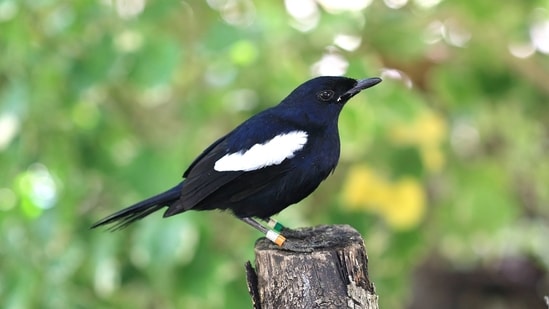
The recovery involved more than removing predators. Researchers documented a combination of measures, including invasive predator control, habitat restoration, supplementary feeding, nest boxes, and the relocation of birds to other islands. Although these interventions helped establish additional populations, the results varied between islands, highlighting the need for continued monitoring and management.
How the bird came close to extinction
The Seychelles magpie-robin once inhabited several islands in the granitic Seychelles. Agricultural development and the introduction of invasive species, including rats and cats, contributed to its decline. By 1960, Frégate was the only island where the species survived.
Numbers remained precarious for decades. The 2016 study's authors recorded approximately 38 to 41 birds on Frégate in 1977 and 1978, but the population fell to between 17 and 21 by 1988-90. A formal recovery program began in 1990, funded by the Royal Society for the Protection of Birds and initially coordinated by the International Council for Bird Preservation, now known as BirdLife International. Conservation work focused on controlling introduced predators, improving habitat and providing more opportunities for successful breeding.
Nest boxes offered another way to support reproduction. The researchers reported fledging success in 44% of open-fronted nest boxes, compared with 28% in coconut palm crowns and 38% in natural nests. These results suggested that nest boxes could provide useful breeding sites, although they were only one component of a broader conservation strategy.
{{/usCountry}}Nest boxes offered another way to support reproduction. The researchers reported fledging success in 44% of open-fronted nest boxes, compared with 28% in coconut palm crowns and 38% in natural nests. These results suggested that nest boxes could provide useful breeding sites, although they were only one component of a broader conservation strategy.
{{/usCountry}}From one to five islands
Relocating birds to other islands reduced the species' dependence on Frégate and helped establish additional populations. According to the 2016 study, translocations took place in stages: Cousin in 1994, Cousine in 1995, Aride in 2002 and Denis in 2008. With these four additional populations, the Seychelles magpie-robin occupied five islands.
The outcomes differed across the new populations. By 2015, numbers on Cousin and Cousine were relatively stable, while the population on Denis continued to grow. Aride, however, experienced a sharp decline between 2014 and 2015, more than a decade after its founding population was introduced. The researchers could not establish a definitive explanation, but considered several possible factors, including disease, low recruitment of young birds, social conflict, and genetic issues. The decline illustrated why translocation alone could not guarantee a population's long-term stability.
More recent information comes from a 2025 census conducted on Frégate Island. The conservation update, Seychelles Magpie Robin: 2025 Census Insights, reported more than 200 birds and 54 occupied territories on the island. Approximately half of the recorded birds had leg rings. These figures apply to Frégate alone and should not be treated as an updated total for all five islands.
The census ran from April 30 to July 11, 2025. Surveyors used maps, GPS devices and playback calls to locate birds, photograph their leg rings and record their movements. Each territory was visited at least four times to improve the reliability of the count. The report also explained that weather, time of day and movement between territories could influence detection, meaning that survey conditions can affect the number of birds recorded.
The Seychelles magpie-robin's recovery reflects decades of coordinated conservation rather than a single intervention. Its increase from 12 birds on Frégate in 1960 to approximately 280 across five islands by 2015 marked a major milestone. The 2025 census provides a more recent snapshot of the population on Frégate, while the different outcomes on the other islands underscore the importance of tracking each population separately to understand the species' wider status.