Introducing wildlife for hunting can have consequences that extend far beyond the hunt. In Hawaii, invasive plants and animals are putting pressure on native forests, and nonnative birds may be affecting those fragile ecosystems as well. By eating fruit and moving between forest habitats, introduced birds can influence which plants spread, complicating conservation efforts across the islands.
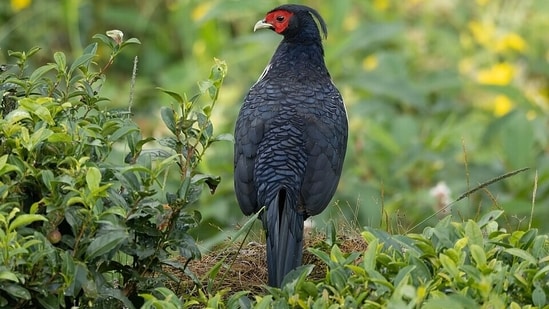
According to the U.S. Fish and Wildlife Service, introduced game birds can influence Hawaii’s forest ecosystems by feeding on native and nonnative plants and dispersing seeds. In 1962, 67 Kalij pheasants were released at Puʻu Waʻawaʻa Ranch on Hawaiʻi’s Big Island to provide hunting opportunities. Native to parts of South Asia, the birds became established as a breeding population and spread through forested landscapes, feeding on a variety of plants, including banana poka, an invasive vine that threatens native Hawaiian vegetation. Although their feeding habits have raised concerns about the spread of invasive plant seeds, the birds also consume native fruits, making their ecological role complex and highlighting the challenges of managing introduced species in Hawaii’s forests.
A hunting bird finds a home in Hawaii
The Kalij pheasant (Lophura leucomelanos) is originally from the Himalayas and other regions of South Asia. These pheasants are characterized by their black feathers, long tails, and habit of ground feeding. In Hawaii, they were introduced deliberately by humans for farm games in Texas and Michigan rather than arriving naturally. This population of Kalij pheasants later spread beyond the ranch as they moved into nearby forests.
{{/usCountry}}The Kalij pheasant (Lophura leucomelanos) is originally from the Himalayas and other regions of South Asia. These pheasants are characterized by their black feathers, long tails, and habit of ground feeding. In Hawaii, they were introduced deliberately by humans for farm games in Texas and Michigan rather than arriving naturally. This population of Kalij pheasants later spread beyond the ranch as they moved into nearby forests.
{{/usCountry}}Deep Dive
How did Kalij pheasants spread invasive banana poka in Hawaii?
Why can species introduced for hunting or other practical purposes harm native habitats?
Should introduced species like Kalij pheasants be removed from Hawaii?
Research published in The Wilson Bulletin documented their spread, estimating a dispersal rate of approximately eight kilometers per year. The birds were found across a wide elevational range and had established themselves in several forest types. Researchers attributed this to the birds’ ability to use foods such as fruits, seeds, and small insects. Hawaii had a variety of forests that could provide a good feeding and nesting ground for these birds. As the bird population increased, it began affecting not only hunting areas but also the wider natural environment.
How feeding habits can spread invasive plants
One of the major issues caused by their feeding habitat is the growth of the banana poka (Passiflora tarminiana), which is a climbing vine that grows over trees and shrubs and competes for sunlight. Banana poka fruits are fleshy, seed-bearing fruits that provide food for fruit-eating animals. The Kalij pheasants eat banana poka and other nonnative plants, which has become a mechanism through which the seeds are dispersed as they move through the forest and feed. The dispersed seeds contribute to invasive vegetation that is harder to control.
Introduced game birds such as kalij pheasants are capable of transporting invasive plants such as banana poka and fire tree. In addition, these introduced game birds eat native vegetation that also serves as food for the endangered Hawaiian goose, the nene. Nevertheless, eating the seeds does not mean that these birds will be able to help with dispersing those plants because not all seeds are capable of surviving digestion. Seed viability after digestion is another factor that affects whether the seeds can germinate.
A complicated role in forest conservation
The pheasants’ effects on Hawaii’s ecosystems are not uniformly harmful. Although they can help move seeds of invasive plants, they also consume fruits from native species. Where native seed-dispersing birds have declined or disappeared, introduced birds can sometimes perform similar ecological functions. Research published in The Proceedings of the National Academy of Sciences examined seed dispersal by introduced birds in Hawaiian rainforests. The researchers found that introduced birds transported seeds of native plants into forests dominated by exotic vegetation, potentially helping some native understory species reestablish themselves. They also documented the movement of certain exotic plants into native forests, highlighting the mixed consequences of introduced birds.
While that study was not focused on identifying Kalij pheasants as the cause of that effect, the evidence provided by it indicates why conservation managers should be more careful when evaluating the impact of introduced wildlife. In Hawaii, preserving native forests and studying how introduced wildlife affects plant communities remain important. Monitoring pheasant numbers, seed viability, and invasive plant spread could help managers decide whether intervention is needed. Kalij pheasants were introduced to Hawaii for a simple purpose: to provide hunters with another game bird. Nearly 70 years later, the example shows how an introduced species can alter the environment and create management challenges.