In September 2017, Hurricane Irma tore through homes on the Caribbean island of Barbuda. According to TIME's on-the-ground report by Tara John, the island's entire population of around 1,800 people was evacuated to its sister island, Antigua. Barbuda was empty save for a dozen army officers. Pets and farm animals were left behind without their owners.
A rushed exit and a growing hunger problem
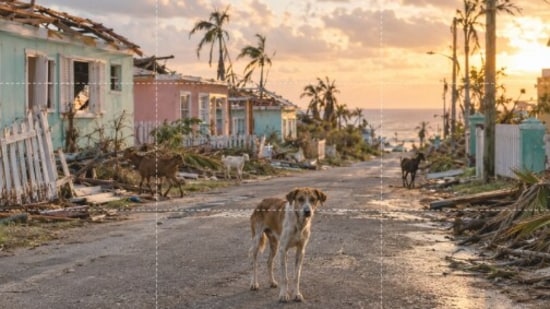
Irma was a Category 5 storm. Its record-breaking winds flattened much of the island. The evacuation came days after Irma struck and just hours before Hurricane Jose was predicted to make landfall on the island on September 9. Cats, dogs, and herds of livestock were left without owners. Among them were hundreds of dogs, and soon hunger became a serious problem. Fences and pens were torn down, and Karen Corbin, president of the Antigua and Barbuda Humane Society, told TIME the dogs would eventually turn on the horses, cows, goats, sheep, pigs, and poultry running free. For Barbuda’s farmers, livelihoods were at stake.
Why nobody could rush home
The owners were not free to run back home. Officials said the island faced a potential health crisis because the region is vulnerable to mosquito-borne diseases such as Zika. TIME reported that cleanup could take three weeks to two months, and officials were reluctant to let residents return before it was complete. Corbin visited at the government’s invitation and noticed half-eaten goats and a dead pig. The dogs had already started attacking other pets, TIME reported. She recommended removing the dogs from the island to protect the other animals.
Deep Dive
Why were pets and farm animals left behind during Barbuda’s Hurricane Irma evacuation?
How did prolonged separation affect dogs rescued after the Fukushima disaster?
How can pet owners prepare for evacuation during a natural disaster?
Volunteers brought food and antibiotics
Zifforah “Ziffy” Tyrell, a 29-year-old Antiguan-British goat farmer, led a grassroots campaign. Animal lovers donated more than $3,000 to her GoFundMe campaign in a matter of days. The money bought feed and antibiotics and helped her lobby the government to let her onto the island. Accompanied by an army officer, volunteers went from house to house. They gave an injection to a donkey with a festering wound, tended to a racehorse grazing in a front yard, picked up a puppy found beside its dead mother, and fed and watered gaunt dogs, including German shepherds, terriers, and huskies.
{{/usCountry}}Zifforah “Ziffy” Tyrell, a 29-year-old Antiguan-British goat farmer, led a grassroots campaign. Animal lovers donated more than $3,000 to her GoFundMe campaign in a matter of days. The money bought feed and antibiotics and helped her lobby the government to let her onto the island. Accompanied by an army officer, volunteers went from house to house. They gave an injection to a donkey with a festering wound, tended to a racehorse grazing in a front yard, picked up a puppy found beside its dead mother, and fed and watered gaunt dogs, including German shepherds, terriers, and huskies.
{{/usCountry}}At one home, a Barbudan stranded on Antigua had asked the team to find her dogs, but local farmer Shiraz Hopkins, 38, pointed to two bloated animal corpses near the front door. They were her pups. Tyrell also said police shot dogs they claimed were aggressive.
A pattern that goes well beyond Barbuda
Leaving behind pets in a disaster is not unique to Barbuda. A study in the Australian Journal of Emergency Management surveyed 352 Australian pet owners who had experienced emergencies and natural disasters. About a third (34 percent) left their homes. Among those who left, 81 percent kept some of their pets with them, while 15 percent left some behind, either enclosed in the home, released to escape, or impossible to find or catch. The study was done in Australia, not Barbuda, so its numbers do not describe what happened here. Still, the authors noted a clear need for detailed household evacuation plans and destinations for evacuees that are pet-friendly.
Who owns the rescued animals?
Corbin appreciated the effort from Tyrell’s team to feed the animals, but added that moving the animals should involve careful planning. She also asked who would own some of the animals if they were moved to Antigua. Prime Minister Gaston Browne made Corbin’s team the lead coordinator of Barbuda’s animal rescue effort, with World Animal Protection set to work alongside it. That put the effort under one coordinator, but the fate of many animals remained uncertain.
Barbuda’s story shows how a rushed evacuation can threaten animals and their humans long after the storm has passed. There was little time to leave, and the animals left behind were not only pets but for many farmers, their livelihoods. As the Australian study suggests, planning ahead for pet, including pet-friendly places to go, could help prevent similar problems in the next disaster.