What if the best thing a farmer could do for his land was to do nothing? An English farmer gave up farming his 377 acres in Bedfordshire in the late 1980s and let it go wild. That land is now known as Strawberry Hill. The Wildlife Trust for Bedfordshire, Cambridgeshire and Northamptonshire says that by the end of 2024 it was home to half of all the nightingales in Bedfordshire. It was also home to vast numbers of other threatened species, including turtle doves, warblers and bats.
When the farming stopped, nature took over
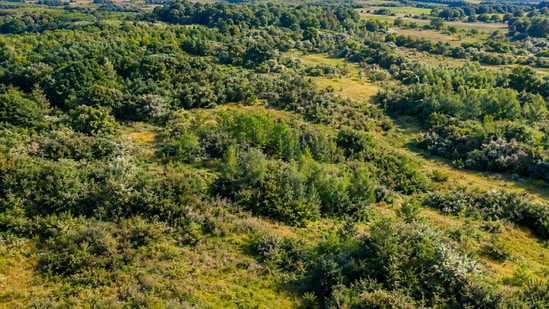
The story began when the farmer stopped farming, and the land was left to its own devices. Without the farming, the old fields changed slowly. Over time, young trees, hawthorn and blackthorn, took over. Eventually this dense growth provided the perfect habitat for rare birds, insects and plants. The trust says the site covers 150 hectares, or 377 acres. It is the largest scrub and young woodland area in central England. It took place slowly, over the course of many decades.
A small bird with a loud voice
The nightingale is a small bird famous for its beautiful song. In the summer of 2024, the trust's chief executive, Brian Eversham, said the team had seen enormous numbers of nightingales and many other birds. The team had also found rare wildflowers on the site that had not previously been recorded there, and they documented 11 of the UK's resident bat species. Eversham said his visits have reminded him that nature can bounce back from decades-long declines if we give it a chance.
What research says about farmland birds
A 2001 study in Proceedings of the Royal Society B gives helpful background on why farmland birds have struggled. In the study, Donald, Green and Heath asked whether farming intensity was the explanation for a sharp decline in Europe’s farmland birds. That fall was in the last quarter of the 20th century. They discovered countries with more intensive agriculture had significantly larger declines in population and range size. Cereal yield explained more than 30% of the variation in population trends alone. The authors say the results suggest that recent trends in agriculture have had a deleterious effect on bird populations across the continent. However, the study didn’t look at Strawberry Hill and can’t therefore account for everything that happened there.
The rescue of a wild farm
{{/usCountry}}A 2001 study in Proceedings of the Royal Society B gives helpful background on why farmland birds have struggled. In the study, Donald, Green and Heath asked whether farming intensity was the explanation for a sharp decline in Europe’s farmland birds. That fall was in the last quarter of the 20th century. They discovered countries with more intensive agriculture had significantly larger declines in population and range size. Cereal yield explained more than 30% of the variation in population trends alone. The authors say the results suggest that recent trends in agriculture have had a deleterious effect on bird populations across the continent. However, the study didn’t look at Strawberry Hill and can’t therefore account for everything that happened there.
The rescue of a wild farm
{{/usCountry}}It cost time and money to save Strawberry Hill. The trust has leased the site since 2022. It was in that year that a consortium of conservation-minded backers, We Have The Power and the Esmée Fairbairn Foundation, stepped forward to hold the land temporarily. Half of the site was bought in 2023 with a grant from the Biffa Award. The trust launched an appeal in 2024 to raise £1.5m to buy the remaining half. Of this, almost half a million pounds was raised from over 3,800 individual donations. The rest came from a large donation from a private donor and additional gifts from trusts and funds. On November 14, 2024, the trust announced it had received full ownership.
What follows, and what it teaches us
In November 2024, the trust said it would continue managing and monitoring the site. It also said it would develop a conservation management plan and create appropriate access for visitors without disturbing the wildlife.
This is just one site and one story. It doesn’t mean every farm should be left to its own devices. People still need food. But it does show what can happen when you give land time and space. The birds moved in as the farmer stepped back over the decades. Sometimes the best help we can offer nature might be just some space.