Many among Afghanistan’s dwindling Sikh minority are considering leaving for neighbouring India, after a suicide bombing in the eastern city of Jalalabad on Sunday killed at least 13 members of the community.
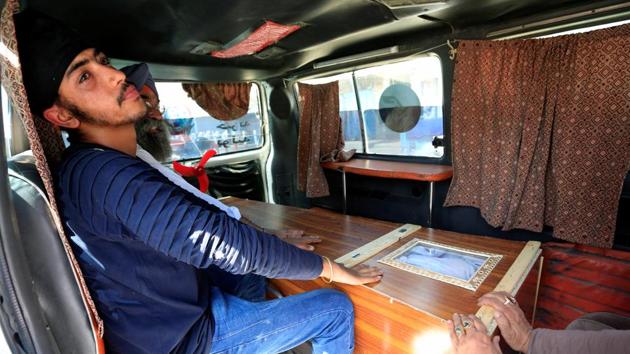
The victims of the attack claimed by militant group Islamic State included Avtar Singh Khalsa, the only Sikh candidate in parliamentary elections this October, and Rawail Singh, a prominent community activist.
“I am clear that we cannot live here anymore,” said Tejvir Singh, 35, whose uncle was killed in the blast.
“Our religious practices will not be tolerated by the Islamic terrorists. We are Afghans. The government recognises us, but terrorists target us because we are not Muslims,” added Singh, the secretary of a national panel of Hindus and Sikhs.
The Sikh community now numbers fewer than 300 families in Afghanistan, which has only two gurdwaras, or places of worship, one each in Jalalabad and Kabul, the capital, Singh added.
Although almost entirely a Muslim country, Afghanistan was home to as many as 250,000 Sikhs and Hindus before a devastating civil war in the 1990s.
{{/usCountry}}Although almost entirely a Muslim country, Afghanistan was home to as many as 250,000 Sikhs and Hindus before a devastating civil war in the 1990s.
{{/usCountry}}Even a decade ago, the US State Department said in a report, about 3,000 Sikhs and Hindus still lived there.
Despite official political representation and freedom of worship, many face prejudice and harassment as well as violence from militant Islamist groups, prompting thousands to move to India, their spiritual homeland.
Following the Jalalabad attack, some Sikhs have sought shelter at the city’s Indian consulate.
“We are left with two choices: to leave for India or to convert to Islam,” said Baldev Singh, who owns a book- and textile shop in Jalalabad.
India has issued long-term visas to members of Afghanistan’s Sikh and Hindu communities.
“They can all live in India without any limitation,” said Vinay Kumar, India’s ambassador to Afghanistan. “The final call has to be taken by them. We are here to assist them.”
Kumar, who was in the Indian capital, New Delhi, to discuss the security situation, said the government was helping organise the last rites of Sikhs killed in the blast.
‘We are not leaving’
But other Sikhs, with land or businesses and no ties to India, say they do not plan to leave, as Afghanistan remains their country. India has offered to take the dead bodies, but at least nine were cremated according to Sikh rites in Jalalabad.
“We are not cowards,” said Sandeep Singh, a Sikh shopkeeper in Kabul. “Afghanistan is our country and we are not leaving anywhere.”
The attack targeted “Afghanistan’s multicultural fabric”, Indian Prime Minister Narendra Modi said on Monday. He is expected to hold a meeting to discuss the security threats to Indian and religious minorities.
India, a longstanding ally of Afghanistan, has invested in several large development projects, but heightened security risks have prompted its companies to cut back operations.
The two countries’ officials have not been able to free seven Indian engineers kidnapped in May in the northern province of Baghlan.