At least one person was killed and dozens suffered injuries in Kathmandu, Nepal, on Monday as police fired tear gas and water cannon to disperse protests in the capital against a government ban on social media platforms such as Facebook, Instagram, YouTube, and X (formerly Twitter).
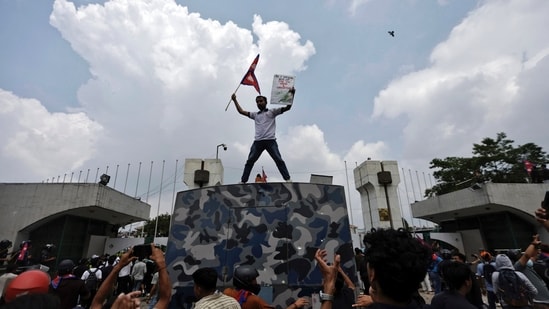
Visuals from near government office showed police struggling to hold up barricades as hundreds gathered. Cops in riot gear were bunched up at the gates, trying to protect themselves as much as trying to deter the crowd.
The protest against the blocking of at least 26 platforms since Friday has grown to become a rallying point against corruption, too. The demonstrations are populated largely by younger people or Gen-Z, essentially digital natives born around the turn of the millennium.
Demonstrators were also seen throwing teargas back at the police, who had retreated to a corner of the street, making a huddle, and using riot shields to protect from incoming projectiles, visuals shared by ANI showed.
{{/usCountry}}Demonstrators were also seen throwing teargas back at the police, who had retreated to a corner of the street, making a huddle, and using riot shields to protect from incoming projectiles, visuals shared by ANI showed.
{{/usCountry}}There were protests in other parts of the country, too, but particularly intense in New Baneshwor in Kathmandu and Damak in Jhapa district, ANI reported citing The Himalayan Times.
The army has also been deployed to New Baneshwor as tensions escalated shortly after a curfew was enforced in the area.
The protester who died was shot during violent clashes with the cops here.
In Damak, protesters marched from the main square towards the municipal office, where they burnt an effigy of Prime Minister KP Sharma Oli and attempted to breach the office gates.
Multiple journalists and photographers were also injured while covering the protests.
What led to protests in Nepal?
The protests come after the Nepal government's decision to ban 26 social media platforms that have not registered under its new rules.
The government says the registration is an effort to tax the revenue these apps generate in the country. Critics say it's lever to control content critical of the government.
Following the order from the government, social media sites went dark past midnight on September 4.
As the protests gained momentum, leading Nepali artists, actors, and entertainers voiced their support, further amplifying the movement.
Nepalese actor Hari Bansha Acharya posted on Facebook, saying, “Today's youth do more than just think – they ask questions. Why did this road collapse? Who is accountable? This is not a voice against the system but against those who misuse it.”