China and Russia have operatioanalised a mega natural gas pipeline connecting Siberia to northeast China further fuelling political and economic ties between the two countries, which are increasingly a pivot against US-led western powers.
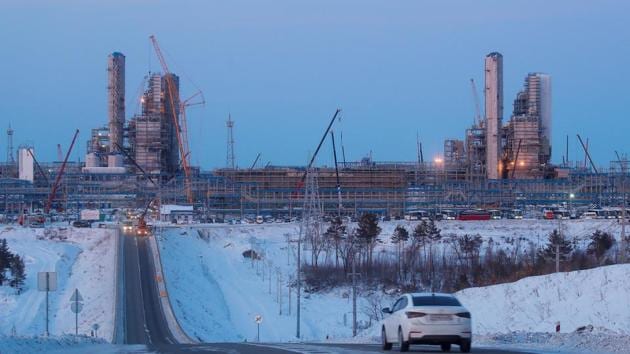
Called the “Power of Siberia”, the cross-border gas pipeline, according to the official news agency, Xinhua, is over 8,000 km long with a 3,000-km section in Russia and a 5,111-km stretch in China.
China is the world’s largest energy consumer and demand for natural gas is increasing in the country, especially in the northern part, as it gradually moves from burning coal to cleaner energy for central household heating in winter.
For Moscow, the pipeline opens up a massive new market in Asia – and a line for hundreds of billions of US dollars —as it looks at economic alternatives in the aftermath of western sanctions following its annexation of Ukraine’s Crimea five years ago.
President Xi Jinping and Russian counterpart Vladimir Putin watched the inauguration of the pipeline via a video link.
They spoke on phone Monday afternoon after witnessing the launch ceremony of the China-Russia east-route natural gas pipeline, Chinese state media reported. On Monday itself, the east-route natural gas pipeline began pumping Russian natural gas into China.
{{/usCountry}}They spoke on phone Monday afternoon after witnessing the launch ceremony of the China-Russia east-route natural gas pipeline, Chinese state media reported. On Monday itself, the east-route natural gas pipeline began pumping Russian natural gas into China.
{{/usCountry}}The volume of the supplies gas is scheduled to reach 5 billion cubic metres in 2020 and increase to 38 billion cubic metres annually from 2024, under a 30-year contract signed between the state-owned China National Petroleum Corp and Russian gas giant Gazprom in May 2014.
Speaking highly of the arduous efforts Chinese and Russian builders and companies have made in frozen and snow-covered land in the past five years, Xi was quoted by Xinhua as saying that the workers “…have shown to the world their consummate skills and the fruitful results of China-Russia cooperation”.
Xi called on both countries to redouble their efforts to initiate more key projects like the east-route natural gas pipeline, to boost both countries’ development and better benefit both peoples.
“That step brings the Russian-Chinese strategic partnership in the energy sector to a whole new level,” Putin said in a statement to the Russian news agency, TASS.
Hailing the five-year toil of construction teams from both countries on the project under extreme weather and the completion on schedule, Putin said Russia will provide 1 trillion cubic meters of natural gas to China in the next 30 years.
The pipeline uses strong and tough X80 pipeline steel, with a super large diameter of 1,422 mm and 12 MPa high pressure, Wang Yilin, board chairperson of CNPC said.
“China’s apparent consumption (total of a country’s gas production plus imports minus exports) of natural gas will reach about 310 billion cubic meters in 2019, up about 10 percent over last year,” a Chinese government report said earlier this year.
According to this report, in 2018, the country’s apparent consumption of natural gas reached 280.3 billion cubic meters, up 17.5 percent year on year. The daily peak gas consumption exceeded 1 billion cubic meters, and 10 provincial-level regions each reported natural gas consumption of over 10 billion cubic meters.