The Russian parliament's upper house voted Wednesday to withdraw from an international treaty allowing surveillance flights over military facilities following the US exit from the treaty.
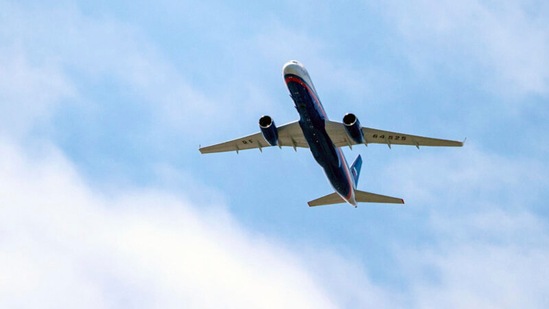
The vote comes after US officials told Moscow last month that President Joe Biden's administration had decided not to reenter the Open Skies Treaty, which had allowed surveillance flights over military facilities before President Donald Trump withdrew from the pact.
As a presidential candidate, Biden had criticized Trump’s withdrawal as “short-sighted.” Moscow has signaled its readiness to reverse the withdrawal procedure and stay in the 1992 treaty if the United States returns to the agreement.
After the Russian upper house voted to leave the treaty, it would now come to Russian President Vladimir Putin for signing. If Putin endorses the exit, it would take effect in six months.
Putin and Biden are to have a summit in Geneva on June 16. The meeting comes as Russia-US ties have sunk to the lowest levels since the Cold War times after Russia's 2014 annexation of Ukraine's Crimean Peninsula, the accusations of Moscow's interference in US elections, hacking attacks, and other irritants.
The Open Skies Treaty was intended to build trust between Russia and the West by allowing the accord’s more than three dozen signatories to conduct reconnaissance flights over each other’s territories to collect information about military forces and activities. More than 1,500 flights have been conducted under the treaty since it took effect in 2002, aimed at fostering transparency and allowing for the monitoring of arms control and other agreements.
Trump pulled out of the pact last year, arguing that Russian violations made it untenable for Washington to remain a party. Washington completed its withdrawal from the treaty in November.
{{/usCountry}}Trump pulled out of the pact last year, arguing that Russian violations made it untenable for Washington to remain a party. Washington completed its withdrawal from the treaty in November.
{{/usCountry}}Moscow has deplored the US withdrawal, warning that it will erode global security by making it more difficult for governments to interpret the intentions of other nations, particularly amid heightened Russia-West tensions.
The European Union has urged the US to reconsider its exit and called on Russia to stay in the pact and lift flight restrictions, notably over its westernmost Kaliningrad region, which lies between NATO allies Lithuania and Poland.
Russia has insisted the restrictions on observation flights it imposed in the past were permissible under the treaty and noted that the US imposed more sweeping restrictions on observation flights over Alaska.
As a condition for staying in the pact after the US pullout, Moscow has unsuccessfully pushed for guarantees from NATO allies that they wouldn’t hand over the data collected during their observation flights over Russia to the US.