The Billions of Dollars in Orders Complicating an End to U.S. Aid to Israel
Outstanding orders add to existing aid commitments as Democratic gains signal greater scrutiny of military assistance to Israel.
Published on: Nov 5, 2026, 08:51:10 IST
WSJ
Advertisement
Israel has ordered billions of dollars worth of American military hardware beyond what the U.S. has committed to paying for, illustrating how hard it would be to phase out Washington’s funding for the country.
PREMIUM
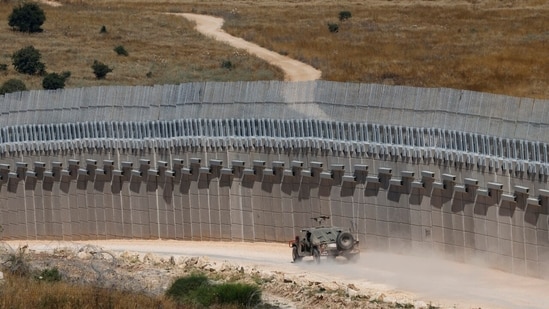
An Israeli army Humvee vehicle patrols along the northern border with Lebanon.
{{^htLoading}} {{/htLoading}}
The U.S. has already pledged nearly $7 billion in annual U.S. military aid over the next two years. Beyond 2028, Israel would need approximately $10 billion to pay for outstanding orders as of April 1, according to a State Department document sent to Congress and reviewed
{{^usCountry}}{{/usCountry}}
Deep Dive
Why would ending U.S. military aid to Israel be difficult?
Israel had about $10 billion in outstanding military orders as of April 1, beyond aid already pledged through 2028. The orders would still need to be paid for, and unwinding the existing system could take years.
Who would pay for Israel’s outstanding U.S. weapons orders if aid ends?
The State Department said the estimated $10 billion in requirements could be covered by U.S. Foreign Military Financing, Israeli national funds, or both. The article says it is unclear how much the amount may have changed since April 1.
Could U.S.-Israel military co-production replace direct aid?
A proposal would shift support toward defense investment and joint production of military technologies, building on cooperation such as the Iron Dome. It would not meet Israel’s immediate need for U.S.-made weapons or resolve who pays for existing orders.
Powered ByAsk HT
U.S. and Israeli officials have been discussing for months a potential phasing out of American military aid. Israeli Prime Minister Benjamin Netanyahu has said the country should eventually wean itself off U.S. aid, proposing to eliminate direct aid over the coming decade.
Still, Trump’s comments on Tuesday caught Israeli officials, including some in the security establishment, off guard, the Journal has reported.
Israel is one of the largest recipients of American military aid in the world, receiving about $3.3 billion in funding each year that can be used to buy U.S.-made military hardware, including bombs, vehicles, jet fighters and other equipment.
{{^htLoading}} {{/htLoading}}
The funding is structured in a way that allows Israel to use pledged future funding to buy equipment before receiving the money, a system that gives American and Israeli officials more flexibility when it comes to shipping weapons to the country.
In recent decades, the U.S. has pledged aid to Israel in a series of 10-year agreements, the most recent of which was a 10-year memorandum of understanding agreed to by the Obama administration. That deal, which runs through 2028, pledged $3.3 billion each year in U.S. military aid, known as Foreign Military Financing.
In 2024, Congress also approved about $26 billion in additional support to Israel during the height of Israel’s war in Gaza following the Oct. 7, 2023, Hamas-led attack.
{{^htLoading}} {{/htLoading}}
Even after those funds run out, Israel would still need another $10 billion to pay for its existing orders, according to a letter from the State Department to the office of Rep. Joaquin Castro (D., Texas), who inquired about the funds earlier this year. The requirements “could be covered either by FMF, national funds, or both,” says the letter, meaning that either the U.S. or Israel could end up paying for the orders.
“Even if the MOU ran its full course to 2028, there’s still $10 billion above and beyond that, and there’s an issue of who’s going to pay for that,” Castro said in an interview.
The State Department didn’t respond to a request for comment.
The U.S. has provided Israel with a total of about $174 billion in military assistance and funding from its founding in 1948 through May 2025, according to the Congressional Research Service, not adjusted for inflation.
{{^htLoading}} {{/htLoading}}
American lawmakers have drafted legislation that would shift funding from foreign financing to defense investments and joint production of military technologies. The co-production proposal would write U.S.-Israel military cooperation into U.S. law as part of the new annual U.S. defense-policy package, called the National Defense Authorization Act, expected to be completed by the end of the year.
An F-35 jet fighter, made by Lockheed Martin, in southern Israel.
Advocates of this legislation said it would make it easier for the Pentagon to cooperate with Israel on procuring military technologies. Proponents hope it will build on past successes in defense cooperation, such as Israel’s Iron Dome air-defense system, which included the participation of American firms.
{{^htLoading}} {{/htLoading}}
Critics say it would embed Israel deeper into Pentagon supply chains and programs in a way that would make such cooperation more difficult to repeal in a future Congress.
Trump’s statement Tuesday came amid declining support for Israel in both parties, following years of war in Gaza and Lebanon and this year’s joint American-Israeli attack on Iran. Democrats particularly seized on Israel’s conduct in the war in Gaza, which has destroyed much of the enclave and killed more than 74,000 Palestinians, according to Palestinian health authorities, who don’t say how many were combatants.
Trump specifically said ending direct aid to Israel would deprive Democratic critics of Israel of a political talking point, referring to the campaign of Abdul El-Sayed, who was elected as the first Muslim to serve in the U.S. Senate from Michigan in Tuesday’s landslide for Democrats. El-Sayed campaigned on ending unconditional aid to Israel.
{{^htLoading}} {{/htLoading}}
The election has also highlighted tensions within the Republican Party over America’s relationship with Israel. In a post on X Wednesday, Vance cited polling listing the top policy changes that would regain support from Republicans, including ending the war in Iran and changing the U.S. relationship with Israel.
Israel’s $10 billion in outstanding orders is one illustration of the challenges facing both critics of Israel who want to cut military aid and supporters of the state, who want to switch from aid to military co-production.
Unwinding the current system would likely take years. Switching to a new system would raise questions about who would pay for orders that are supposed to be delivered into the future, such as Israel’s plan to buy a squadron of 25 new advanced F-35 jet fighters.
{{^htLoading}} {{/htLoading}}
The co-production proposal also wouldn’t address Israel’s immediate needs. It remains dependent on the regular flow of American-made armaments, including thousands of bombs that the U.S. has delivered in recent years during the wars.
If Israel were to start to pay for more of its own weapons, that could mean an increase in military spending even after years in which it has spent a historically high amount during recent conflicts. Even with U.S. aid, Israel now spends around 7% of its gross domestic product on defense, more than any North Atlantic Treaty Organization member.
Winding down American aid to Israel would also run up against other longstanding American policies. Current U.S. law commits the government to ensuring that its military exports give Israel a “qualitative military edge” over potential rivals. Cutting off aid would make that more difficult.
{{^htLoading}} {{/htLoading}}
Either way, current and former U.S. officials say that an abrupt end to U.S. military aid to Israel is unlikely.
“It’s not plausible we stop by the end of this year” because of funding already committed by Congress, said Josh Paul, a former State Department official who resigned during the Biden administration to protest its support for the war in Gaza.
“We’ve not seen anything yet to substantiate this,” said Paul, who said he would support an aid shutdown.
Israel has ordered billions of dollars worth of American military hardware beyond what the U.S. has committed to paying for, illustrating how hard it would be to phase out Washington’s funding for the country.
PREMIUM
An Israeli army Humvee vehicle patrols along the northern border with Lebanon.
The U.S. has already pledged nearly $7 billion in annual U.S. military aid over the next two years. Beyond 2028, Israel would need approximately $10 billion to pay for outstanding orders as of April 1, according to a State Department document sent to Congress and reviewed by The Wall Street Journal. It’s unclear how much that amount might have changed since then.
{{^usCountry}}{{/usCountry}}
The disclosure comes as President Trump said Tuesday that he planned to end aid to Israel. American support for the country has been one of the issues at the center of an election that led to major Republican losses in Congress. Vice President JD Vance, in a post on X, cited the war in Iran and the U.S. relationship with Israel as among the top reasons voters went against Republicans.
{{^htLoading}} {{/htLoading}}
Deep Dive
Why would ending U.S. military aid to Israel be difficult?
Israel had about $10 billion in outstanding military orders as of April 1, beyond aid already pledged through 2028. The orders would still need to be paid for, and unwinding the existing system could take years.
Who would pay for Israel’s outstanding U.S. weapons orders if aid ends?
The State Department said the estimated $10 billion in requirements could be covered by U.S. Foreign Military Financing, Israeli national funds, or both. The article says it is unclear how much the amount may have changed since April 1.
Could U.S.-Israel military co-production replace direct aid?
A proposal would shift support toward defense investment and joint production of military technologies, building on cooperation such as the Iron Dome. It would not meet Israel’s immediate need for U.S.-made weapons or resolve who pays for existing orders.
Powered ByAsk HT
U.S. and Israeli officials have been discussing for months a potential phasing out of American military aid. Israeli Prime Minister Benjamin Netanyahu has said the country should eventually wean itself off U.S. aid, proposing to eliminate direct aid over the coming decade.
Still, Trump’s comments on Tuesday caught Israeli officials, including some in the security establishment, off guard, the Journal has reported.
Israel is one of the largest recipients of American military aid in the world, receiving about $3.3 billion in funding each year that can be used to buy U.S.-made military hardware, including bombs, vehicles, jet fighters and other equipment.
The funding is structured in a way that allows Israel to use pledged future funding to buy equipment before receiving the money, a system that gives American and Israeli officials more flexibility when it comes to shipping weapons to the country.
{{^htLoading}} {{/htLoading}}
In recent decades, the U.S. has pledged aid to Israel in a series of 10-year agreements, the most recent of which was a 10-year memorandum of understanding agreed to by the Obama administration. That deal, which runs through 2028, pledged $3.3 billion each year in U.S. military aid, known as Foreign Military Financing.
In 2024, Congress also approved about $26 billion in additional support to Israel during the height of Israel’s war in Gaza following the Oct. 7, 2023, Hamas-led attack.
Even after those funds run out, Israel would still need another $10 billion to pay for its existing orders, according to a letter from the State Department to the office of Rep. Joaquin Castro (D., Texas), who inquired about the funds earlier this year. The requirements “could be covered either by FMF, national funds, or both,” says the letter, meaning that either the U.S. or Israel could end up paying for the orders.
{{^htLoading}} {{/htLoading}}
“Even if the MOU ran its full course to 2028, there’s still $10 billion above and beyond that, and there’s an issue of who’s going to pay for that,” Castro said in an interview.
The State Department didn’t respond to a request for comment.
The U.S. has provided Israel with a total of about $174 billion in military assistance and funding from its founding in 1948 through May 2025, according to the Congressional Research Service, not adjusted for inflation.
American lawmakers have drafted legislation that would shift funding from foreign financing to defense investments and joint production of military technologies. The co-production proposal would write U.S.-Israel military cooperation into U.S. law as part of the new annual U.S. defense-policy package, called the National Defense Authorization Act, expected to be completed by the end of the year.
{{^htLoading}} {{/htLoading}}
An F-35 jet fighter, made by Lockheed Martin, in southern Israel.
Advocates of this legislation said it would make it easier for the Pentagon to cooperate with Israel on procuring military technologies. Proponents hope it will build on past successes in defense cooperation, such as Israel’s Iron Dome air-defense system, which included the participation of American firms.
{{^htLoading}} {{/htLoading}}
Critics say it would embed Israel deeper into Pentagon supply chains and programs in a way that would make such cooperation more difficult to repeal in a future Congress.
Trump’s statement Tuesday came amid declining support for Israel in both parties, following years of war in Gaza and Lebanon and this year’s joint American-Israeli attack on Iran. Democrats particularly seized on Israel’s conduct in the war in Gaza, which has destroyed much of the enclave and killed more than 74,000 Palestinians, according to Palestinian health authorities, who don’t say how many were combatants.
Trump specifically said ending direct aid to Israel would deprive Democratic critics of Israel of a political talking point, referring to the campaign of Abdul El-Sayed, who was elected as the first Muslim to serve in the U.S. Senate from Michigan in Tuesday’s landslide for Democrats. El-Sayed campaigned on ending unconditional aid to Israel.
{{^htLoading}} {{/htLoading}}
The election has also highlighted tensions within the Republican Party over America’s relationship with Israel. In a post on X Wednesday, Vance cited polling listing the top policy changes that would regain support from Republicans, including ending the war in Iran and changing the U.S. relationship with Israel.
Israel’s $10 billion in outstanding orders is one illustration of the challenges facing both critics of Israel who want to cut military aid and supporters of the state, who want to switch from aid to military co-production.
Unwinding the current system would likely take years. Switching to a new system would raise questions about who would pay for orders that are supposed to be delivered into the future, such as Israel’s plan to buy a squadron of 25 new advanced F-35 jet fighters.
{{^htLoading}} {{/htLoading}}
The co-production proposal also wouldn’t address Israel’s immediate needs. It remains dependent on the regular flow of American-made armaments, including thousands of bombs that the U.S. has delivered in recent years during the wars.
If Israel were to start to pay for more of its own weapons, that could mean an increase in military spending even after years in which it has spent a historically high amount during recent conflicts. Even with U.S. aid, Israel now spends around 7% of its gross domestic product on defense, more than any North Atlantic Treaty Organization member.
Winding down American aid to Israel would also run up against other longstanding American policies. Current U.S. law commits the government to ensuring that its military exports give Israel a “qualitative military edge” over potential rivals. Cutting off aid would make that more difficult.
Either way, current and former U.S. officials say that an abrupt end to U.S. military aid to Israel is unlikely.
“It’s not plausible we stop by the end of this year” because of funding already committed by Congress, said Josh Paul, a former State Department official who resigned during the Biden administration to protest its support for the war in Gaza.
“We’ve not seen anything yet to substantiate this,” said Paul, who said he would support an aid shutdown.
Get the latest World News, breaking headlines and global updates from the US, UK, Pakistan, Bangladesh, Russia and other countries along with latest US midterm elections update. Follow major international events on Hindustan Times.
Get the latest World News, breaking headlines and global updates from the US, UK, Pakistan, Bangladesh, Russia and other countries along with latest US midterm elections update. Follow major international events on Hindustan Times.
Home/World News/The Billions of Dollars in Orders Complicating an End to U.S. Aid to Israel
{{^htLoading}}
Advertisement
{{/htLoading}}
SHARE THIS ARTICLE ON
{{#usCountry}}{{/usCountry}}
Notifications
Get breaking alerts directly from the newsroom
Notifications are on!You'll be notified when news breaks