When Captain James Cook sailed into Hawaii in 1778, he left behind a little something that would change the islands for centuries: goats. According to the National Park Service, Cook’s visit also introduced goats to the islands, which have left a lasting mark. Wild herds stripped native plants, and erosion followed in areas the goats cleared over time.
A present with a price tag
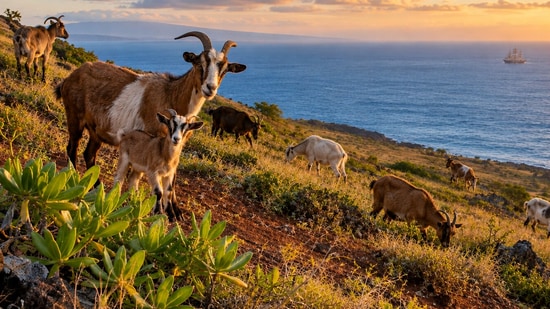
Cook’s third Pacific voyage took him to the Hawaiian Islands in 1778, and he left goats on Niʻihau. Kepa Maly and Bruce A. Wilcox say in their 2000 paper in the journal Rangelands that the animals Cook brought were given as gifts. The authors also mention that a reason was to leave behind breeding stock which could supply other ships. In other words, the goats were meant for a purpose. But Hawaii had no native sheep, goats, or cattle, and its plants had little experience with such grazers. What looked good to the visiting sailors soon proved very costly to the native plants of the islands.
What the goats did to native plants
Over time, many goats went wild. The park service says goats destroyed native plants such as silverswords, naupaka, and koa. All three are native to Hawaii and add to the distinctiveness of the island ecosystems. When the island lost them, it lost a piece of what makes the nature of Hawaii so special. Invasive grasses were introduced to support goat production for hunting and farming. So goats weren’t the only newcomers on the land.
Why erosion became a real worry
Plants have other uses than just making the surroundings green. They keep the soil in place through their roots, and protect the soil from rain through their leaves. Once the animals strip an area of plants, it becomes easier for the soil to erode. The NPS mentions major erosion problems were seen in areas stripped by the goats. This was a big issue in a region where invasive species pose a threat to native ecosystems. It takes a lot of time to restore soil, which means that the effects of the animals will outlive the animals themselves. Invasive species are often seen as a new problem. This history shows the roots of the trouble going back more than two centuries.
How the park pushed back
{{/usCountry}}Plants have other uses than just making the surroundings green. They keep the soil in place through their roots, and protect the soil from rain through their leaves. Once the animals strip an area of plants, it becomes easier for the soil to erode. The NPS mentions major erosion problems were seen in areas stripped by the goats. This was a big issue in a region where invasive species pose a threat to native ecosystems. It takes a lot of time to restore soil, which means that the effects of the animals will outlive the animals themselves. Invasive species are often seen as a new problem. This history shows the roots of the trouble going back more than two centuries.
How the park pushed back
{{/usCountry}}According to the park service, control work began in 1916, the same year Hawaiʻi Volcanoes National Park was founded. Park staff as well as contract hunters tried to control the number of goats at the park. Fences were built both to keep goats out of protected areas and to confine goats within management units where they could be hunted. The goats were generally found at mid-elevations and the lowlands of the coast. The page says very few goats can now be found at the park due to control measures undertaken, but it was last updated in 2021. A U.S. Geological Survey publication reports that hunters removed the last 239 known goats from several park management units between 1997 and 2014, mostly in aerial hunts. These steps, together, were the park’s major response to the problem.
What this story teaches us
The goat story is about more than one island chain. It shows how a practical decision can leave consequences that last for centuries. It also helps explain why early action is important. Once an invasive animal settles and breeds somewhere, it can take years of planning, fencing and several other efforts to remove it. Over 240 years after Cook’s visit, introduced species are still a major concern for Hawaiian ecosystems. For readers who love to travel, the lesson can be quite simple. One should be mindful and follow local regulations, stay on marked trails, and not bring plants, seeds, or animals to places they don’t belong.