There was a windy beach somewhere in Oregon where the sand never stopped moving. Dunes shift, and farms and houses get buried. So around 1910, Oregon tried a fix. It planted a tough European grass to hold the sand down. It worked, but it changed the coast in ways people hadn't expected. According to a 2012 study in the journal Ecology by Zarnetske and colleagues, the Pacific Northwest coast went from open, shifting dunes to dense, grassy ridges after two non-native beachgrasses took hold.
Why Oregon went with beach grass
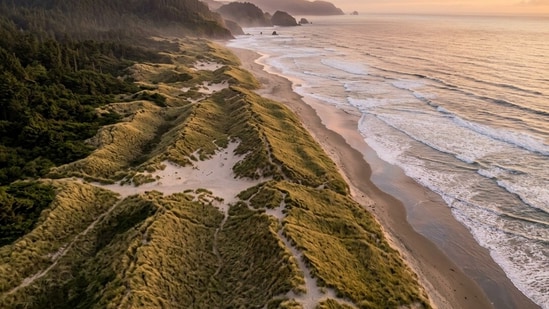
Sand in motion is more than a nuisance, and Oregon wanted to stop it. One way of solving the issue was by using European beachgrass. This plant has a deep root system and thrives where sand is constantly being deposited. Eventually, a dune is formed. A 2013 paper in Global Change Biology by Seabloom and colleagues says this grass, introduced from Europe over a century ago, was mainly responsible for the formation of the dunes along parts of the Pacific Northwest Coast. It also notes that dunes comprise about 45 percent of the coastline in this area.
A coastline that looks very different
The Ecology study shows how dramatic the shift was. Over the last century, the area changed from open, shifting dunes with a few sparse plants, including a native beachgrass, Elymus mollis, to dense continuous ridges of grass. That change was driven by two non-native species, European beachgrass and American beachgrass, which arrived later. The American species, which the 2013 paper says came from the Atlantic coast and Great Lakes region, has been replacing the European species and keeps pushing south along the Oregon coast. In experiments, the researchers found each grass has its own influence on dune shape. So the type of grass really matters.
Deep Dive
What types of grasses were introduced to the Oregon coast to control sand movement?
How did the introduction of European beachgrass affect native dune species in Oregon?
Why might removing invasive beachgrass be a controversial decision for coastal management?
What it meant for the native wildlife
The paper describes the loss of native dune species as an accidental effect of European grass invasion on the Pacific coast. One example is the Western snowy plover, a small shorebird that nests on open sand and is federally threatened. Native dune plants once formed small hillocks and short ridges. The new grass, European beachgrass, helped build tall ridges instead. Those ridges may protect the coast, but they also altered the habitat for native species. A plant introduced to control sand ended up crowding out the species that already lived there.
Fixing one problem, facing another
{{/usCountry}}The paper describes the loss of native dune species as an accidental effect of European grass invasion on the Pacific coast. One example is the Western snowy plover, a small shorebird that nests on open sand and is federally threatened. Native dune plants once formed small hillocks and short ridges. The new grass, European beachgrass, helped build tall ridges instead. Those ridges may protect the coast, but they also altered the habitat for native species. A plant introduced to control sand ended up crowding out the species that already lived there.
Fixing one problem, facing another
{{/usCountry}}Dunes are also important for floods. The authors used models to investigate how the risk of waves overtopping dunes might be influenced by American beachgrass, rising seas, and changing storms. They found that the invasion of American beachgrass, which builds lower dunes than European beachgrass, tripled the number of areas subject to this type of overtopping. In the same models, storm intensity had the greatest effect on overtopping. The authors also point out a tough choice. In some places, removing beachgrass helps threatened species recover, but they note that, based on their 2013 projections, climate change may make the protection dunes provide more important.
What this story teaches us
The people who introduced this grass were responding to a real and costly problem. The aim was to protect farms and homes, not to reshape the coast. The point of this example is that significant changes to nature may come at a cost that takes many years to show up. The lower dunes created after American beachgrass arrived are a warning about how species introductions can often unfold.