There's a plant that fixes one big problem but ends up causing another. That's the story of weeping lovegrass. This African grass was introduced into the United States in 1935 at Stillwater, Oklahoma, according to the USDA Forest Service Fire Effects Information System. People were looking for a plant that could hold the soil in place, and the grass did that. Decades later, scientists started asking a new question about it: what else was it doing to the land around it?
Why people planted it and how far it spread
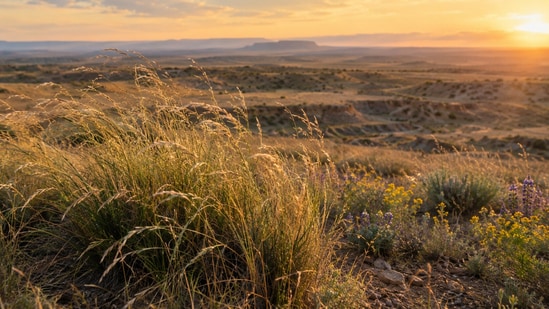
The 1930s were a difficult time on the American Plains. Rainfall was scarce, and strong winds blew away valuable topsoil. People were looking for plants that could hold the ground together. Weeping lovegrass looked like a smart choice. Its thin leaves droop and bend downward, giving the grass its common name. It produces a dense mat of roots underground, which the Forest Service review notes was a factor in its use for erosion control. It was also grown for animal feed. Between 1936 and 1945, it was widely planted in the southwestern and south-central United States for erosion control purposes. One strain, called A-67, went particularly far. The review says it was planted and established on some 2 million acres in Oklahoma and northwestern Texas from 1940 to 1980.
What happened to native plants
Researchers have investigated the other side as well. The Forest Service review says several studies at Arizona’s Appleton-Whittell Research Ranch found lower plant diversity in weeping lovegrass stands than in native grasslands and shrublands. Those stands included weeping lovegrass and its close relative, Lehmann lovegrass.
{{/usCountry}}Researchers have investigated the other side as well. The Forest Service review says several studies at Arizona’s Appleton-Whittell Research Ranch found lower plant diversity in weeping lovegrass stands than in native grasslands and shrublands. Those stands included weeping lovegrass and its close relative, Lehmann lovegrass.
{{/usCountry}}Deep Dive
Why was weeping lovegrass introduced in the United States?
How did weeping lovegrass affect native plant diversity?
Should weeping lovegrass be used for erosion control or land restoration?
The review also cites a 1999 study that compared plant species counts across habitats. There were 100 plant species in the native grassland plots, whereas there were 58 plant species in the weeping lovegrass plots. That is 42 fewer plant species. Some explanations were offered by researchers. Weeping lovegrass can compete aggressively. Researchers have suggested that it may produce chemicals that inhibit other plants, or it may get an early start in the growing season. However, these are ideas, not settled answers.
A long stay after a wildfire
Arizona offers another example. In 1990, a large area of central Arizona was burned by the Dude Fire. Afterward, weeping lovegrass was seeded to reduce erosion as part of rehabilitation efforts. A 2015 peer-reviewed study in the journal Forests looked at the area 15 years after the fire. The authors found that weeping lovegrass constituted 81 percent of the herbaceous, or non-woody, plant cover in the burned area. They describe it as an aggressive non-native grass. The research also found that perennial, non-native plants used in recovery work can persist for long periods in an ecosystem. The authors also noted that bunches of the grass appeared to channel runoff, suggesting it was doing little to prevent erosion and may have been making it worse.
Why it still matters
Weeping lovegrass is not a simple villain. People used the best tools they had to solve a real problem. The story shows how a plant that helps in one setting can have lasting effects elsewhere. This matters as we become more involved in tree planting and other environmentally friendly initiatives. So when conservation projects call for new plantings, it is worth asking how those species may affect the ecosystem over time.