Jensen Huang's resignation as Nvidia CEO could give US officials pushing for tougher restrictions on China's access to advanced artificial intelligence (AI) chips a major opportunity. A report by The Washington Post has revealed how Secretary of State and national security adviser Marco Rubio played a key role in bringing concerns about Huang's relationship with a woman suspected of working for Chinese intelligence to President Donald Trump.
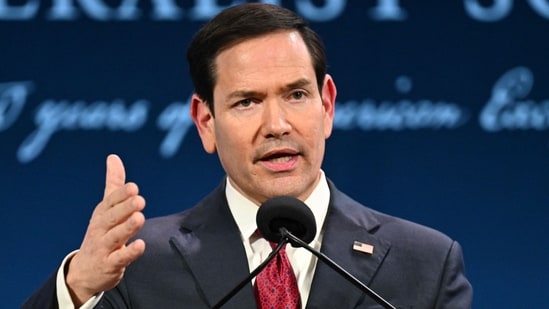
According to the report, Rubio sent Trump a memo warning him about Huang's relationship. The memo was based on a CIA report, but Rubio presented its findings in stronger terms, according to a person familiar with the matter. The information later appeared in news reports, triggering a series of events that eventually led to Huang's resignation.
The episode also exposed disagreements within the Trump administration over how much access China should have to American AI technology. While Huang had a close relationship with Trump and supported selling chips to China, several national security officials viewed those sales as a threat to US interests.
Deep Dive
What did Marco Rubio’s memo tell Trump about Jensen Huang?
How did Rubio’s memo contribute to Jensen Huang’s resignation?
Could Jensen Huang’s departure lead to tighter US restrictions on AI chip sales to China?
Marco Rubio's memo and Jensen Huang's alleged ties to a suspected Chinese spy
{{/usCountry}}Marco Rubio's memo and Jensen Huang's alleged ties to a suspected Chinese spy
{{/usCountry}}Rubio's intervention became a turning point in the controversy surrounding Huang. Nvidia's board launched an investigation into whether his relationship with the woman had created security concerns.
Huang admitted to having an affair with an executive at an Nvidia customer and apologized. US intelligence officials suspect the woman of being a Chinese intelligence asset, although the allegations have not been publicly established.
Huang eventually resigned on Thursday after reports of another affair, this time with a subordinate at Nvidia. Trump continued to support him publicly, calling him a "legend" who had "done a fantastic job."
During the Group of Seven summit in Paris, Rubio declined several questions about his role in informing the White House. However, when asked about negotiations with China over AI, he said, "The Chinese system is always going to act in the best interest of the Chinese system, and the United States will always act in the best interest of the United States. I work for the American people."
Also Read: How Donald Trump and Jensen Huang forged their powerful alliance
Jensen Huang's China policy faces fresh opposition from US lawmakers
Huang had argued that American chipmakers should continue doing business in China rather than allow Chinese companies to turn to local competitors. His position put him at odds with lawmakers and national security officials who wanted stricter export controls.
China has also been holding back large-scale imports of Nvidia's advanced AI chips despite demand from its technology companies.
According to a November 5 Reuters report, around 600,000 Nvidia H200 chips were stored in Hong Kong awaiting shipment to mainland China, as Beijing withheld approval for large-volume imports.
The restrictions reflect China's reluctance to become more dependent on US technology, even as domestic companies continue to need Nvidia's processors for AI development.
In a September 2025 podcast interview, Huang criticized those supporting tougher restrictions, saying the term "China hawk" should be a badge of shame.
"They think they're doing the right thing for our country, but it's not patriotic," he said. "Not even a little bit."
His close relationship with Trump helped him make his case directly to the president. In December 2025, Trump approved sales of Nvidia's H200 AI chips to China in exchange for a share of the revenue.
Commerce Secretary Howard Lutnick described the agreement during an interview with CNBC.
"So it's the great American technologist talking to the great businessman president, and they reached what they thought was the right answer for this particular moment," Lutnick said.
Now, Huang's departure could help lawmakers advance three proposed measures as part of a major defense bill. They would restrict exports of powerful AI chips, require technology to detect chip smuggling and limit China's access to chipmaking equipment.
Rep. John Moolenaar, chairman of the House Select Committee on China, said, "It is in our national interest for NVIDIA and our other AI champions to succeed, but American companies should never jeopardize our nation's security by giving Chinese companies access to their most advanced chips."
Sen. Jim Banks also backed tighter controls, saying, "Nvidia's first obligation should be to American customers and American security."
Banks added, "Congress has multiple bills at the ready to close these loopholes, and I'm more hopeful than ever that they will pass."