Most of us have often wondered about leaving a job we have had for years. Now a Nobel Prize-winning scientist has announced he is doing just that. CNBC reported on June 19 that AI scientist John Jumper announced on X that he is joining AI startup Anthropic. He shared the 2024 Nobel Prize in Chemistry with Google's Demis Hassabis for co-creating AlphaFold, an AI system that predicts protein structures. Hassabis responded to the post with praise. This is the latest high-profile exit from the AI research unit of the Big Tech giant, CNBC says. The decision comes amid competition for top AI talent.
Who John Jumper is and what he created
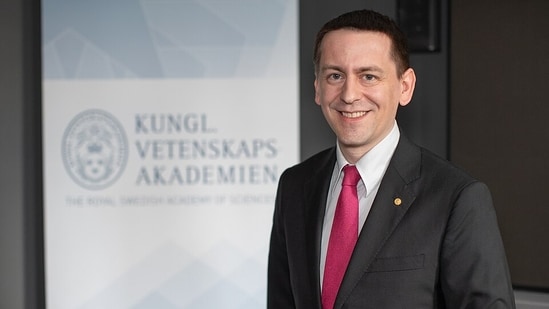
Jumper worked at Google DeepMind as a senior research scientist, and his departure from the company was considered surprising by CNBC. Jumper became well-known for being a co-inventor of AlphaFold, a system that has already made predictions about more than 200 million protein structures, according to CNBC. The same report says it has cut years off biological and medical research. Those are strong claims, so it is worth looking at the research behind them. There is a Nature study published in 2021, and Jumper is listed as the first author.
What the AlphaFold study found
The study notes that proteins are essential for life and that knowledge of their structure can shed light on how they work. According to the authors, solving the structure of a single protein can take months or even years of work. Predicting protein 3D structure from amino acid sequence has been a long-standing scientific challenge for more than 50 years.
The authors describe AlphaFold as the first computational method that can regularly predict protein structures with atomic accuracy, even when no similar structure is known. The authors say they developed a completely redesigned version of their neural network model. The design draws on physical and biological knowledge about protein shape. The study adds that accurate computational methods are required to fill the gap in known protein structures. In the highly challenging CASP14 test, its predictions were competitive with experimentally determined structures in most cases. The test name stands for the 14th Critical Assessment of Protein Structure Prediction. The study itself tests prediction accuracy, not medical results. A Fortune report notes that AlphaFold's impact on drug discovery is yet to be proven, and Jumper said later models are more likely to play a direct role there.
What Hassabis said and what we still don't know
{{/usCountry}}The authors describe AlphaFold as the first computational method that can regularly predict protein structures with atomic accuracy, even when no similar structure is known. The authors say they developed a completely redesigned version of their neural network model. The design draws on physical and biological knowledge about protein shape. The study adds that accurate computational methods are required to fill the gap in known protein structures. In the highly challenging CASP14 test, its predictions were competitive with experimentally determined structures in most cases. The test name stands for the 14th Critical Assessment of Protein Structure Prediction. The study itself tests prediction accuracy, not medical results. A Fortune report notes that AlphaFold's impact on drug discovery is yet to be proven, and Jumper said later models are more likely to play a direct role there.
What Hassabis said and what we still don't know
{{/usCountry}}Hassabis responded directly to Jumper’s post, so the exchange was public. CNBC reported that he said that AlphaFold changed the world and showed the field what AI could do for science and medicine. Jumper called Google DeepMind a “special place” in his post and said he was still curious to see what it finds next. However, the reason for leaving hasn’t yet been made clear.
A fierce race for AI talent
CNBC describes a fierce talent war. Meta, Alphabet, Anthropic and OpenAI are all fighting for top-level researchers in their race to build next-generation artificial intelligence systems. Jumper’s exit comes days after Noam Shazeer said he would leave Google for OpenAI. CNBC calls Shazeer a vice president of engineering at Google and co-lead of its Gemini AI models.
Long story short, the best AI researchers are in high demand. For readers, the safest takeaway is the confirmed facts: a Nobel winner is changing jobs after nearly nine years. Jumper's AlphaFold research was published in Nature in 2021, and that publication remains part of the scientific record.