The tree-of-heaven has a lovely name and a rough reputation. According to a U.S. Forest Service species review, it first arrived in Pennsylvania in 1784 as an ornamental plant. Today it grows in places from Maine to southern California, and has infested hundreds of acres of oak-hickory forest in Shenandoah National Park in Virginia. So how did a tree planted for looks become a forest problem?
A garden tree from China
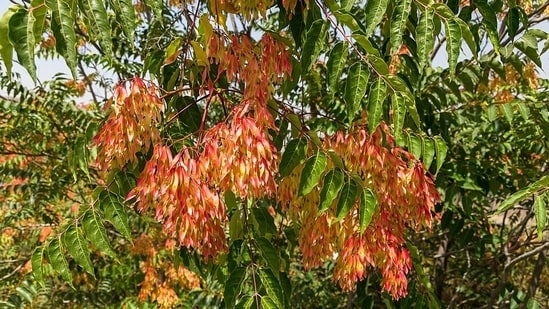
This tree species is native to central China and Taiwan. The review says that the distribution of this tree in North America seems to have occurred through three different introductions from China. Pennsylvania introduced it in 1784, while New York used the tree for ornamental purposes in 1820. The eastern introductions came through English stock from China, and by 1840 eastern nurseries were selling the tree. The third introduction occurred during the California Gold Rush in the middle of the 1800s. Chinese immigrants who came to California during the Gold Rush, many of whom later worked on railroad construction, may have brought the tree because it had medicinal and cultural importance in their homeland.
Why it spreads so quickly
The tree-of-heaven is designed to spread. It is referred to as one of the fastest-growing trees in North America, and saplings may average about 3 feet of growth per year for at least four years. Winged seeds are dispersed by the wind, and in one experiment, the seeds went farther than those of 37 other wind-dispersed species. One tree can produce more than 325,000 seeds in one year. Killing the tree is not a solution because it re-sprouts from its roots; shoots can emerge up to 50 to 90 feet from the parent stem, and the wounded or dead main stem causes extensive root sprouting. Because of that, the review states that fire is not recommended for the control of the tree.
From city alleys to wild forests
{{/usCountry}}The tree-of-heaven is designed to spread. It is referred to as one of the fastest-growing trees in North America, and saplings may average about 3 feet of growth per year for at least four years. Winged seeds are dispersed by the wind, and in one experiment, the seeds went farther than those of 37 other wind-dispersed species. One tree can produce more than 325,000 seeds in one year. Killing the tree is not a solution because it re-sprouts from its roots; shoots can emerge up to 50 to 90 feet from the parent stem, and the wounded or dead main stem causes extensive root sprouting. Because of that, the review states that fire is not recommended for the control of the tree.
From city alleys to wild forests
{{/usCountry}}Deep Dive
How does tree-of-heaven spread into forests?
Why is tree-of-heaven difficult to control once it is established?
Can Verticillium wilt be used to control tree-of-heaven?
The tree grows best on disturbed ground. It is most common in urban areas, where it shows up in alleyways, along roadsides and on fence rows, and its seeds can even sprout in cracks in pavement. It also tolerates most industrial pollutants. It often colonizes after logging, and storms that open gaps in the forest can also help it. In oak-hickory forests, it turns up most often along roadsides and on logging trails, and in urban woodlots in central Massachusetts it appeared only on disturbed sites and did not invade intact woodlands, the review notes. So it usually enters forests through openings that people or storms create. In closed-canopy hardwood forests without gaps, it is generally rare in late-successional forests. Another clue comes from lab studies: extracts from its leaves, bark, roots, and seeds slowed the germination and growth of other plants. This is one of several traits that likely help it spread.
A possible fix, and what to watch for
One possible answer is a fungus. In 2014, a study in Phytopathology revealed that Verticillium wilt, caused by the fungus Verticillium nonalfalfae, had been causing the death of tens of thousands of tree-of-heaven trees in forests in Pennsylvania, Ohio, and Virginia. The study also inoculated tree-of-heaven seedlings with isolates of the same fungus from other host plants, and those isolates did not cause disease in the seedlings. In field tests, however, an isolate taken from tree-of-heaven itself was highly effective: after researchers inoculated 100 trees across 12 stands, natural spread of the fungus killed more than 14,000 additional canopy trees by 2011, nearly wiping out tree-of-heaven in several of the smaller stands. The authors wrote that the fungus is host-adapted and a strong biocontrol candidate. That’s promising, but the study calls it a candidate, not a done deal.
You might already walk past this tree. The review says its large leaves have 15 to 41 leaflets and smell bad; the tree is also known as the stink tree. However, its history shows how a tiny choice can become a giant one. So, before planting anything non-native, it helps to ask where it might end up.