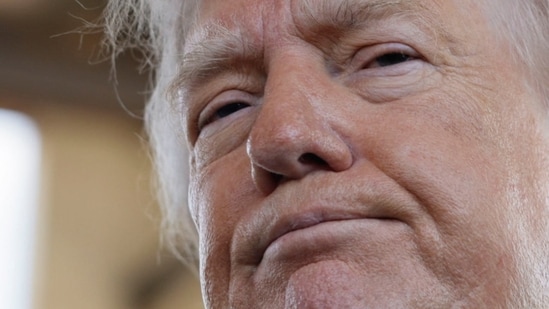
“Pretend I’m on the ballot,” President Trump advised last month. Evidently a lot of voters did. In retrospect, the line nicely captures Mr. Trump’s almost unfailing ability to act against his own interests.
{{^htLoading}} {{/htLoading}} That has been his propensity since the moment he descended the Trump Tower escalator in 2015. Listen to the impromptu talk he gave on that occasion and ponder the series of loosely connected gibes and wildly overstated claims. In a way, the event was a disaster. Nearly
{{^usCountry}}{{/usCountry}} Deep Dive
What issues contributed to the Republican Party’s midterm losses?
The articles point to the Iran war and rising fuel costs, concerns about affordability and tariffs, harsh immigration enforcement, and corruption concerns. Republicans also faced criticism over candidate choices and other political missteps.
How did Trump’s decisions hurt Republican candidates in the midterms?
Trump backed candidates who struggled or lost, including Ken Paxton, and his choices sometimes pushed aside Republicans considered more competitive. His focus on personal projects and remarks that distracted from candidates’ campaigns also drew criticism.
Was the Iran war the only reason Republicans lost the midterms?
No. JD Vance blamed the war, but the articles also cite the cost of living, tariffs, immigration enforcement, and corruption concerns. The war was one factor in a broader set of political and economic problems.
Which is why the GOP tends to lose when Mr. Trump is in charge. The GOP lost in Virginia and New Jersey in 2017 and lost the House in 2018. In 2025 Republicans lost in Virginia and New Jersey again and on Tuesday night suffered the worst defeat in a generation.
Never has so successful a politician so consistently spoiled his own and his party’s advantages. Mr. Trump’s fans know this. Speak to them at rallies and they will refer to his latest own-goal and roll their eyes and say they wished he hadn’t said or done it but they love him all the same. Press further and you’ll find the own-goals are in some mysterious way part of the appeal. Mr. Trump doesn’t view political reality, or reality, in the way other politicians do. That his bumptious comportment and cockamamie rhetoric have appealed to so many people for more than a decade is a measure of the electorate’s weariness with conventional political behavior.
{{^htLoading}} {{/htLoading}} A century from now historians will read the catalog of Mr. Trump’s self-defeating conduct and puzzle over how such a man won the presidency twice. The crude social-media tirades don’t earn new supporters; they repel potential ones. Mr. Trump’s insistence on driving allies from public office—John Cornyn, Thom Tillis, Bill Cassidy—has made his life harder. No one forced him to elevate the all-but-certain losers Ken Paxton and Darline Graham, but he did.
The habit extends to international affairs. Mr. Trump threatened to take Greenland by force and for a moment seemed serious. Later he asked for military assistance in Iran from the European allies he’d insulted. He didn’t get it. In a similar vein, all Mr. Trump had to do to install a conservative ally as Canada’s prime minister was nothing. Instead he joked about making Canada the 51st state and gave the victory to Mark Carney, whose government promptly cozied up to China and generally sides with America’s critics abroad.
{{^htLoading}} {{/htLoading}} Nobody forced Mr. Trump ahead of the 2024 election to promise the full release of Jeffrey Epstein’s “client list” and so elevate the myth that the financier led a sex-trafficking ring. A moment’s reflection would have told him that if no such list existed, as indeed none did, he would appear, in the minds of people who thrilled to his promise, to be part of the conspiracy to hide the truth. So it came to pass.
Mr. Trump has sometimes advanced policies that afforded him no political benefit but that furthered noble aims even so. The demolition of Iran’s nuclear program and military belongs in that category, as does his rough treatment of elite universities that allow approved bigotries to flourish.
{{^htLoading}} {{/htLoading}} But you can puzzle all day over some choices and never find the upside. The advantage to be gained by sending the Justice Department after Lisa Cook, James Comey and Jerome Powell is zero. Pretending to ban selected media from the White House may scratch some itch, but please don’t stoop to the belief that this or related attacks on the press advance Mr. Trump’s aims or help his party or expand his base of support.
Some forms of political self-harm you can laugh at. Others you can’t. The president refuses to enforce a law, passed by large majorities in Congress, requiring the divestiture or ban of the social-media platform TikTok, even as it spreads hatred of both America and Mr. Trump. Wantonly slapping tariffs on a constantly changing assortment of the world’s goods had the effect of debilitating growth and alienating merchants and consumers forced to pay more for affected imports.
{{^htLoading}} {{/htLoading}} Mr. Trump’s backward sense of his own interests has given him a strange quality of authenticity that his supporters love and his critics must sometimes envy. But the political benefits of authenticity diminish sharply once lame-duckery begins. His fans care about the future and will look forward to the applicants hoping to follow him. Which brings to mind the single most self-defeating decision of Mr. Trump’s second term: his choice of a running-mate who, as anybody might have foreseen, would not scruple to sabotage him.
{{^htLoading}} {{/htLoading}} “Pretend I’m on the ballot,” President Trump advised last month. Evidently a lot of voters did. In retrospect, the line nicely captures Mr. Trump’s almost unfailing ability to act against his own interests.
That has been his propensity since the moment he descended the Trump Tower escalator in 2015. Listen to the impromptu talk he gave on that occasion and ponder the series of loosely connected gibes and wildly overstated claims. In a way, the event was a disaster. Nearly everyone scorned it—everyone, that is, except the sizable plurality of Republican voters Mr. Trump needed to blaze through the subsequent primaries.
{{^usCountry}}{{/usCountry}} His supporters heard a candidate who, whatever else might have been true about him, didn’t operate according to ordinary political calculations. The following year, he won. He won again in 2024. But as Tuesday’s election has reminded his party, there’s only so much advantage to be had from ignoring ordinary political calculations.
{{^htLoading}} {{/htLoading}} Deep Dive
What issues contributed to the Republican Party’s midterm losses?
The articles point to the Iran war and rising fuel costs, concerns about affordability and tariffs, harsh immigration enforcement, and corruption concerns. Republicans also faced criticism over candidate choices and other political missteps.
How did Trump’s decisions hurt Republican candidates in the midterms?
Trump backed candidates who struggled or lost, including Ken Paxton, and his choices sometimes pushed aside Republicans considered more competitive. His focus on personal projects and remarks that distracted from candidates’ campaigns also drew criticism.
Was the Iran war the only reason Republicans lost the midterms?
No. JD Vance blamed the war, but the articles also cite the cost of living, tariffs, immigration enforcement, and corruption concerns. The war was one factor in a broader set of political and economic problems.
Which is why the GOP tends to lose when Mr. Trump is in charge. The GOP lost in Virginia and New Jersey in 2017 and lost the House in 2018. In 2025 Republicans lost in Virginia and New Jersey again and on Tuesday night suffered the worst defeat in a generation.
Never has so successful a politician so consistently spoiled his own and his party’s advantages. Mr. Trump’s fans know this. Speak to them at rallies and they will refer to his latest own-goal and roll their eyes and say they wished he hadn’t said or done it but they love him all the same. Press further and you’ll find the own-goals are in some mysterious way part of the appeal. Mr. Trump doesn’t view political reality, or reality, in the way other politicians do. That his bumptious comportment and cockamamie rhetoric have appealed to so many people for more than a decade is a measure of the electorate’s weariness with conventional political behavior.
{{^htLoading}} {{/htLoading}} A century from now historians will read the catalog of Mr. Trump’s self-defeating conduct and puzzle over how such a man won the presidency twice. The crude social-media tirades don’t earn new supporters; they repel potential ones. Mr. Trump’s insistence on driving allies from public office—John Cornyn, Thom Tillis, Bill Cassidy—has made his life harder. No one forced him to elevate the all-but-certain losers Ken Paxton and Darline Graham, but he did.
The habit extends to international affairs. Mr. Trump threatened to take Greenland by force and for a moment seemed serious. Later he asked for military assistance in Iran from the European allies he’d insulted. He didn’t get it. In a similar vein, all Mr. Trump had to do to install a conservative ally as Canada’s prime minister was nothing. Instead he joked about making Canada the 51st state and gave the victory to Mark Carney, whose government promptly cozied up to China and generally sides with America’s critics abroad.
{{^htLoading}} {{/htLoading}} Nobody forced Mr. Trump ahead of the 2024 election to promise the full release of Jeffrey Epstein’s “client list” and so elevate the myth that the financier led a sex-trafficking ring. A moment’s reflection would have told him that if no such list existed, as indeed none did, he would appear, in the minds of people who thrilled to his promise, to be part of the conspiracy to hide the truth. So it came to pass.
Mr. Trump has sometimes advanced policies that afforded him no political benefit but that furthered noble aims even so. The demolition of Iran’s nuclear program and military belongs in that category, as does his rough treatment of elite universities that allow approved bigotries to flourish.
{{^htLoading}} {{/htLoading}} But you can puzzle all day over some choices and never find the upside. The advantage to be gained by sending the Justice Department after Lisa Cook, James Comey and Jerome Powell is zero. Pretending to ban selected media from the White House may scratch some itch, but please don’t stoop to the belief that this or related attacks on the press advance Mr. Trump’s aims or help his party or expand his base of support.
Some forms of political self-harm you can laugh at. Others you can’t. The president refuses to enforce a law, passed by large majorities in Congress, requiring the divestiture or ban of the social-media platform TikTok, even as it spreads hatred of both America and Mr. Trump. Wantonly slapping tariffs on a constantly changing assortment of the world’s goods had the effect of debilitating growth and alienating merchants and consumers forced to pay more for affected imports.
{{^htLoading}} {{/htLoading}} Mr. Trump’s backward sense of his own interests has given him a strange quality of authenticity that his supporters love and his critics must sometimes envy. But the political benefits of authenticity diminish sharply once lame-duckery begins. His fans care about the future and will look forward to the applicants hoping to follow him. Which brings to mind the single most self-defeating decision of Mr. Trump’s second term: his choice of a running-mate who, as anybody might have foreseen, would not scruple to sabotage him.