US stocks fell sharply on Thursday, with technology and semiconductor shares leading the losses. The Nasdaq was on track to enter correction territory as investors sold shares of chipmakers and companies linked to artificial intelligence (AI) data centres.
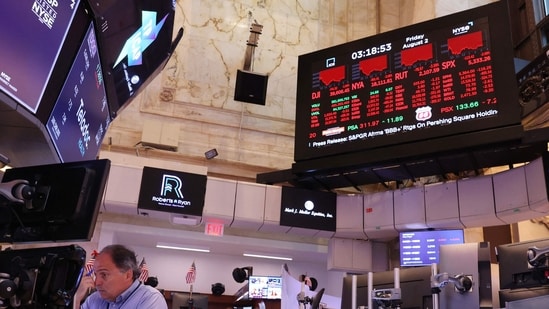
The sharp fall came a day after US stocks recorded a strong rally following the Democrats' sweeping victory in the US midterm elections. The easing of political uncertainty had boosted investor confidence on Wednesday, but the market turned lower on Thursday.
The Nasdaq Composite led the losses among major indexes. At 9:57 am ET, the Nasdaq fell 795.08 points, or 3.09%, to 24,941.44, Reuters reported.
Deep Dive
Why did US stocks fall sharply as chip and AI data centre shares plunged?
How could tighter data centre rules affect AI infrastructure companies?
Why might large technology companies have an advantage over smaller AI data centre firms?
The S&P 500 also recorded a sharp fall. The index dropped 127.74 points, or 1.66%, to 7,560.88 at 9:57 am ET.
The Dow Jones Industrial Average declined as well. It fell 351.87 points, or 0.66%, to 53,004.25 at the same time.
Chip stocks lead Wall Street losses
Qualcomm shares plunged 9% after the chipmaker's fourth-quarter forecast for smartphone chip sales fell short of Wall Street estimates. The company faced weak demand and declining revenue from its business linked to Apple.
{{/usCountry}}Qualcomm shares plunged 9% after the chipmaker's fourth-quarter forecast for smartphone chip sales fell short of Wall Street estimates. The company faced weak demand and declining revenue from its business linked to Apple.
{{/usCountry}}The wider semiconductor index also extended its losses, falling 7.1%. Major chipmakers, including Nvidia, Advanced Micro Devices (AMD), Intel and Marvell Technology, contributed to the decline, Reuters reported.
The fall in chip stocks was also linked to concerns about the future of the AI industry and the rapid expansion of data centres across the US.
Also read: US 10-year Treasury yield falls after Democrats' midterm win, jobs data in focus
Investors were concerned that the Democrats' election victory could bring greater scrutiny of AI data centre projects. Democrats won in some important data centre states, where public opposition to the industry's rapid expansion has been growing, Reuters reported.
Ipek Ozkardeskaya, senior analyst at Swissquote Bank, said the Trump administration's additional push for AI development over the past two years could now be scaled back.
Ozkardeskaya also said the rapid expansion of AI infrastructure could face greater scrutiny under the new political situation. She added that some issues surrounding the AI trade had received little attention from the current administration.
AI data centre companies and suppliers fall
Companies operating AI data centres recorded heavy losses. Shares of IREN, Hut 8 and Applied Digital fell between 6% and 11%, Reuters reported.
AI cloud computing companies CoreWeave and Nebius Group also suffered sharp declines. CoreWeave shares dropped 9.3%, while Nebius Group fell 13.4%.
Companies supplying electricity and equipment to the data centre industry also traded lower. GE Vernova and Constellation Energy, which are exposed to the growing demand for data centre power, recorded losses.
Dell shares plunged 10.5%. The decline came as investors sold shares of companies linked to AI infrastructure. Dell is a major supplier of servers used in AI data centres.
Big technology stocks also decline
Several major technology companies also lost ground after Wednesday's strong rally. The earlier rally had added around $750 billion to the market value of major technology companies, Reuters reported.
Meta Platforms shares fell 3.4%, while Amazon and Alphabet also traded slightly lower.
Tesla shares dropped 9.5%, while SpaceX fell 6.7%. Both companies are led by billionaire Elon Musk.
The losses extended after Democrats made major election gains, including in Texas, the home state of Tesla and SpaceX. Musk had spent nearly half a billion dollars supporting Republican candidates, including efforts to keep Republicans in control of Texas.
Also read: US midterms could fuel AI trade as data centre curbs favour Microsoft, Amazon
Why investors are watching US politics and interest rates
The market decline came after the S&P 500 recorded its biggest one-day percentage gain in three months on Wednesday. Investors had welcomed the easing of political uncertainty following the Democrats' election victory, Reuters reported.
Some analysts believe a divided government in Washington could make it harder to pass major new laws. It could also reduce the chances of sudden changes in government policies.
A divided government could also make it more difficult for lawmakers to agree on government spending plans. This is important because the US is already facing a worsening fiscal situation, Reuters reported.
The sharp fall in oil prices also helped improve investor sentiment. Oil prices declined for a fourth consecutive day on Thursday amid expectations of a lower risk of further escalation in the Iran conflict.
However, inflation remains a concern for central banks around the world. Higher crude oil prices following the Middle East conflict have added to concerns about rising inflation.
Cleveland Federal Reserve President Beth Hammack said on Thursday that she favoured a gradual path of interest rate hikes to bring inflation down, Reuters reported.
Investors are now waiting for US October non-farm payrolls data, which is scheduled to be released on Friday. The report will provide fresh information about the health of the US jobs market.
Traders are currently expecting the Federal Reserve to raise interest rates next month, following its September rate hike. The upcoming jobs report could influence expectations about the Fed's next policy decision.
Market breadth shows more stocks falling
Market data showed that declining stocks outnumbered advancing stocks on both major US exchanges. On the New York Stock Exchange (NYSE), declining stocks outnumbered rising stocks by a ratio of 1.36 to 1. On the Nasdaq, the ratio was 2.17 to 1, Reuters reported.
The S&P 500 recorded 69 stocks touching new 52-week highs and three stocks hitting new 52-week lows. The Nasdaq Composite recorded 132 new 52-week highs and 247 new 52-week lows, showing the wider pressure on stocks listed on the exchange.