Vance’s Break With Trump on Iran Follows Weeks of Handwringing Over War
Trump administration officials are now debating what to do next in Iran, with some arguing the president should double down on military strikes.
Published on: Nov 5, 2026, 09:02:59 IST
WSJ
Advertisement
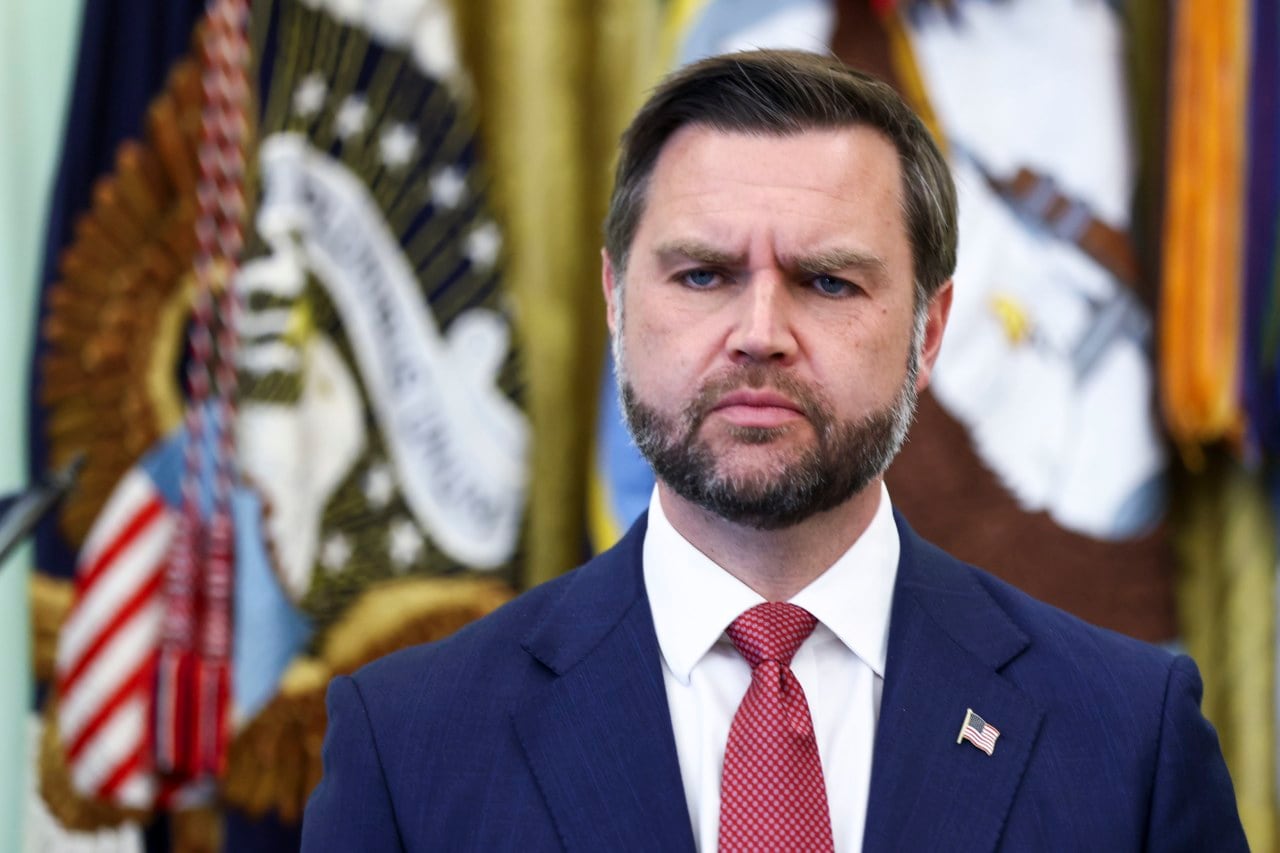
Vice President JD Vance
WASHINGTON—Vice President JD Vance spent Tuesday night in the White House East Room watching the disastrous midterm results roll in. Sitting alongside President Trump, Vance saw the Senate seat he had briefly held in Ohio flip to Democratic control, and then all of Congress.
{{^htLoading}} {{/htLoading}}
By Wednesday morning, the Marine veteran made his simmering frustrations public, blaming the war for the Republicans’ stunning losses and issuing a rare public rebuke of the ongoing military campaign his boss still supports.
{{^usCountry}}{{/usCountry}}
Vance’s comments
Deep Dive
Why did JD Vance blame the Iran war for Republicans’ midterm losses?
Vance said Republican voters were angry about the war, higher energy prices and the administration’s departure from its “America First” agenda. He argued that ending the conflict could help win those voters back.
What did Donald Trump say about Vance’s claim that the Iran war cost Republicans the election?
Trump said Vance was “largely” right that the war contributed to the losses by pushing gasoline prices up in the short term. He nevertheless defended the military action, saying it was necessary to prevent Iran from getting a nuclear weapon.
What options are being debated for ending or continuing the Iran conflict?
Some administration officials are urging fresh strikes followed by a push for peace, while others want Trump to wind down the military operation. The article also describes a negotiated settlement as one possible way to find an off-ramp.
Powered ByAsk HT
“The reason we lost is the war,” Vance wrote in a lengthy post on social media. Vance said Republican voters who had voted for Trump in 2024 showed up, but that they were mad about the war, the resulting higher energy prices and that the administration had abandoned its “America First” agenda.
Vance blaming Trump’s war for the catastrophic results of the midterm election is a rare moment of distance between himself and the president, to whom he owes his political career, and shows how keenly opposed to the war Vance was from the start despite repeatedly defending it publicly.
{{^htLoading}} {{/htLoading}}
The vice president staked his political future on maintaining the coalition that Trump built, and campaigned heavily in the midterms to stave off Republican losses, only to see the party fail miserably and lose in states that haven’t sent Democrats to the Senate in decades.
Asked whether Vance was right that the war was to blame for the GOP’s election losses, Trump said, “I think it’s largely true because it drove the gasoline up a little bit short term.” Trump added though that if he had to start the war again, he would “because long term, it’s the only answer. You can’t allow Iran to have a nuclear weapon.”
{{^htLoading}} {{/htLoading}}
Vance, who was tapped by Trump to lead peace negotiations with Iran, suggested otherwise in his online post: “If you’d like to argue it was worth it, that losing the Senate for the next 6 years was worth it, then do so. Argue it was a worthwhile cost to pay. Agree or disagree, that’s at least honest.”
Trump told reporters of Vance’s post “I thought it was good,” acknowledging that he has long known the vice president’s views on the war. “I know how he feels about it,” Trump said.
A jet fighter landing on the flight deck of the USS George Washington, which is deployed in the Middle East.
The split follows months of internal debate on how to handle the conflict, which had grown deeply unpopular with voters.
{{^htLoading}} {{/htLoading}}
In September, Vance told reporters he wouldn’t call the fighting in Iran a war, but also couldn’t say when the conflict would end. Vance has privately discussed with Trump the possibility of the Iran war extending through the end of his second term, The Wall Street Journal previously reported.
Top administration officials also worked to play down the impact of ongoing military operations even as the administration explored more strikes. Also in September, senior Trump administration officials held a Situation Room discussion about the Iran war’s unpopularity. Vance, Secretary of State Marco Rubio and others sat around the table as top officials said disclosing continuing strikes, whether defensive or offensive, would hurt Republicans in vulnerable states. They agreed advertising the assaults wouldn’t help election prospects, according to people familiar with the discussion.
{{^htLoading}} {{/htLoading}}
That idea was briefed to Trump, who agreed with the approach, the people said.
In the ensuing weeks, the U.S. military quietly conducted small-scale strikes on Iran, attacking missile launchers and other equipment but avoiding human casualties, the Journal reported. In one instance on Monday, Iran’s Islamic Revolutionary Guard Corps fired a surface-to-air missile at a U.S. jet fighter, which fired back in self-defense, officials said. One reason to keep the campaign quiet was to avoid signaling any intention of resuming major combat operations, the Journal previously reported.
Some White House advisers have pointed fingers at Defense Secretary Pete Hegseth, whom they blame for convincing Trump that the Iran war would be a short engagement similar to the successful capture of ousted Venezuelan dictator Nicolás Maduro, according to people familiar with the discussions. Hegseth has frequently been the voice in the cabinet advocating to continue the war, often in opposition to Rubio, Vance and others who pushed for peace talks, some people said.
{{^htLoading}} {{/htLoading}}
Despite the criticism from inside the White House, Pentagon officials and others have for weeks insisted that Trump likes Hegseth and isn’t considering firing him. Publicly, Trump says he expects no changes to his cabinet or broader team during the so-called lame-duck period, before Democrats regain control of Congress in January.
Secretary of Defense Pete Hegseth with President Trump at the White House in October.
Hegseth is “doing a very good job,” Trump told reporters Wednesday.
{{^htLoading}} {{/htLoading}}
Chief Pentagon Spokesman Sean Parnell said Hegseth “will not back down or be deterred by politicians seeking to score partisan points or launch phony investigations where no wrongdoing exists.” Parnell added that Hegseth is “100% committed to leading the Department until the end of President Trump’s term in office.”
It isn’t clear if Vance coordinated his post with the White House in advance, although it is not typical for the vice president to review his social media with the administration. A White House official said the president was aware of Vance’s message before it was published.
Asked about Vance potentially running for president, Trump, standing at the White House ballroom construction project, shrugged. “Maybe he won’t run. I don’t know who’s going to run,” he said.
{{^htLoading}} {{/htLoading}}
Some administration officials are now pushing Trump to launch fresh military strikes on Iran and then push for peace to extricate himself from the war during the lame-duck period, according to people familiar with deliberations. Others say Trump should cut his losses and wind down the military operation, exposing the deepening rifts within the administration over the war in the wake of the midterm election losses, the people said.
The Pentagon has been preparing to resume major combat operations for weeks, amassing thousands of pounds of munitions and moving additional air defense and ships to the region. A third aircraft-carrier strike group and an additional Marine expeditionary unit are moving toward the Middle East, the Journal previously reported, adding as much as 9,000 to 10,000 more troops to the region.
Iranian officials, meanwhile, have touted Trump’s midterm losses as a victory of their own. “The Iranian nation handed Trump a strategic defeat on the battlefield and in Hormuz—and a POLITICAL DEFEAT in Washington,” Mohsen Rezaei, a top Iranian security official, said in a social-media post on Wednesday.
“Keeping the blockade on, continuing to escort tankers, and looking for an off-ramp through a negotiated settlement, these are going to be the least bad choices for the president,” said Jonathan Panikoff, a former top U.S. intelligence official on the Middle East. “There are no good options here. There’s only bad, worse, and worst.”
WASHINGTON—Vice President JD Vance spent Tuesday night in the White House East Room watching the disastrous midterm results roll in. Sitting alongside President Trump, Vance saw the Senate seat he had briefly held in Ohio flip to Democratic control, and then all of Congress.
By Wednesday morning, the Marine veteran made his simmering frustrations public, blaming the war for the Republicans’ stunning losses and issuing a rare public rebuke of the ongoing military campaign his boss still supports.
{{^usCountry}}{{/usCountry}}
Vance’s comments followed weeks of internal hand-wringing at the White House about the war’s impact on the midterms and discussions about whether to acknowledge publicly ongoing strikes, according to people familiar with the discussions.
Deep Dive
Why did JD Vance blame the Iran war for Republicans’ midterm losses?
Vance said Republican voters were angry about the war, higher energy prices and the administration’s departure from its “America First” agenda. He argued that ending the conflict could help win those voters back.
What did Donald Trump say about Vance’s claim that the Iran war cost Republicans the election?
Trump said Vance was “largely” right that the war contributed to the losses by pushing gasoline prices up in the short term. He nevertheless defended the military action, saying it was necessary to prevent Iran from getting a nuclear weapon.
What options are being debated for ending or continuing the Iran conflict?
Some administration officials are urging fresh strikes followed by a push for peace, while others want Trump to wind down the military operation. The article also describes a negotiated settlement as one possible way to find an off-ramp.
Powered ByAsk HT
“The reason we lost is the war,” Vance wrote in a lengthy post on social media. Vance said Republican voters who had voted for Trump in 2024 showed up, but that they were mad about the war, the resulting higher energy prices and that the administration had abandoned its “America First” agenda.
{{^htLoading}} {{/htLoading}}
Vance blaming Trump’s war for the catastrophic results of the midterm election is a rare moment of distance between himself and the president, to whom he owes his political career, and shows how keenly opposed to the war Vance was from the start despite repeatedly defending it publicly.
The vice president staked his political future on maintaining the coalition that Trump built, and campaigned heavily in the midterms to stave off Republican losses, only to see the party fail miserably and lose in states that haven’t sent Democrats to the Senate in decades.
Asked whether Vance was right that the war was to blame for the GOP’s election losses, Trump said, “I think it’s largely true because it drove the gasoline up a little bit short term.” Trump added though that if he had to start the war again, he would “because long term, it’s the only answer. You can’t allow Iran to have a nuclear weapon.”
{{^htLoading}} {{/htLoading}}
Vance, who was tapped by Trump to lead peace negotiations with Iran, suggested otherwise in his online post: “If you’d like to argue it was worth it, that losing the Senate for the next 6 years was worth it, then do so. Argue it was a worthwhile cost to pay. Agree or disagree, that’s at least honest.”
Trump told reporters of Vance’s post “I thought it was good,” acknowledging that he has long known the vice president’s views on the war. “I know how he feels about it,” Trump said.
A jet fighter landing on the flight deck of the USS George Washington, which is deployed in the Middle East.
The split follows months of internal debate on how to handle the conflict, which had grown deeply unpopular with voters.
{{^htLoading}} {{/htLoading}}
In September, Vance told reporters he wouldn’t call the fighting in Iran a war, but also couldn’t say when the conflict would end. Vance has privately discussed with Trump the possibility of the Iran war extending through the end of his second term, The Wall Street Journal previously reported.
Top administration officials also worked to play down the impact of ongoing military operations even as the administration explored more strikes. Also in September, senior Trump administration officials held a Situation Room discussion about the Iran war’s unpopularity. Vance, Secretary of State Marco Rubio and others sat around the table as top officials said disclosing continuing strikes, whether defensive or offensive, would hurt Republicans in vulnerable states. They agreed advertising the assaults wouldn’t help election prospects, according to people familiar with the discussion.
{{^htLoading}} {{/htLoading}}
That idea was briefed to Trump, who agreed with the approach, the people said.
In the ensuing weeks, the U.S. military quietly conducted small-scale strikes on Iran, attacking missile launchers and other equipment but avoiding human casualties, the Journal reported. In one instance on Monday, Iran’s Islamic Revolutionary Guard Corps fired a surface-to-air missile at a U.S. jet fighter, which fired back in self-defense, officials said. One reason to keep the campaign quiet was to avoid signaling any intention of resuming major combat operations, the Journal previously reported.
Some White House advisers have pointed fingers at Defense Secretary Pete Hegseth, whom they blame for convincing Trump that the Iran war would be a short engagement similar to the successful capture of ousted Venezuelan dictator Nicolás Maduro, according to people familiar with the discussions. Hegseth has frequently been the voice in the cabinet advocating to continue the war, often in opposition to Rubio, Vance and others who pushed for peace talks, some people said.
{{^htLoading}} {{/htLoading}}
Despite the criticism from inside the White House, Pentagon officials and others have for weeks insisted that Trump likes Hegseth and isn’t considering firing him. Publicly, Trump says he expects no changes to his cabinet or broader team during the so-called lame-duck period, before Democrats regain control of Congress in January.
Secretary of Defense Pete Hegseth with President Trump at the White House in October.
Hegseth is “doing a very good job,” Trump told reporters Wednesday.
{{^htLoading}} {{/htLoading}}
Chief Pentagon Spokesman Sean Parnell said Hegseth “will not back down or be deterred by politicians seeking to score partisan points or launch phony investigations where no wrongdoing exists.” Parnell added that Hegseth is “100% committed to leading the Department until the end of President Trump’s term in office.”
It isn’t clear if Vance coordinated his post with the White House in advance, although it is not typical for the vice president to review his social media with the administration. A White House official said the president was aware of Vance’s message before it was published.
Asked about Vance potentially running for president, Trump, standing at the White House ballroom construction project, shrugged. “Maybe he won’t run. I don’t know who’s going to run,” he said.
{{^htLoading}} {{/htLoading}}
Some administration officials are now pushing Trump to launch fresh military strikes on Iran and then push for peace to extricate himself from the war during the lame-duck period, according to people familiar with deliberations. Others say Trump should cut his losses and wind down the military operation, exposing the deepening rifts within the administration over the war in the wake of the midterm election losses, the people said.
The Pentagon has been preparing to resume major combat operations for weeks, amassing thousands of pounds of munitions and moving additional air defense and ships to the region. A third aircraft-carrier strike group and an additional Marine expeditionary unit are moving toward the Middle East, the Journal previously reported, adding as much as 9,000 to 10,000 more troops to the region.
Iranian officials, meanwhile, have touted Trump’s midterm losses as a victory of their own. “The Iranian nation handed Trump a strategic defeat on the battlefield and in Hormuz—and a POLITICAL DEFEAT in Washington,” Mohsen Rezaei, a top Iranian security official, said in a social-media post on Wednesday.
“Keeping the blockade on, continuing to escort tankers, and looking for an off-ramp through a negotiated settlement, these are going to be the least bad choices for the president,” said Jonathan Panikoff, a former top U.S. intelligence official on the Middle East. “There are no good options here. There’s only bad, worse, and worst.”
Stay updated with US News covering politics, crime, weather, local events, and sports highlights. Get the latest on Donald Trump and American politics along with Horoscope 2026.
Stay updated with US News covering politics, crime, weather, local events, and sports highlights. Get the latest on Donald Trump and American politics along with Horoscope 2026.
Home/World News/Us News/Vance’s Break With Trump on Iran Follows Weeks of Handwringing Over War
{{^htLoading}}
Advertisement
{{/htLoading}}
SHARE THIS ARTICLE ON
{{#usCountry}}{{/usCountry}}
Notifications
Get breaking alerts directly from the newsroom
Notifications are on!You'll be notified when news breaks