The Trump administration is reportedly considering sending out payments – dubbed ‘DOGE dividend’ payments – to millions of Americans next year. Should it be implemented, cheques of up to $5,000 per household could go out after the Elon Musk-led Department of Government Efficiency (DOGE) wraps up its work in July 2026.
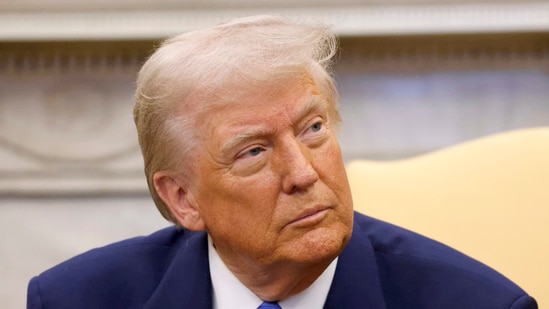
Donald Trump “loves” the idea of the dividend cheque, something the president himself recently told reporters aboard Air Force One. US Treasury Secretary Scott Bessent and Kevin Hassett, the director of the White House’s National Economic Council, have signalled their support too. However, any official policy or legislative proposals have yet to be released.
DOGE is tasked with eliminating wasteful spending by the federal government. The US annual spending budget is roughly $6.7 trillion, two-thirds of which happens to be congressionally mandated spending – including on federal programmes such as Social Security, Medicare and Medicaid. DOGE has already set a goal of uncovering $2 trillion worth of spending cuts by July next year. If it meets its goal, $400 billion, which is 20% of the savings, would be earmarked for DOGE refunds. However, the Congress would need to authorise the payments.
James Fishback, a DOGE supporter with connections to the Trump administration, is the one who developed the idea. He took to X to share a four-page proposal, gaining Musk’s attention. Musk then reportedly pitched it to President Trump.
{{/usCountry}}James Fishback, a DOGE supporter with connections to the Trump administration, is the one who developed the idea. He took to X to share a four-page proposal, gaining Musk’s attention. Musk then reportedly pitched it to President Trump.
{{/usCountry}}What are DOGE dividends and how likely are the cheques?
A DOGE dividend is a cheque sent to every taxpayer, and is funded exclusively with a portion of the total savings that DOGE delivered. According to Fishback’s proposal, the dividend would be sent only to households above a certain income level. This is in contrast to pandemic-era cheques that were sent “indiscriminately.”
There are a few hurdles, though. The $5,000 cheque is based on the premise that DOGE successfully reaches its goal - eliminating $2 trillion in wasteful federal spending – which Musk has cast doubt on. “You have to have some overage,” he said in a January interview. “If you try for $2 trillion, you have a good chance at getting $1 [trillion].”
According to the DOGE website, an estimated $55 billion was saved by the cost-cutting initiative during the first month of Trump's presidency. DOGE will be required to save over $110 billion per month to remain on track to meet its target. “The size of the cheques is out of proportion with the size of cuts,” said Ernie Tedeschi, the economics director of the Budget Lab at Yale University.
The Congress would need to authorise direct payments to Americans, and the some Republican lawmakers are already opposing the proposal, including House Speaker Mike Johnson and Rep. Eric Burlison. Therefore, it is perhaps too early to say whether DOGE cheques will actually happen.
Would you be eligible?
The refund payment would be sent to households that pay federal taxes, according to Fishback. About 70% of US Americans have a federal tax liability, which means that around 80 to 90 million households could be eligible for a cheque. Because of deductions and tax credits, millions of low-income Americans do not owe federal income taxes and hence, should Fishback’s qualifications be used, they would not qualify for a cheque.