While Islamabad has hinted at a tougher approach against Tehreek-e-Taliban Pakistan (TTP) and emphasised the continuation of counter-terrorism operations in Khyber Pakhtunkhwa and Balochistan, Pakistan-based terrorist outfits Jaish-e-Mohammad (JeM) and Lashkar-e-Taiba (LeT) have stepped up efforts to push cadres into India.
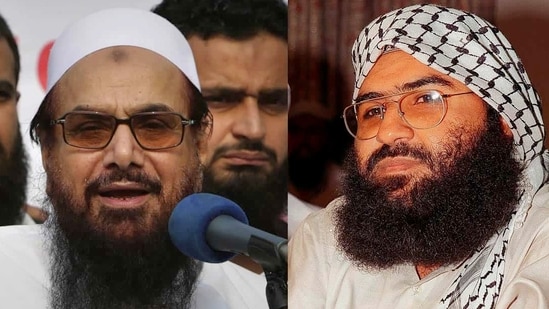
The JeM is also urging youth to join the terror group's gyms at district levels in Karachi, Gujranwala, Sialkot, Peshawar, Muzaffarabad, Kotli, Narowal, Shakargarh, etc., for physical fitness and agility. It periodically organises visits of gym-going youth to the border/Line of Control (LoC) areas for familiarisation to use them in future infiltrations.
Between August 5 and 11, the JeM organised a seven-day “Daura Tarbiya” training camp at Ganga Choti, Bagh district in Pakistan-occupied Jammu and Kashmir.
Meanwhile, top LeT leaders actively participated in Friday sermons in Jamaat-ud-Dawa's marakiz and madrassas, spewing venom against India and the West. As part of its ongoing jihadi training activities, the LeT restarted its basic training course Daura-e-Sufa in the garb of 'self-defence courses'. LeT functionaries have started donation campaigns in the name of recent floods. While helping people of flood-affected areas, these propagate the ideology and opportunistically exploit the crisis for spotting raw talent and recruits for the terror group.
Though terrorism-linked fatalities remained at roughly the same level, the overall security situation deteriorated in Pakistan, as the terrorists appeared to gain ground in August. As talks with TTP linger on, without any signs of rapprochement, there is unease in the rank and file of the outfit, even as other terrorist groups strengthening their position.
{{/usCountry}}Though terrorism-linked fatalities remained at roughly the same level, the overall security situation deteriorated in Pakistan, as the terrorists appeared to gain ground in August. As talks with TTP linger on, without any signs of rapprochement, there is unease in the rank and file of the outfit, even as other terrorist groups strengthening their position.
{{/usCountry}}The unceasing cycle of political vendetta continued last month, with the Pakistan government and the TTP irreconcilable, and the confrontation does not augur well for the country and will have an adverse impact on the economy, which is already in the doldrums.
Though the International Monetary Fund (IMF) and friendly countries have come to the rescue, things are going to worsen for the common man as a result of the conditionalities imposed, and with prices of essential commodities skyrocketing.
Economic situation remains precarious
On August 29, the IMF executive board approved the release of a USD 1.17 billion tranche to Pakistan. It also approved an extension in the External Fund Facility until June 2023, besides enhancing the assistance of Special Drawing Rights (SDR) 720 million (about USD 950 million), bringing the total assistance package to approximately USD 6.5 billion. The release provided much-needed budgetary support to meet fiscal and external deficits, essentially by catalysing additional financing from bilateral and multilateral partners.
Despite the disbursal of the IMF tranche, the economic situation in Pakistan will remain precarious, as the depleted forex reserves stood at only around USD 7.7 billion, as on August 24. The devastating floods, which have claimed around 1,300 lives and displaced more than 30 million displaced, would only add to the country’s forex woes, as a downturn is expected in the economy, including a possible decline in exports of textiles in the coming months. Notwithstanding the approximately USD 500 million aid pledged by multilateral and bilateral partners, the situation has put an additional burden on Pakistan’s already thin resources. The Pakistani government has estimated a loss of over USD 10 billion to the economy due to the floods.
Political situation remains fluid
The government has slapped a slew of legal cases on Pakistan Tehreek-e-Insaaf (PTI) chairman Imran Khan Niazi. These include a case filed under the Anti-Terrorism Act for threatening senior police officials and a lady additional sessions judge in Islamabad filed on August 20. The Election Commission of Pakistan has separately issued notices to Khan and other senior party leaders for making intemperate and contemptuous remarks against the commission. The commission is also hearing the Toshakhana reference filed against Khan for misappropriation of official gifts.
Khan, meanwhile, has ramped up his anti-establishment rants in public rallies, directed particularly against army chief general Qamar Javed Bajwa, demanding the military establishment review its policies on supporting the ruling coalition government.