It is the most rustic of drugs. Made from crushing dried poppy pods, the powder is then dissolved in water or steeped in tea for a quick high. Called doda, its Punjabi name, it has proved to be the gateway drug to harder narcotics like heroin and cocaine, the use of which is now rife in the Indo-Canadian community in the Greater Toronto Area (GTA).
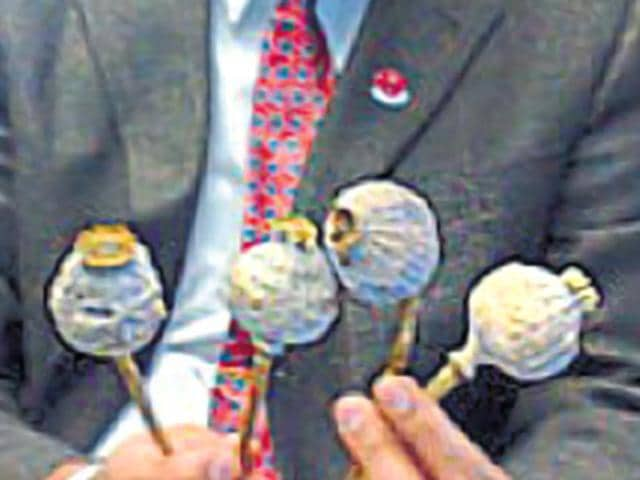
For nearly five years, the sale of doda remained legal and it was openly available in meat stores in the region, and became the drug of choice for many in the community, especially those in the trucking industry.
It’s also a habit that mirrors the spike in drug abuse in Punjab, where the majority of Indo-Canadians in this region trace their origin to. “That culture was brought back here,” said former Brampton City Councillor Vicky Dhillon.
This flourishing trade has increasingly seen the involvement of Indo-Canadian gangs from British Columbia on the West Coast, in trafficking the drugs. There are even dial-for-dope hotlines. Users call the number of a dealer and wait at a predetermined street corner for delivery.
Dhillon has spearheaded a campaign against doda. He first became involved after hearing reports of school children getting addicted to the drug and his concern rose as the father of a school-going son. In 2010, doda was finally declared an illegal substance by Health Canada.
But as doda vanished from the shelves, a number of addicts pursued alternate highs — heroin and . That trend has been noticed by those working in the field, such as the non-profit Punjabi Community Health Services (PCHS), which runs a de-addiction centre in Malton, another GTA township and also has offices in Mississauga in Ontario, Calgary in Alberta and Moga in Punjab.
{{/usCountry}}But as doda vanished from the shelves, a number of addicts pursued alternate highs — heroin and . That trend has been noticed by those working in the field, such as the non-profit Punjabi Community Health Services (PCHS), which runs a de-addiction centre in Malton, another GTA township and also has offices in Mississauga in Ontario, Calgary in Alberta and Moga in Punjab.
{{/usCountry}}Sitting in his office in Brampton, PCHS CEO Baldev Mutta estimated his organisation was providing de-addiction counselling to nearly 100 clients, an increase of “about 100%” over the past five years. It’s the only community-oriented organisation of its kind in Ontario, if not in Canada, and Mutta described the numbers they were seeing as “peanuts”.
“We’re merely scratching the surface,” he said. The devastation caused by addiction among families within the community is “huge”, Mutta said, because of how expensive such habits are, and the legal and health complications that arise from them.
With cultural barriers over disclosing addiction and the lack of mainstream solutions to what is becoming a crisis in the area, doda may be gone from here but its impact will not be forgotten in the near future.