E-Paper



Viral hepatitis: The silent killer you need to keep at bay

 Prefer HTon Google


Viral hepatitis — the inflammation of the liver due to infection — is a deadly disease that most people are often not aware of.
Viral hepatitis — the inflammation of the liver due to infection — is a deadly disease that most people are often not aware of. The Delhi government, in order to create awareness among the masses about the disease and its symptoms (that is often mild), celebrates December 4 as Hepatitis day every year.
The government-run Institute of Liver and Biliary Sciences (ILBS) will organise an awareness event on the day this year also. Hepatitis infection is broadly divided into two categories — blood-borne B and C and waterborne A and E.
One in three persons affected with blood-borne viral hepatitis-B and C, are at a risk of developing liver cancer, yet most of them are not aware of their infection. “Chances of developing liver cirrhosis are almost 20% higher in people with blood-borne viral hepatitis. And because the symptoms are so mild that it is easy to miss. The disease is a silent killer,” says Dr SK Sarin, director, ILBS.
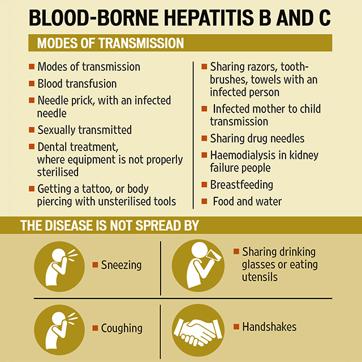
Blood-borne hepatitis B and C infections cause liver damage over time. In most cases, there are no symptoms till the liver is about 75% damaged. Unsafe blood transfusion, tattoos or dental procedures using unsterilised tools, unprotected sex, sharing razor can lead to disease transmission from an infected person to a healthy person. An estimated 25 million to 40 million Indians carry the Hepatitis B and C viruses (HBV and HCV).
There is a vaccine against hepatitis B but the disease has no cure; one needs to be on medicines for their entire life to keep the virus in check. For hepatitis C, there is no vaccine but there is a cure in the form of advanced medicines that are expensive.