
 E-Paper



Climate change is not of our making: Modi at Paris summit
Prime Minister Narendra Modi said on Monday India did not create the climate change menace but was suffering its consequences while he delivered a stern message to affluent nations, saying “those with luxury of choices” should sharply reduce emissions.

 Prefer HTon Google


Prime Minister Narendra Modi said on Monday India did not create the climate change menace but was suffering its consequences while he delivered a stern message to affluent nations, saying “those with luxury of choices” should sharply reduce emissions.
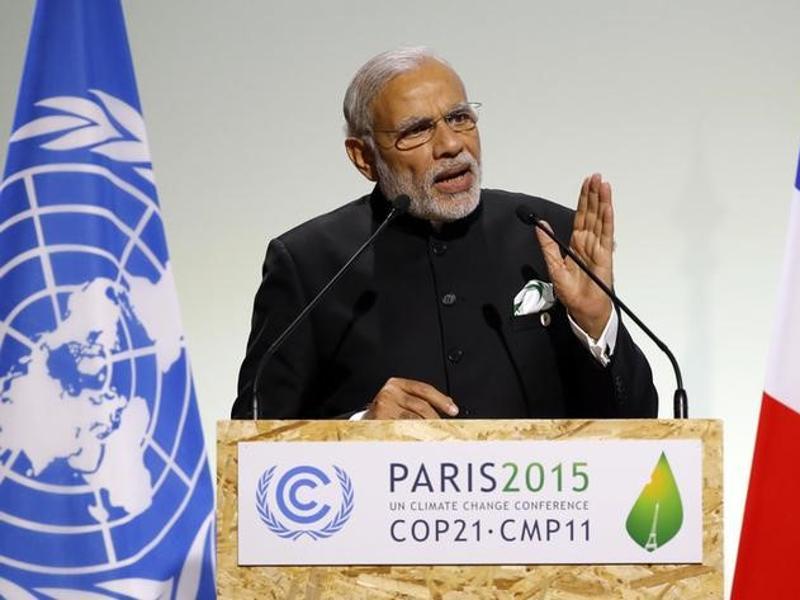
His comments came on the sidelines of a high-stakes United Nations conference in Paris where over 150 world leaders have gathered in a bid to nail down a pact to limit global warming amid deep divisions between rich and poor countries.
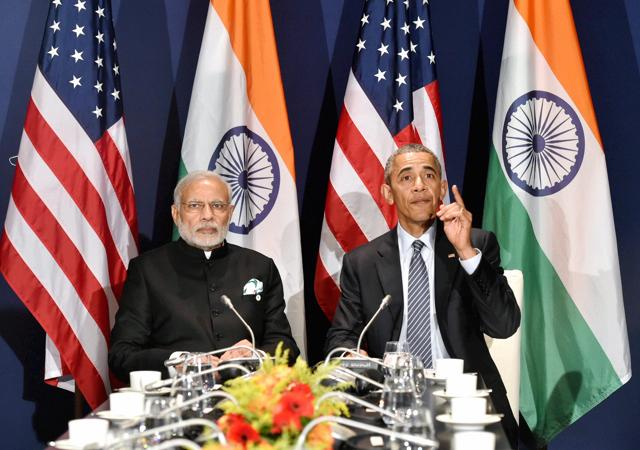
Modi reiterated his message at a clutch of forums with his packed itinerary squeezing in a much-talked-about impromptu meeting with Pakistani Prime Minister Nawaz Sharif and a discussion with US President Barack Obama where the two nations agreed that development and environmental protection must go hand in hand.
“Climate change is a major global challenge. But it is not of our making. It is the result of global warming that came from prosperity and progress of an industrial age powered by fossil fuel,” Modi said while inaugurating the India pavilion at the summit, toughening his country’s stand in the face of recent US criticism of India.
“But we in India face consequences. We see the risk to our farmers. We are concerned about rising oceans that threaten our 7,500 km of coastline and 1,300 islands. We worry about the glaciers that feed our rivers and nurture our civilisation.”
Modi said India wants a “comprehensive equitable and durable agreement”, underscoring a demand of less-privileged nations who have said as developed countries have been the major polluters over the years, they should assume a greater role in fighting global warming.
He clearly outlined India’s strategy for the 10-day-long summit, saying the developed world should provide easy access to cleaner technologies, climate finance and right to carbon space.
Read: Will fulfil responsibilities on climate: Modi tells Obama in Paris
“India’s progress is our destiny and right of our people. But we must also lead in combating climate change,” he said.
“We need a genuine global partnership. Democratic India must grow rapidly to meet energy needs of everyone,” Modi added.
In an article that he wrote for the Financial Times, Modi asked advanced countries to “assume more responsibilities” and provide “affordable cleaner technologies” to the developing world.
All you need to know about Paris Climate Change Summit 2015
The Prime Minister also launched the International Solar Alliance of over 100 countries in the presence of French President Francois Hollande and described it as a “dream come true”.
“This day is the sunrise of new hope – not just for clean energy but for villages and homes still in darkness,” he said. “Convergence between economy, ecology and energy shall define our future.”
He sought the resolution of the intellectual rights issue in the transfer of cleaner technologies at the Innovation Mission hosted by US President Barack Obama, with other heads of state and industry leaders such as Bill Gates and Ratan Tata among those present.
Speaking on India’s position on the climate talks, Modi said equity and common but differentiated responsibility should be the bedrock of all elements of the proposed deal. He also called for the continuation of conventional energy sources such as coal and said there cannot be any place for unilateral steps that can hinder the growth of developing countries.
Modi made it clear in the presence of 150 head of states that the developed world will have to provide carbon space for the developing world to grow. He also said rich nations cannot deny opportunity for the poor in the world to develop.
“We assume advanced nations will take ambitious targets. It’s not a question of historical responsibility. They also have room for emission cuts. Climate justice demands with lethal carbon space, developing countries must have enough room to grow,” Modi said in his final engagement of the day before leaving for Delhi.
Apart from the Prime Minister’s remarks on climate change, his brief meeting with Pakistani counterpart Nawaz Sharif at the start of the conference’s high-level segment drew much media attention.
Sources said Modi walked towards Sharif who was sitting on a sofa. Sharif responded and the two shook hands. Modi reportedly sat down beside him in the lounge for the heads of state.
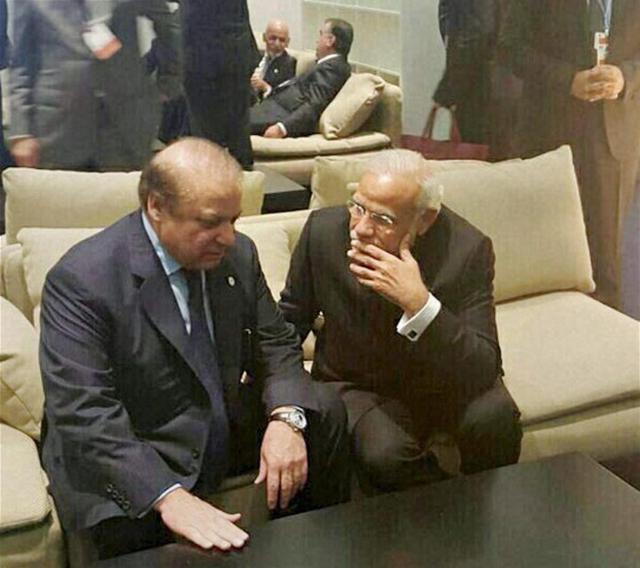
Officials said the two leaders spoke for a few moments without any delegates around. Indian government sources, however, said that the two prime ministers exchanged pleasantries and termed it a courtesy meeting.
Read: ‘Climate change’ in India-Pak ties? Modi-Sharif shake hands in Paris
Following the Modi-Obama meeting, the two countries said an agreement in Paris must require all nations to pursue action to curb carbon pollution without impeding development goals of countries like India.
At a joint press conference, Obama told reporters he and Modi had agreed climate change was an urgent threat while India must also be able to grow and fight poverty.


