The Delhi government’s odd-even programme, which rations vehicle use based on licence plates, makes a comeback this year with the chief minister’s recent announcement of a seven-point Parali Pradushan Action Plan. The plan is a series of emergency measures targeted at alleviating the poor levels of air quality that mark Delhi’s winter season.
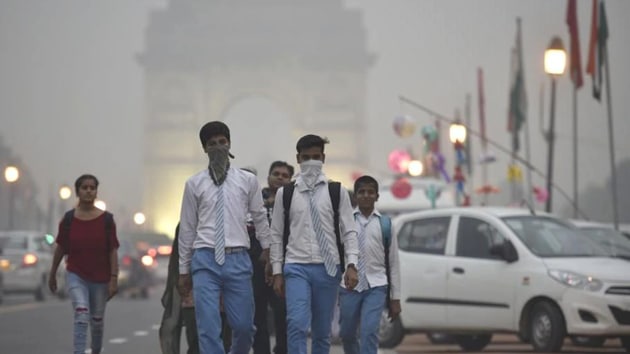
Did the earlier odd-even programme have any impact on air quality? In this article, we discuss two studies to outline the methods used, the key results, and takeaways. To evaluate odd-even scheme correctly, we should compare observed air quality with what the levels could have been in the absence of the programme. Meteorological conditions greatly influence how pollution levels vary from one day to the next, and, so, any reasonable evaluation needs to figure out a way to make apple-to-apple comparisons. Different techniques have different advantages and limitations, but help piece together a comprehensive picture.
A paper co-authored by one of us (Dey) utilised satellite-based estimates of PM2.5 to examine the potential decrease due to fewer traffic emissions during odd-even. The satellite-based estimates were calibrated against ground-based measurements, combined with chemical transport model simulations. The estimated PM2.5 represents the level between 10:30 am to 1:30 pm, when the satellites cross this region. The study concluded that the traffic restriction between January 1-15 in 2016 reduced PM2.5 by 4-6% with a maximum of up to 10%, primarily at three local hotspots in Delhi. Analysis of meteorological parameters suggested a stagnation of pollutants just before and during the programme, thereby spoiling the effort.
Another paper, that one of us (Harish) was a part of, uses government monitoring data, and a statistical technique called difference-in-differences. The analysis compares Delhi’s monitors to monitors from neighbouring cities in the National Capital Region using PM2.5 data before, during, and after the two pilot rounds. The analysis technique assumes that air quality changes in similar ways within and outside Delhi due to meteorology and other factors that are common to both. A relative change in trends when a programme is implemented only in one of them can then be attributed to the programme. This second analysis finds that PM2.5 levels were lower by 14-16% on average during 8am-8pm during the odd-even scheme in January 2016. No impact was detected at night. No impact was detected when the programme was repeated in April.
{{/usCountry}}Another paper, that one of us (Harish) was a part of, uses government monitoring data, and a statistical technique called difference-in-differences. The analysis compares Delhi’s monitors to monitors from neighbouring cities in the National Capital Region using PM2.5 data before, during, and after the two pilot rounds. The analysis technique assumes that air quality changes in similar ways within and outside Delhi due to meteorology and other factors that are common to both. A relative change in trends when a programme is implemented only in one of them can then be attributed to the programme. This second analysis finds that PM2.5 levels were lower by 14-16% on average during 8am-8pm during the odd-even scheme in January 2016. No impact was detected at night. No impact was detected when the programme was repeated in April.
{{/usCountry}}Should the odd-even programme then be part of a series of emergency measures? Yes, it can provide some relief during the peak pollution episodes. We also need other emergency measures in Delhi, as well as in the neighbouring regions.
Is odd-even a silver bullet to avoid the winter peak? No. For one, we need to address stubble burning holistically. Data suggests that stubble burning was lower in 2018 than in previous years. These government efforts need to continue, ideally moving towards more sustainable agriculture practices in the long term.
Ultimately, we need accelerated progress on longer-term measures, targeting each of the major sources of pollution, implemented around the year. We must tackle household biomass burning, power plants, industries, waste burning, transport emissions (especially trucks), and road and construction dust in parallel. For reducing transport emissions from private vehicle use in cities, public transport investments are critical. Delhi needs more buses that it currently has. This has to be taken up on priority.
We will not see dramatic improvements in air quality because of these emergency measures. Their objective is to restrict the air quality from going from poor to severe in this period, and not to improve it to good or even moderate levels. We urge government officials, and media commentators not to rush to declare the efforts as a success or failure prematurely. PM2.5 concentrations will fluctuate depending on meteorological conditions, as they do all the time. We should learn from our experiences in 2016 to set up multiple ways to measure impact in advance, such as comparing with historical satellite and modelling derived estimates, and careful statistical analysis using regulatory monitoring data. We should expect potentially divergent results across these studies, which then require careful deliberation and reconciliation.